
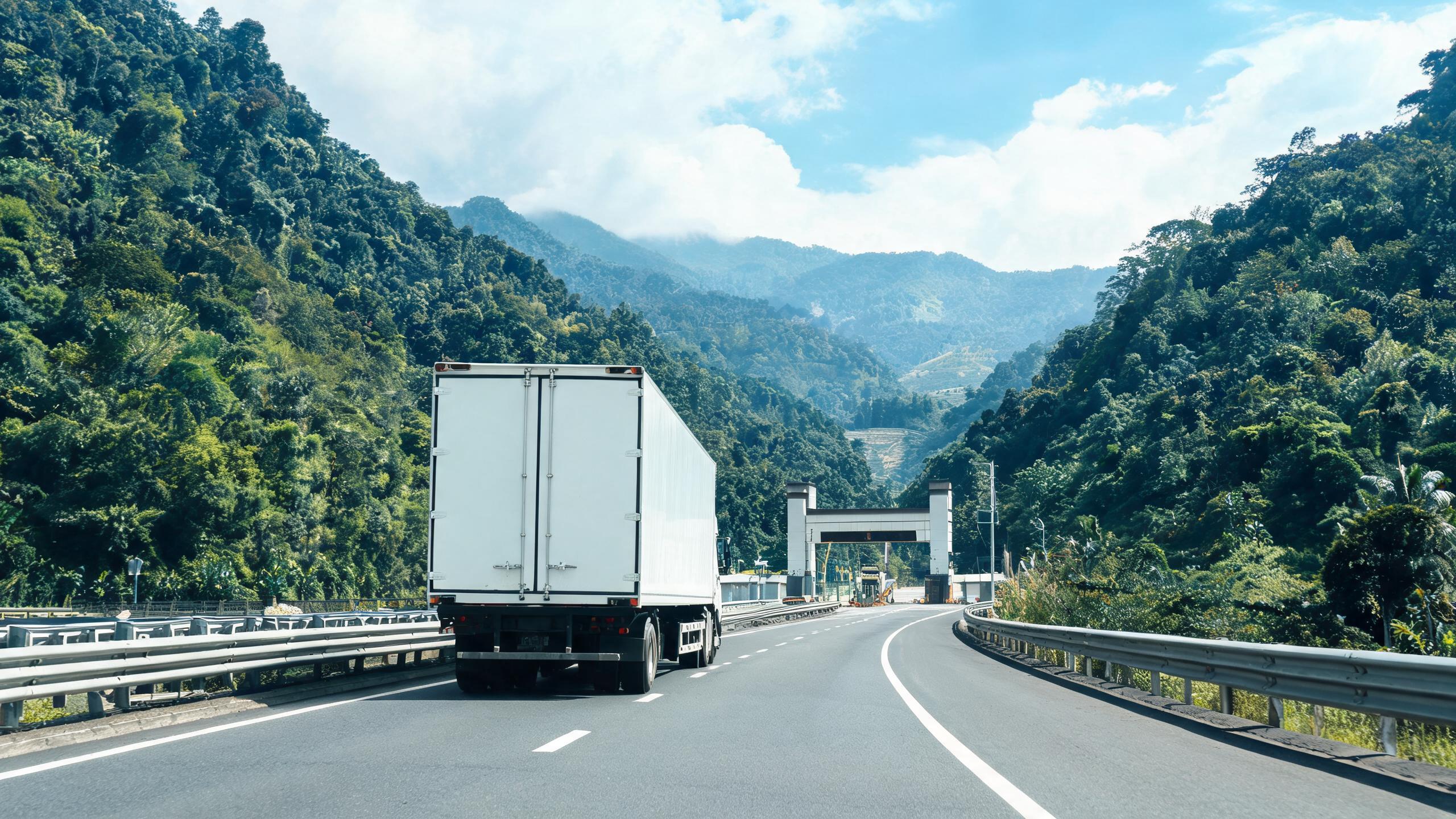
A practical guide for B2B buyers on cross-border trucking from China to Southeast Asia, covering major routes, TIR customs transit procedures, delivery options, and key considerations for choosing a reliable freight partner.
LOGISTICS GUIDE
Cross-Border Trucking from China to Southeast Asia: Routes, TIR Transit, and Delivery Options
If you import goods from China to markets like Vietnam, Thailand, Laos, Myanmar, or Cambodia, you have likely considered ocean freight, air freight, and rail. But there is a fourth option that often gets overlooked—cross-border trucking. For many B2B shipments, especially those under 5 tons or requiring faster-than-ocean delivery, trucking from China to Southeast Asia can be the most cost-effective and flexible solution.
This article covers the practical side: the main road corridors, how TIR customs transit works, the different delivery options (door-to-door, port-to-port, warehouse-to-warehouse), and what to look for when choosing a trucking partner. The goal is to give you the facts you need to evaluate whether cross-border trucking fits your supply chain.
- Cross-border trucking from China to Southeast Asia typically takes 3–10 days depending on the destination and border crossing.
- Major routes go through Guangxi (Youyi Guan / Friendship Pass) for Vietnam, and Yunnan (Mohan / Boten) for Laos and Thailand.
- TIR transit simplifies customs clearance by allowing sealed trucks to cross borders with minimal inspection, reducing delays.
- Delivery options range from FOB port pickup to full door-to-door, including customs clearance and import duties.
- Cost per kg for trucking is often 30–50% lower than air freight for shipments under 3 tons, while still being faster than sea.
Why Consider Cross-Border Trucking?
Most buyers default to sea freight for China–Southeast Asia trade because it is the most well-known option. But trucking has specific advantages:
- Speed: 3–10 days transit vs. 7–20 days for sea (depending on port pair and transshipment).
- Flexibility: Trucks can handle odd-sized cargo, partial loads (LTL), and high-value goods that need faster delivery.
- Lower minimums: No container minimum (FCL) requirement. You can ship 500 kg or 5 tons on a single truck.
- Reduced handling: Cargo moves from factory to destination without container loading/unloading at ports, reducing damage risk.
- Customs simplicity: With TIR transit, the same sealed truck crosses multiple borders without repeated inspections.
That said, trucking is not for every shipment. It is less suitable for very large volumes (over 20 tons per shipment) or for destinations far from the border (e.g., southern Thailand or Indonesia). For those, sea or multimodal rail remains better.
Major Cross-Border Trucking Routes from China to Southeast Asia
The road network connecting China to Southeast Asia has improved significantly over the past decade. The two main gateways are through Guangxi (to Vietnam) and Yunnan (to Laos, Thailand, Myanmar, and Cambodia).
1. China to Vietnam (via Guangxi)
The busiest corridor. Two main border crossings:
- Youyi Guan (Friendship Pass) – Lang Son: This is the primary crossing for cargo from Shenzhen, Guangzhou, Dongguan, and other manufacturing hubs in southern China. Distance from Shenzhen to Hanoi is about 1,400 km, transit time 3–4 days. From Hanoi, trucks can continue to Ho Chi Minh City (additional 2–3 days).
- Dongxing – Mong Cai: A smaller crossing used for cargo destined for northern Vietnam ports (Haiphong) or for goods coming from Fujian/Zhejiang provinces.
Typical transit times (door-to-door, factory to warehouse):
- Shenzhen / Guangzhou → Hanoi: 3–4 days
- Shenzhen / Guangzhou → Ho Chi Minh City: 6–8 days
- Shanghai / Ningbo → Hanoi: 5–7 days
2. China to Laos and Thailand (via Yunnan)
The Mohan (China) – Boten (Laos) crossing is the main gateway for the China–Laos Railway and road corridor. From Boten, trucks drive south to Vientiane (Laos) and then cross into Thailand at the Nong Khai (Thailand) – Vientiane (Laos) bridge.
- Route: Kunming (China) → Mohan → Boten → Luang Prabang → Vientiane → Nong Khai → Bangkok
- Distance: Kunming to Bangkok is about 1,800 km.
- Transit time: 5–7 days for door-to-door from Kunming to Bangkok.
This route is increasingly popular for goods from Yunnan, Sichuan, and Chongqing destined for central Thailand (Bangkok, Rayong, Laem Chabang).
3. China to Myanmar (via Yunnan)
The Ruili (China) – Muse (Myanmar) crossing is the main land route. From Muse, trucks go to Mandalay and then to Yangon.
- Route: Kunming → Ruili → Muse → Mandalay → Yangon
- Transit time: 7–10 days from Kunming to Yangon.
- Note: Political and security conditions in Myanmar can affect reliability. Always check current situation before booking.
4. China to Cambodia (via Vietnam or Thailand)
There is no direct China–Cambodia land border. Trucks go through Vietnam (Moc Bai border crossing from Ho Chi Minh City) or through Thailand (Aranyaprathet–Poipet crossing). Typical transit from Shenzhen to Phnom Penh is 7–10 days.
| Route | Border Crossing | Typical Transit (door-to-door) | Best for cargo from |
|---|---|---|---|
| China → Vietnam (North) | Youyi Guan / Friendship Pass | 3–5 days | Guangdong, Fujian, Zhejiang |
| China → Vietnam (South) | Youyi Guan + domestic truck | 6–8 days | Guangdong, Shanghai |
| China → Laos → Thailand | Mohan–Boten | 5–7 days | Yunnan, Sichuan, Chongqing |
| China → Myanmar | Ruili–Muse | 7–10 days | Yunnan, Sichuan |
| China → Cambodia (via Vietnam) | Moc Bai (VN–KH) | 7–10 days | Guangdong, Shenzhen |
TIR Customs Transit: What It Is and Why It Matters
TIR (Transports Internationaux Routiers) is a UN customs transit system that allows goods to move across international borders under a single customs document, with the truck sealed at the origin and inspected only at the destination customs office.
How TIR works in practice:
- The truck is loaded at the factory or warehouse in China.
- A TIR carnet (the customs document) is issued by the Chinese customs authority.
- The truck is sealed with a customs-approved lock.
- At each border crossing, customs officers check the seal and the TIR carnet, but do not open the truck or inspect the cargo.
- The truck proceeds to the destination customs office in the importing country, where the seal is broken and the goods are cleared.
Benefits for cross-border trucking from China to Southeast Asia:
- Reduced border delays: Instead of waiting 1–2 days for customs clearance at each border, TIR trucks can cross in 1–2 hours.
- Lower risk of cargo damage: Fewer inspections mean less handling of goods.
- Simplified documentation: One document covers the entire transit, reducing paperwork errors.
- Cost savings: Fewer delays mean lower demurrage and storage costs.
TIR coverage in Southeast Asia:
As of 2025, the following countries are TIR contracting parties along the China–Southeast Asia corridor:
- China (joined 2016)
- Thailand (joined 2020)
- Laos (joined 2022)
- Vietnam (joined 2023)
- Myanmar (joined 2021)
Cambodia is not yet a TIR member, so shipments to Cambodia still require standard customs clearance at the border.
Important: TIR transit is available only for trucks that are registered with the TIR system. Not all trucking companies have TIR-certified vehicles. When booking, ask specifically: "Do you offer TIR transit for this route?"
Delivery Options: What You Can Choose
Cross-border trucking services typically offer several delivery options. The terminology can vary by provider, so it helps to know the standard terms.
1. FOB / EXW + Trucking (Port-to-Port or Border-to-Border)
- What it means: The seller (or you) arranges trucking from the factory to a designated border crossing or port. You handle customs clearance at destination.
- Best for: Buyers with their own customs broker or import license in the destination country.
- Cost: Lower, because you are only paying for the trucking leg.
- Risk: You bear the risk of customs delays or issues at the border.
2. Door-to-Door (DDP – Delivered Duty Paid)
- What it means: The trucking company handles everything: pickup from the factory in China, export customs, transit, import customs, and delivery to your warehouse in the destination country. All duties and taxes are included in the price.
- Best for: Buyers who want a single point of contact and predictable landed cost.
- Cost: Higher, but includes all fees.
- Risk: Minimal for you—the provider is responsible for all customs clearance.
3. Door-to-Door (DAP – Delivered at Place)
- What it means: Same as DDP, but duties and taxes are not included. You pay those separately at destination.
- Best for: Buyers who want to manage their own duty payments (e.g., for duty drawback programs).
- Cost: Lower than DDP, but you need to budget for duties separately.
4. LTL (Less Than Truckload) Consolidation
- What it means: Your cargo shares a truck with other shipments. The trucking company consolidates multiple LTL shipments at a warehouse near the border, then loads them onto a single truck.
- Best for: Small shipments (under 2 tons) that do not fill a full truck.
- Cost: Per kg, usually higher than full truckload but lower than air freight.
- Transit time: Slightly longer (1–2 extra days) due to consolidation at the border warehouse.
| Option | Included | Best for | Typical cost (per kg, Shenzhen→Bangkok) |
|---|---|---|---|
| FOB + Trucking | Factory → border | Buyers with own broker | $0.30–$0.50 |
| DAP (Door-to-Door, no duties) | All transport + customs | Buyers managing duty | $0.50–$0.80 |
| DDP (Door-to-Door, all-in) | All transport + customs + duties | Single-point responsibility | $0.80–$1.20 |
| LTL Consolidation | Share truck space | Small shipments | $0.60–$1.00 |
Note: Prices are indicative and vary by cargo type, weight, and current fuel costs. Always request a quote for your specific shipment.
What Affects Transit Time and Cost
Several factors influence how long the trucking takes and how much it costs:
1. Border Crossing Efficiency
The busiest crossings (Youyi Guan, Mohan–Boten) usually have faster processing. Smaller crossings may have longer queues. TIR transit helps significantly at all crossings.
2. Seasonality
- Chinese New Year (January–February): Truck availability drops by 30–50% as drivers return home. Plan shipments 2–3 weeks before or after.
- Rainy season (May–October in Southeast Asia): Road conditions in Laos and northern Thailand can deteriorate, adding 1–2 days transit.
- Harvest season (October–December): Trucks are in higher demand for agricultural goods, raising rates.
3. Cargo Type
- General cargo (electronics, machinery parts, clothing): Standard rates.
- Hazardous materials (chemicals, batteries): Requires special permits and certified trucks. Add 20–40% to cost.
- Oversized / heavy cargo: May require special trucks or escorts. Quote per project.
4. Insurance
Most trucking companies offer basic cargo insurance (typically 0.3–0.5% of cargo value). For high-value goods, consider purchasing additional coverage. Always ask for the insurance certificate before shipping.
How to Choose a Cross-Border Trucking Partner
When evaluating a trucking company for China–Southeast Asia routes, ask these questions:
- Do you have TIR-certified trucks? If yes, ask for the TIR registration number.
- What is your border crossing record? Ask for average crossing times at the specific border you will use.
- Do you offer door-to-door or just border-to-border? Confirm the service scope.
- What is your insurance coverage? Get the policy details in writing.
- Can you provide a tracking system? Some companies offer GPS tracking for the truck.
- What is your payment terms? Common terms: 50% deposit, 50% upon delivery. Some offer net 30 for established customers.
- Do you have a warehouse at the border? Useful for consolidation or temporary storage if customs is delayed.
Common Mistakes to Avoid
- Not checking the TIR status: Without TIR, you may face 1–2 day delays at each border. Always ask.
- Assuming all trucking companies are the same: Some specialize in China–Vietnam, others in China–Thailand. Choose one with route-specific experience.
- Not accounting for customs clearance time: Even with TIR, destination customs clearance can take 1–2 days. Plan your warehouse delivery accordingly.
- Skipping insurance: Trucking involves road risks (accidents, theft, weather). Always insure the cargo.
- Not verifying the trucking company's license: In China, cross-border trucking requires a specific license (国际道路运输许可证). Ask for a copy.
FAQ
Q: How much does cross-border trucking from China to Southeast Asia cost compared to sea freight?
For a 2-ton shipment from Shenzhen to Bangkok, trucking (DDP) costs approximately $0.80–$1.20 per kg, while sea freight (LCL) costs about $0.30–$0.50 per kg but takes 10–14 days longer. For shipments under 3 tons, trucking is often more cost-effective when you factor in inventory carrying costs.
Q: Can I track my shipment in real time?
Many providers offer GPS tracking. Ask if they provide a tracking link or app. Some also offer temperature monitoring for sensitive goods.
Q: What documents do I need for cross-border trucking?
- Commercial invoice
- Packing list
- Bill of lading (or CMR waybill for trucking)
- Certificate of origin (for preferential tariff treatment)
- TIR carnet (if applicable)
- Any permits for restricted goods (e.g., batteries, chemicals)
Q: How far in advance should I book?
For standard cargo, book 5–7 days before the desired pickup date. During peak seasons (Chinese New Year, November–December), book 2–3 weeks ahead.
Q: Is cross-border trucking safe for high-value goods?
Yes, provided you use a reputable company with TIR-certified trucks, GPS tracking, and adequate insurance. Theft risk is lower than air freight because the truck is sealed and tracked.
Next Steps
If you are considering cross-border trucking from China to Southeast Asia for your next shipment, start by gathering the following information:
- Cargo type, weight, and dimensions
- Pickup location in China (city, province)
- Destination in Southeast Asia (city, country)
- Desired delivery date (flexible or fixed)
- Whether you need customs clearance included
With those details, you can request quotes from 2–3 trucking companies and compare their TIR capabilities, transit times, and insurance coverage.
For more information on specific routes or to discuss your shipment requirements, contact our logistics team. We can provide route-specific advice and connect you with vetted cross-border trucking partners.