
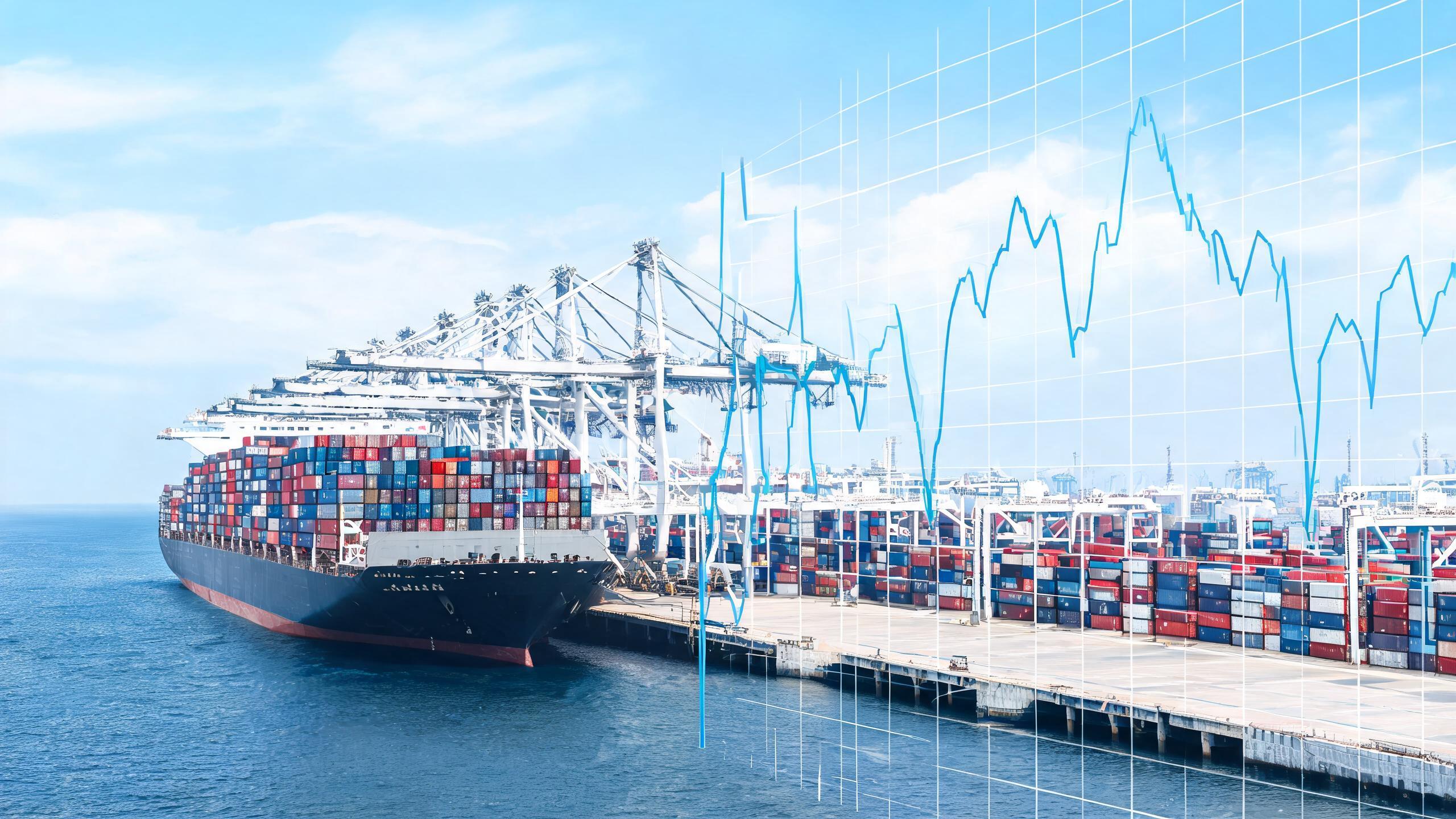
A practical guide for international buyers navigating sea freight from China. Understand current ocean freight rates, key factors that influence quotes, and how to budget for shipping in 2025.
OCEAN FREIGHT INSIGHTS
- Sea freight from China remains the most cost-effective mode for large-volume shipments, but rates fluctuate based on fuel, container availability, and seasonal demand.
- Ocean freight rates from China vary significantly by route: US West Coast, Europe, and Southeast Asia each have distinct pricing structures.
- Factors like port congestion, blank sailings, and Incoterms directly affect your final quote — understanding these helps you negotiate better.
- Booking 2–4 weeks ahead and using a freight forwarder with consolidated services can reduce your China sea shipping costs.
- Always ask for an ocean freight quote from China that includes all surcharges (BAF, CAF, PSS) to avoid surprises at billing.
Introduction: Why Sea Freight from China Still Matters
For any B2B buyer importing goods from China, sea freight is the backbone of the supply chain. Air freight is fast but expensive; rail is limited in capacity. Ocean freight strikes the balance — it moves 80% of global trade by volume and offers the lowest cost per kilogram for containerized cargo.
But sea freight China rates are not static. They change weekly, sometimes daily, driven by a mix of global demand, fuel costs, and operational disruptions. If you are sourcing from Chinese suppliers, understanding how these rates are built and what affects them will help you budget accurately and avoid unexpected surcharges.
This article covers the current state of ocean freight rates China, the main factors that influence your China sea shipping rates, and how to get a reliable ocean freight quote China.
1. Current Ocean Freight Rate Landscape (2025)
As of early 2025, the global container shipping market has stabilized compared to the extreme volatility of 2021–2023. However, rates remain elevated above pre-pandemic levels due to ongoing rerouting around the Red Sea and capacity constraints.
Below is a general reference for typical sea freight from China rates per 20-foot equivalent unit (TEU) and 40-foot container (FEU) for major routes. These are indicative spot rates; contract rates and actual quotes vary by carrier, volume, and season.
| Route | Container Type | Indicative Rate (USD) | Transit Time (days) |
|---|---|---|---|
| China → US West Coast (LA/LB) | 40' GP | $2,800 – $3,500 | 12–16 |
| China → US East Coast (NY/NJ) | 40' GP | $3,400 – $4,200 | 22–28 |
| China → North Europe (Rotterdam/Hamburg) | 40' GP | $2,200 – $3,000 | 25–32 |
| China → Mediterranean (Genoa/Barcelona) | 40' GP | $2,500 – $3,300 | 28–35 |
| China → Southeast Asia (Singapore/Bangkok) | 20' GP | $400 – $700 | 4–8 |
| China → Middle East (Dubai/Jeddah) | 20' GP | $1,200 – $1,800 | 12–18 |
Note: These are general market ranges. Always request a current ocean freight quote China from your forwarder or supplier for precise pricing.
2. Key Factors That Affect Ocean Freight Rates from China
Understanding what goes into a freight quote helps you ask the right questions. Here are the main drivers:
2.1 Container Availability and Equipment Imbalance
When Chinese exports surge, containers pile up at destination ports and become scarce in China. This "equipment imbalance" raises rates for export from China. Conversely, when imports to China are high, rates may drop. Always check if your forwarder has a container guarantee program.
2.2 Fuel Costs (Bunker Adjustment Factor — BAF)
Fuel can account for 20–30% of total shipping cost. Carriers adjust BAF monthly based on global bunker prices. When oil prices rise, expect your ocean freight rates China to increase proportionally.
2.3 Port Congestion and Blank Sailings
Congestion at major Chinese ports (Shanghai, Ningbo, Shenzhen) or destination ports (Los Angeles, Rotterdam) reduces effective capacity. Carriers respond by canceling sailings ("blank sailings"), which tightens supply and pushes spot rates up. During peak seasons (August–October), expect 10–20% higher rates.
2.4 Seasonal Demand Peaks
Chinese New Year (January–February) sees factory closures and reduced sailings. Pre-holiday rush (November–December) and post-holiday catch-up (March) create rate spikes. The pre-Christmas season (July–September) for retail goods also drives up sea freight China costs.
2.5 Route and Distance
Longer routes (China to US East Coast vs. West Coast) cost more per container due to fuel and time. Transshipment routes (via Singapore or Colombo) are cheaper than direct calls but add 3–7 days transit.
2.6 Incoterms and Who Pays for What
Incoterms like FOB, CIF, or DAP define which party bears freight costs. Under FOB, the buyer arranges and pays for shipping from the Chinese port. Under CIF, the seller includes freight and insurance in the price. Your ocean freight quote China will differ depending on the chosen Incoterm.
2.7 Surcharges: The Hidden Costs
Beyond the base ocean freight, expect these surcharges:
- BAF (Bunker Adjustment Factor) — fuel-related
- CAF (Currency Adjustment Factor) — currency fluctuation
- PSS (Peak Season Surcharge) — seasonal demand
- THC (Terminal Handling Charge) — port handling at origin and destination
- ISPS (International Ship and Port Security) — security fee
- Documentation Fee — for bill of lading processing
Always ask for a full breakdown of charges in your China sea shipping rates quote.
3. How to Get an Accurate Ocean Freight Quote from China
Getting a reliable quote requires more than just asking "how much for a container." Follow these steps:
Step 1: Define Your Shipment Details
Provide your forwarder with:
- Origin city in China (e.g., Shenzhen, Shanghai, Ningbo)
- Destination port and country
- Container type: 20' GP, 40' GP, 40' HC, or LCL (less than container load)
- Estimated cargo weight and volume
- Commodity type (hazardous or general cargo)
- Preferred Incoterm (FOB, CIF, DAP)
- Desired transit time (standard or express)
Step 2: Compare Multiple Quotes
Get at least 3 quotes from different freight forwarders or carriers. Use an online freight marketplace or contact forwarders directly. Compare not just the base rate but the all-in cost including surcharges.
Step 3: Check for Hidden Fees
Ask specifically: "Does this quote include BAF, CAF, THC, and documentation fees?" Some forwarders quote low base rates but add high surcharges later.
Step 4: Consider Consolidation (LCL)
If your shipment is less than 15 cubic meters, LCL (less than container load) can be cheaper than a full container. LCL rates are quoted per cubic meter (CBM) and include consolidation fees. Typical LCL rates from China to US West Coast range from $60–$120 per CBM.
Step 5: Book Early
For peak seasons, book 3–4 weeks in advance to secure space and avoid premium rates. Last-minute bookings often incur a "rush" surcharge of 10–20%.
4. Trends Shaping Sea Freight from China in 2025
Several structural trends are influencing ocean freight rates China for the near future:
4.1 Red Sea Rerouting
Since late 2023, Houthi attacks in the Red Sea have forced carriers to reroute via the Cape of Good Hope, adding 7–10 days to Asia-Europe sailings. This reduces effective capacity and keeps rates elevated for European routes.
4.2 Carrier Alliances and Capacity Management
The three major alliances (2M, Ocean Alliance, THE Alliance) control over 80% of global container capacity. They have become more disciplined in managing capacity through blank sailings, which supports rate floors.
4.3 Digitalization and Spot Rate Platforms
Platforms like Freightos, Xeneta, and FreightHub provide real-time sea freight China spot rates. This transparency helps buyers compare and negotiate, but it also means rates adjust faster to market changes.
4.4 Environmental Regulations
New IMO regulations on carbon intensity (CII) and the EU Emissions Trading System (ETS) are adding costs. Carriers are passing on carbon-related surcharges, which may add $50–$150 per container on European routes by 2026.
4.5 Nearshoring and Diversification
Some buyers are shifting sourcing from China to Vietnam, India, or Mexico. However, China remains the world's largest exporter, and its manufacturing scale means China sea shipping rates will continue to set the benchmark for global ocean freight.
5. Practical Tips for Managing Your Sea Freight Costs
- Use a freight forwarder with a China office: They have local relationships and can negotiate better container rates.
- Consolidate shipments: Combine multiple smaller orders into one container to reduce per-unit freight cost.
- Negotiate volume discounts: If you ship 10+ containers per year, ask for a service contract with fixed rates.
- Monitor fuel prices: When oil prices drop, ask your forwarder to renegotiate BAF.
- Choose non-peak months: Ship in February, March, or October–November to avoid peak season surcharges.
- Use FOB for flexibility: Under FOB, you control the carrier selection and can shop for the best ocean freight quote China.
6. Frequently Asked Questions
Q: What is the difference between spot rates and contract rates for sea freight from China?
Spot rates are current market prices for immediate bookings, updated weekly. Contract rates are negotiated for a fixed volume over a period (e.g., 3–12 months) and are typically 10–20% lower than spot rates but less flexible.
Q: How long does sea freight from China take?
Transit times vary by route: 12–16 days to US West Coast, 22–28 days to US East Coast, 25–35 days to Europe, and 4–8 days to Southeast Asia. Add 2–5 days for customs clearance and inland delivery.
Q: Can I get a free ocean freight quote from China?
Yes, most freight forwarders and online platforms provide free quotes. However, ensure the quote includes all surcharges and is valid for a specific period (usually 7–14 days).
Q: What is the cheapest way to ship from China?
For large volumes, FCL (full container load) is cheapest per unit. For small volumes (under 15 CBM), LCL is more cost-effective. For urgent shipments, air freight is faster but 5–10x more expensive per kg.
Q: How do I verify a freight forwarder's reliability?
Check their membership in FIATA or local logistics associations, read online reviews, ask for references, and verify their license number on the Chinese Ministry of Commerce website.
Conclusion
Sea freight from China remains the most practical and economical choice for bulk imports. While ocean freight rates China fluctuate due to fuel, congestion, and global events, understanding the factors behind your China sea shipping rates empowers you to budget accurately and negotiate better terms.
Whether you are a first-time importer or a seasoned buyer, always request a detailed ocean freight quote China that breaks down base rate, surcharges, and transit time. Partner with a reliable freight forwarder, plan ahead, and stay informed about market trends — your supply chain will thank you.
For more guidance on sourcing and shipping from China, explore our other articles or contact our team for a tailored consultation.