
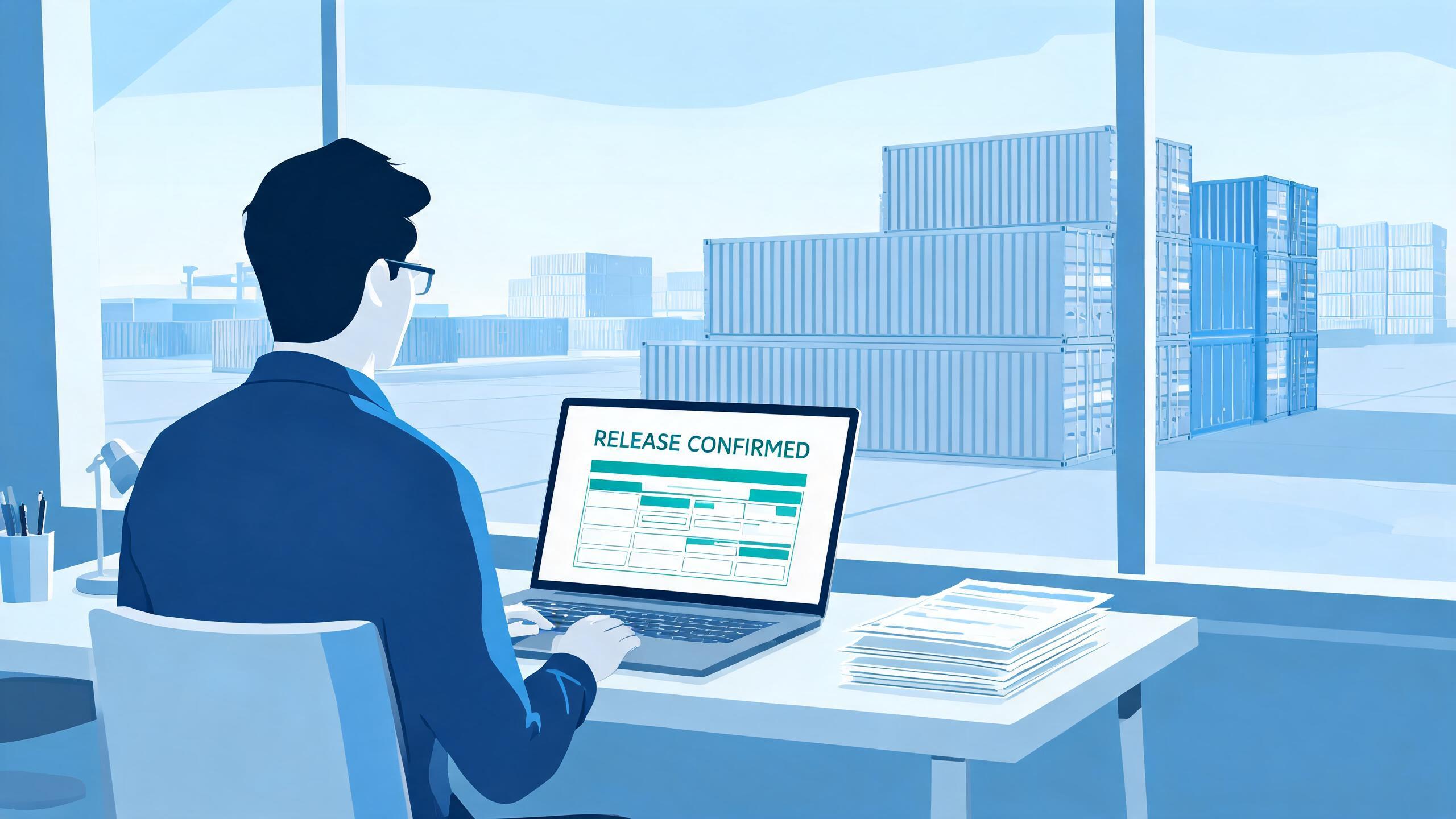
When importing from China, the choice between a telex release bill of lading, an original bill of lading, or a seaway bill determines how fast your cargo is released at the destination port—and how much risk you carry. This guide breaks down the mechanics of each method, when to use them, and the practical questions to ask your freight forwarder before you ship.
SHIPPING & DOCUMENTATION
Telex Release vs Original Bill of Lading: How Cargo Release Works When Shipping from China
You’ve placed the order with your supplier in China. The goods are packed, the container is loaded, and the vessel has sailed. Now comes the part that confuses many first-time importers: how does your cargo actually get released to you at the destination port?
The answer depends on one document decision you make before the ship arrives: telex release, original bill of lading, or seaway bill. Each method controls who can claim the goods, how fast the release happens, and who carries the financial risk if something goes wrong.
This guide explains the mechanics of each option, compares them side by side, and gives you practical questions to ask your freight forwarder when shipping from China.
What Is an Original Bill of Lading?
An original bill of lading (OBL) is a physical, negotiable document issued by the shipping line or their agent. It serves three legal functions:
- Receipt of goods — confirms the carrier received the cargo in the stated condition.
- Contract of carriage — sets out the terms under which the goods will be transported.
- Document of title — whoever holds the original bill of lading has the right to claim the goods.
When you ship with an original bill of lading, the carrier (or their agent) issues typically three original copies. Only one is needed to take delivery of the cargo. The other two are spares in case one is lost.
How cargo release works with an original B/L
- The shipper (your supplier in China) receives the original bills of lading from the shipping line.
- Your supplier endorses the back of the bill and sends the originals to you by courier (DHL, FedEx, UPS).
- You present the endorsed original to the carrier’s office at the destination port.
- The carrier surrenders the cargo to you, and you arrange trucking or warehousing.
Why importers use an original B/L
The main reason is payment security. In international trade, the original bill of lading is often tied to a Letter of Credit (L/C) or documents-against-payment (D/P) arrangement. The seller keeps control of the goods until the buyer pays or accepts the draft. Because the carrier will only release the cargo to the holder of the original document, the seller is protected against the buyer taking the goods without paying.
The downside: courier delivery takes 3–7 days from China to most destinations. If your vessel arrives before the documents do, your cargo sits at the port, and you start paying demurrage and detention charges — often $50–$150 per container per day, depending on the port and shipping line.
What Is a Telex Release Bill of Lading?
A telex release bill of lading is not a physical document at all. It is an electronic instruction from the origin port to the destination port, telling the carrier’s agent to release the cargo to the consignee without requiring the original bill of lading.
The term “telex” is a holdover from the days when these instructions were sent by telex machine. Today, the instruction is sent electronically through the shipping line’s internal system.
How cargo release works with a telex release
- Your supplier in China hands back the original bills of lading to the shipping line (or their agent) at the origin port.
- The supplier instructs the carrier to do a telex release — that is, to release the cargo at destination to the named consignee.
- The carrier’s origin office sends an electronic message to the destination office: “Release cargo to [consignee name] without original B/L.”
- The destination office releases the cargo to the consignee once they provide proof of identity and pay any outstanding freight charges.
Why importers use a telex release
The biggest advantage is speed. Because no physical document travels by courier, the cargo can be released the moment the vessel arrives — or even before, if the consignee has all the required information. This eliminates demurrage and detention costs caused by waiting for documents.
Telex release is common in these situations:
- Open account or prepaid shipments — where the buyer has already paid the supplier, or both parties have an established trust relationship.
- Fast-moving consumer goods — where the buyer needs the cargo immediately to meet retail deadlines.
- Transshipment cargo — where the container is moving through multiple ports and documents would be delayed.
The critical risk: you must surrender the original
A telex release only works if the original bills of lading are returned to the carrier at origin. The supplier must physically hand back all three originals. Once they do, the document is “dead” — it can no longer be used to claim the cargo.
This is the key point for buyers: if you request a telex release, you are telling your supplier, “I trust you, and I will pay you without holding the document of title.” If you haven’t paid yet, the supplier loses their leverage. A telex release is therefore not suitable for transactions where payment is still pending, unless you have a strong, long-term relationship with the supplier.
What Is a Seaway Bill?
A seaway bill (also called a straight bill of lading or non-negotiable bill of lading) is a document that is not negotiable. It identifies a specific consignee, and the carrier releases the cargo to that consignee without requiring the original document.
In practice, a seaway bill works similarly to a telex release — the cargo is released to the named consignee without presenting a physical document. The difference is in the process:
- Telex release starts with a negotiable original bill of lading that is then surrendered at origin.
- Seaway bill is issued from the start as a non-negotiable document. No original ever exists.
When a seaway bill makes sense
Seaway bills are commonly used for:
- Shipments between related companies — e.g., a parent company shipping to its own subsidiary.
- Open account trade — where the buyer and seller have an ongoing credit relationship.
- Fast, simple transactions — where no bank is involved in the payment process.
The limitation
Because a seaway bill is non-negotiable, it cannot be used for Letters of Credit. Banks require a negotiable document (an original bill of lading) to process L/C payments. If your payment terms involve a bank, a seaway bill is not an option.
Telex Release vs Original Bill of Lading vs Seaway Bill: Side-by-Side
| Criteria | Original Bill of Lading | Telex Release | Seaway Bill |
|---|---|---|---|
| Physical document | Yes — 3 originals issued | No — electronic instruction | No — electronic or single copy |
| Negotiable | Yes — can be endorsed and transferred | No — after surrender, it is void | No — non-negotiable |
| Document of title | Yes — holder controls the cargo | No — cargo goes to named consignee | No — cargo goes to named consignee |
| Release speed at destination | Slow — wait for courier delivery | Fast — release on arrival | Fast — release on arrival |
| Payment protection for seller | High — seller controls cargo until paid | Low — seller loses control after surrender | Low — seller has no control |
| Works with Letter of Credit | Yes | Only with bank approval (rare) | No |
| Risk of demurrage | High — document delays | Low | Low |
| Best for | L/C, D/P, high-value goods, new relationships | Open account, prepaid, trusted partners | Related companies, open account |
Which One Should You Choose When Shipping from China?
There is no universal “best” option. The right choice depends on your payment terms, your relationship with the supplier, and how urgently you need the cargo.
Choose an original bill of lading when:
- You are paying via Letter of Credit or documents against payment (D/P).
- You are dealing with a new supplier and have not built trust yet.
- The goods are high-value (e.g., machinery, electronics, branded products) and you want maximum security.
- Your bank requires a negotiable document to process payment.
Choose a telex release when:
- You have already paid the supplier in full (or you trust them on open account terms).
- Your cargo is time-sensitive — you need it released immediately upon vessel arrival.
- You want to avoid demurrage and detention costs caused by document delays.
- Your supplier is willing to surrender the original bills at origin.
Choose a seaway bill when:
- You are shipping between related companies (e.g., your own subsidiary in China to your warehouse).
- You have an open account arrangement and no bank involvement.
- You want the simplicity of a non-negotiable document with fast release.
Practical Questions to Ask Your Freight Forwarder
Before you finalize the shipping instructions, confirm these points with your freight forwarder or the shipping line:
- Does the destination port allow telex release for this shipping line? — Most major lines do, but a few smaller carriers or certain destinations may have restrictions.
- What is the demurrage and detention free time at the destination port? — This tells you how many days you have before storage charges start. Standard free time is 7–10 days, but it varies by port and carrier.
- Who needs to initiate the telex release? — In most cases, the shipper (your supplier) must instruct the carrier. Make sure your supplier knows this requirement before the vessel sails.
- Are there any telex release fees? — Some carriers charge a fee (typically $25–$50) for processing a telex release. Confirm who pays this.
- Can the telex release be reversed? — Once the original is surrendered and the release is issued, it generally cannot be reversed. Make sure all parties are aligned before proceeding.
Common Mistakes to Avoid
Mistake 1: Requesting a telex release before payment is secured. If you haven’t paid your supplier and they surrender the originals, they lose all control over the cargo. This can lead to disputes, delayed shipments, or even legal action.
Mistake 2: Assuming a telex release is the same as a seaway bill. While the release process is similar, the legal nature is different. A telex release starts as a negotiable document; a seaway bill never is. This matters for L/C transactions.
Mistake 3: Forgetting to collect the original bills before they expire. Original bills of lading have a validity period (usually 3–6 months from issue date). If you don’t present them in time, the carrier may require additional documentation or charge storage fees.
Mistake 4: Not confirming the consignee name matches your legal entity. On a telex release or seaway bill, the cargo goes to the named consignee. If the name is misspelled or doesn’t match your import license, customs clearance will be delayed.
Key Takeaways
- Original bill of lading = maximum security for the seller, but slower release and higher demurrage risk.
- Telex release = fastest release, but only works when the seller trusts the buyer (or has already been paid).
- Seaway bill = simple and fast, but not negotiable and not usable with Letters of Credit.
- Always confirm with your freight forwarder which method the destination port and shipping line support before the vessel sails.
- If you are unsure, start with an original bill of lading for your first few shipments, then switch to telex release once you have an established relationship with your supplier.
Final Thoughts
Shipping from China involves more than just booking a container and waiting. The document method you choose determines how quickly your cargo is released, how much you pay in storage fees, and who bears the financial risk if something goes wrong.
For most importers, the practical approach is:
- First shipments with a new supplier: use an original bill of lading with L/C or D/P terms.
- Repeat shipments with a trusted supplier: switch to telex release to speed up delivery and reduce costs.
- Related-company shipments: use a seaway bill for simplicity.
If you are unsure which method fits your transaction, ask your freight forwarder to walk you through the options before the vessel departs. A few minutes of planning can save you hundreds of dollars in demurrage charges and avoid unnecessary delays at the destination port.
Need help structuring your shipping terms with a supplier in China? Contact our team with your Incoterms, payment terms, and destination port — we can advise on the most efficient cargo release method for your specific shipment.