
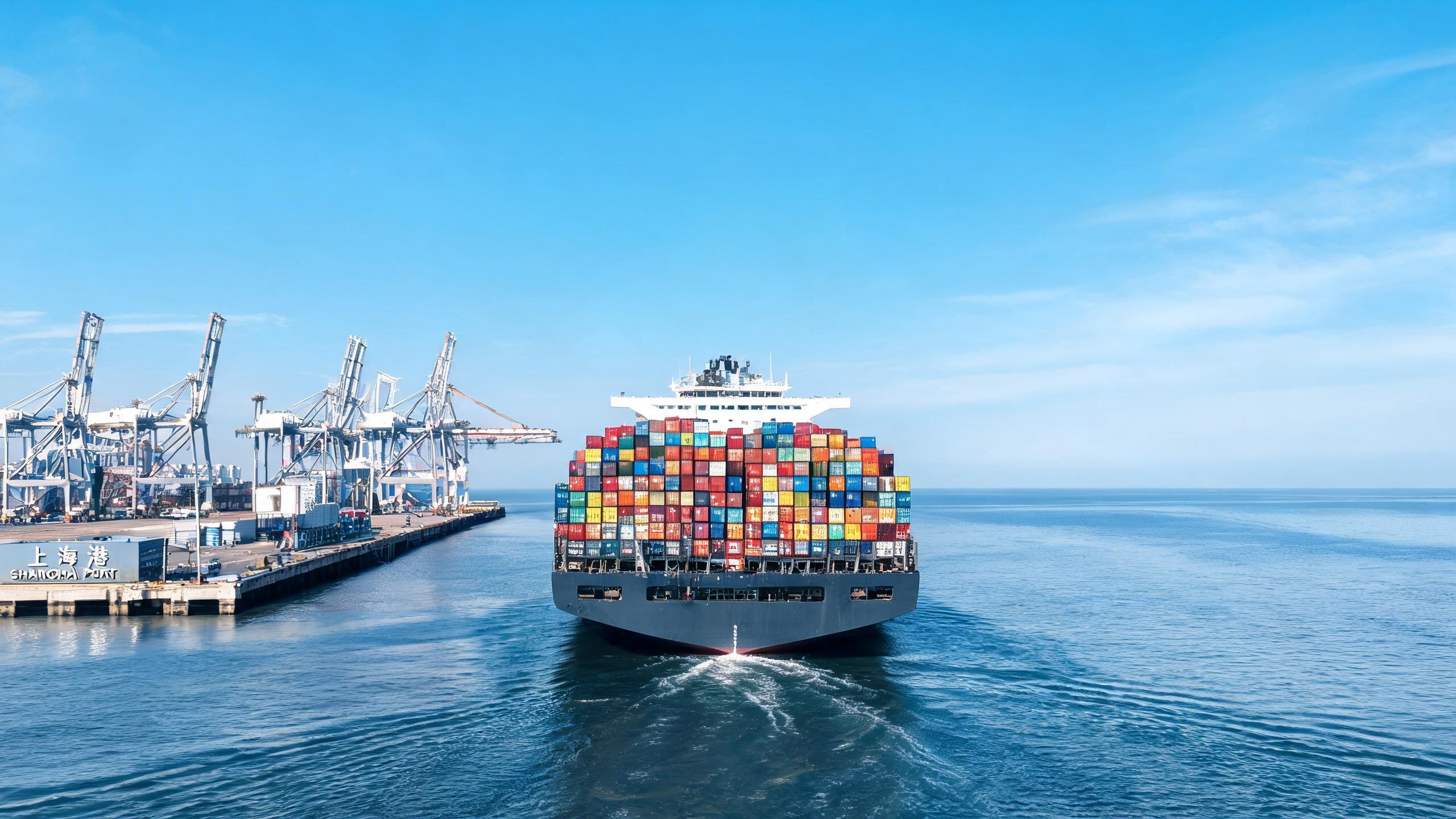
A practical guide for international buyers and importers on how China's four busiest container ports—Shanghai, Ningbo, Shenzhen, and Qingdao—differ in location, cargo profile, transit times, and cost. Learn how to match your product type, origin factory, and destination market to the right port to cut logistics costs and avoid delays.
BUYER GUIDE · EXPORT LOGISTICS
Why the Port Choice Matters More Than You Think
When you place an order with a Chinese supplier, the factory gate is only the starting point. The real cost and time risk sit in the journey from the factory floor to the ship's rail—and that journey is decided by which of China's sea ports your cargo moves through.
Many first-time importers assume "ship from China" is a single option. In reality, China's container ports are spread across thousands of kilometers of coastline, each with its own industrial hinterland, shipping line coverage, and operational quirks. Choosing the wrong port can add 5–12 days of inland transit, push your freight cost up by hundreds of dollars per container, or expose your cargo to congestion delays during peak season.
This guide breaks down the four ports that handle the overwhelming majority of China's containerized exports—Shanghai, Ningbo, Shenzhen, and Qingdao—so you can make an informed routing decision before you sign the contract.
- Shanghai is China's largest container port and the world's busiest—best for high-volume, time-sensitive cargo with the widest sailing frequency.
- Ningbo is the deep-water workhorse adjacent to Shanghai, often with lower trucking costs for factories in Zhejiang and better rates during peak season.
- Shenzhen (Yantian, Shekou, Chiwan) is the gateway for Pearl River Delta manufacturing—ideal for electronics, appliances, and goods from Guangdong.
- Qingdao serves North China's heavy industry, machinery, and chemical sectors, with strong links to Korea, Japan, and the US West Coast.
- Your factory's location, cargo type, and destination market should drive the port choice—not just the headline freight rate.
The Four Ports at a Glance
Before diving into each port's profile, here is a side-by-side comparison of what matters most to a buyer: annual throughput, primary hinterland, and typical advantages.
| Port | Annual Container Throughput | Primary Industrial Hinterland | Key Advantage for Buyers |
|---|---|---|---|
| Shanghai | Over 49 million TEU (2023) | Yangtze River Delta: Jiangsu, Zhejiang, Anhui | Highest sailing frequency; world's largest container port |
| Ningbo-Zhoushan | Over 35 million TEU (2023) | Zhejiang province; nearby Ningbo manufacturing base | Deep-water berths; less congestion; strong alternative to Shanghai |
| Shenzhen | Over 29 million TEU (2023) | Pearl River Delta: Guangdong, Dongguan, Foshan | Direct access to electronics and consumer goods manufacturing |
| Qingdao | Over 26 million TEU (2023) | Shandong, North China: machinery, chemicals, tires | Fastest route for North China cargo to US West Coast and Korea |
Note: Throughput figures are approximate annual TEU counts and vary year to year. Always confirm current capacity and congestion levels with your freight forwarder.
Shanghai Sea Port: The Global Hub
Shanghai is not just China's busiest port—it has been the world's busiest container port for over a decade. Located at the mouth of the Yangtze River, it serves as the primary gateway for the Yangtze River Delta, one of China's most productive manufacturing regions.
What Ships Through Shanghai
Shanghai handles everything from textiles and furniture to machinery and automotive parts. Its Yangshan Deep-Water Port, connected to the mainland by the Donghai Bridge, allows the largest container vessels—those in the 20,000+ TEU class—to dock without tidal restrictions.
Why Choose Shanghai
- Sailing frequency: With hundreds of weekly sailings to Europe, North America, and Southeast Asia, you rarely wait more than a day or two for the next vessel.
- Transshipment hub: Cargo from smaller Chinese ports is often consolidated here, which means more routing options if your destination is off the main trade lanes.
- Service reliability: Major carriers all maintain dedicated terminals, so schedule integrity is generally better than at smaller ports.
When to Be Cautious
Shanghai's volume is also its weakness. During peak season (August–October), berth congestion and trucking bottlenecks can add 3–5 days to your total transit. If your factory is in Zhejiang or southern Jiangsu, you may find that Ningbo offers a faster, cheaper trucking option with comparable sailing coverage.
Ningbo Ocean Shipping: The Deep-Water Alternative
Ningbo-Zhoushan port, often referred to simply as Ningbo, sits about 200 kilometers south of Shanghai. It has grown rapidly in the past two decades, partly because its natural deep-water channels can accommodate fully loaded mega-vessels without tidal waiting—something Shanghai's older terminals cannot always guarantee.
What Ships Through Ningbo
Ningbo's hinterland is Zhejiang province, home to massive manufacturing clusters for household goods, small appliances, textiles, auto parts, and hardware. If your supplier is in Yiwu, Ningbo, Wenzhou, or Taizhou, Ningbo is almost certainly the closest major port.
Why Choose Ningbo
- Lower inland trucking cost: For Zhejiang-based factories, trucking to Ningbo is typically 30–50% cheaper than to Shanghai.
- Less congestion: Ningbo's terminals are generally less crowded than Shanghai's, which can mean faster gate-in and vessel loading.
- Strong US and Europe coverage: Major carriers run direct services to Los Angeles, Long Beach, Rotterdam, and Hamburg from Ningbo.
When to Be Cautious
Ningbo's sailing frequency is slightly lower than Shanghai's for some niche routes. If your destination is served by only one or two carriers from Ningbo, you may have less negotiating power on freight rates. Also, during typhoon season (July–September), Ningbo's exposed coastline can see more weather-related delays than Shanghai's sheltered river port.
"For a buyer sourcing from Zhejiang, routing through Ningbo instead of Shanghai can save $150–$300 per container in trucking costs and often shave a day off the inland leg."
Shenzhen: The Pearl River Delta Powerhouse
Shenzhen's port complex—Yantian, Shekou, and Chiwan—is the export engine for the Pearl River Delta (PRD). This region produces a staggering share of the world's electronics, consumer appliances, and assembled goods. If your product has a circuit board, a battery, or a plastic injection-molded housing, chances are it was made within a two-hour drive of Shenzhen's terminals.
What Ships Through Shenzhen
Yantian is the world's busiest single-terminal container port for exports, specializing in electronics, toys, furniture, and garments. Shekou handles a mix of containers, roll-on/roll-off cargo, and cruise traffic. Chiwan focuses on bulk and containerized general cargo.
Why Choose Shenzhen
- Proximity to manufacturing: Dongguan, Foshan, and Guangzhou factories can truck to Shenzhen in 1–3 hours, minimizing the inland leg.
- US West Coast express services: Several carriers offer dedicated trans-Pacific services from Yantian with transit times as short as 11–13 days to Los Angeles.
- Rail-sea intermodal: China Railway Express services connect inland cities like Chongqing and Chengdu to Shenzhen, offering an alternative to long-haul trucking.
When to Be Cautious
Shenzhen's terminals are notoriously congested during the pre-holiday rush (September–October) and before Chinese New Year. Trucking rates within the PRD also spike during these windows. If your cargo is not from Guangdong, you are likely better off using a port closer to the factory.
Qingdao: The North China Heavyweight
Qingdao, in Shandong province, is the dominant port for North China. It serves a hinterland that includes heavy machinery manufacturers, chemical plants, tire producers, and agricultural exporters. While it does not match Shanghai's volume, Qingdao is a critical node for specific cargo types and trade lanes.
What Ships Through Qingdao
Qingdao's main exports include machinery, construction equipment, chemicals, tires, steel products, and processed food. Shandong province is also a major producer of home appliances (Haier, Hisense) and agricultural goods, so containerized cargo is a mix of industrial and consumer items.
Why Choose Qingdao
- Fastest route to Korea and Japan: Qingdao is a short sea crossing from Incheon and Busan, making it ideal for regional trade.
- US West Coast efficiency: Direct services to Long Beach and Seattle are frequent, with transit times competitive with South China ports.
- Lower terminal handling charges: Qingdao's port fees are generally lower than Shanghai or Shenzhen, which can reduce your total logistics cost.
When to Be Cautious
If your supplier is in Guangdong or Zhejiang, shipping via Qingdao makes little sense—the inland trucking cost will erase any port fee savings. Qingdao also has fewer weekly sailings to Europe than Shanghai or Ningbo, so you may face longer waiting times for less frequent services.
How to Choose the Right Port for Your Shipment
There is no single "best" China sea port. The right choice depends on four variables you control:
1. Factory Location
Map your supplier's address to the nearest major port. A general rule: factories in Jiangsu/Zhejiang → Shanghai or Ningbo; Guangdong → Shenzhen; Shandong/North China → Qingdao. Trucking costs in China are roughly $0.8–$1.5 per kilometer per container, so a 500-km difference can add $400–$750 to your cost.
2. Cargo Type and Value
High-value, time-sensitive goods (electronics, medical devices) justify paying more for the fastest, most reliable route. Low-value, high-volume goods (building materials, agricultural products) should prioritize the lowest all-in cost, even if transit is a few days longer.
3. Destination Market
For US West Coast, all four ports work, but Shenzhen and Qingdao often have the most direct services. For Europe, Shanghai and Ningbo have the highest frequency. For intra-Asia, Qingdao and Shanghai are strong for Korea/Japan, while Shenzhen is better for Southeast Asia.
4. Seasonality and Congestion
Peak season (August–October) and pre-Chinese New Year (January) cause congestion at all ports. If your shipment window is inflexible, consider a port with spare capacity—Ningbo and Qingdao are often less congested than Shanghai and Shenzhen during these periods.
Common Routing Mistakes to Avoid
- Assuming the cheapest freight quote is the best: A low ocean rate from Shanghai may be offset by higher trucking costs from a Guangdong factory. Always compare total landed cost, not just the ocean freight line.
- Ignoring the incoterms split: Under FOB, the buyer controls the routing. Under CIF or EXW, the supplier may choose a port that suits their logistics, not yours. Clarify the port of loading in your purchase contract.
- Not confirming the CY cutoff: Each port and terminal has a container yard (CY) cutoff time—the deadline for cargo to be gate-in. Missing it means waiting for the next vessel, which can add 3–7 days.
- Overlooking rail-sea options: For inland factories in Chongqing, Chengdu, or Xi'an, rail-sea intermodal via Shenzhen or Ningbo can be faster and more predictable than trucking to a coastal port.
FAQ: Port Routing Questions Buyers Ask
Q: Is Shanghai always the best choice for large orders?
Not necessarily. Shanghai has the most sailings, but it also has the highest trucking costs for factories outside the Yangtze River Delta. For a large order from a Zhejiang factory, Ningbo may be cheaper and equally reliable.
Q: Can I split one order across two ports?
Yes, but it is rarely advisable. Splitting cargo means two sets of export documentation, two trucking arrangements, and potentially two different vessel schedules. Only consider it if your supplier has multiple factories and you need to meet a tight deadline.
Q: How do I know if a port is congested before I book?
Ask your freight forwarder for the current vessel waiting time and CY cutoff status. Major carriers also publish schedule reliability data. During peak season, assume congestion is 2–3 days worse than the annual average.
Q: What is the difference between FOB Shanghai and FOB Ningbo for my supplier?
Under FOB terms, the buyer pays for the ocean freight and the seller delivers the cargo to the named port. If your supplier is in Zhejiang, they may quote a lower FOB price to Ningbo because their trucking cost is lower. Always request quotes for both ports and compare.
Final Recommendation: Let the Cargo Decide
The four ports covered here—Shanghai, Ningbo, Shenzhen, and Qingdao—are not interchangeable. Each has a distinct geographic and industrial logic. The most cost-effective routing is the one that matches the port to your factory location, cargo type, and destination market.
Before you finalize your next purchase order, ask your supplier three questions:
- What is the closest major container port to your factory?
- What is the trucking cost and transit time to that port?
- Which port do you recommend for our destination market, and why?
If you are still uncertain, a freight forwarder with China experience can model the total landed cost for multiple port scenarios in a few hours. That small investment in routing analysis often saves more than the forwarder's fee.
Need help evaluating your current shipping routes or comparing quotes from China's sea ports? Contact us with your cargo details and destination, and we will help you map the most efficient path from factory to final port.