
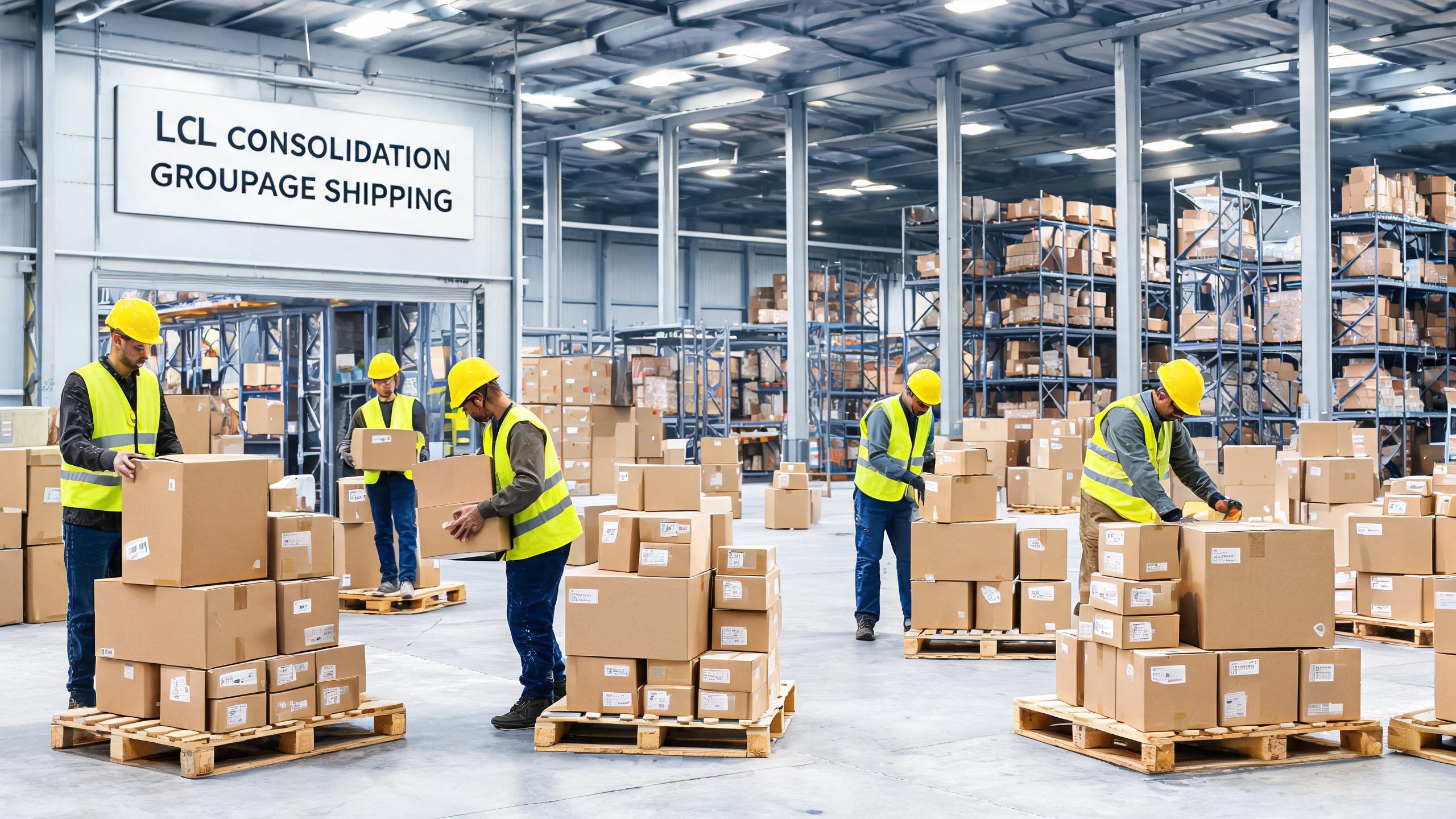
A practical, no-fluff guide to LCL shipping from China. Learn how consolidation works, how LCL from China is priced, and what to watch out for to avoid delays, damage, and hidden costs. Written for B2B buyers who need to move less-than-container loads reliably.
FREIGHT & LOGISTICS GUIDE
- LCL shipping from China is cost-effective when your cargo volume is between 1–15 CBM — below a full container load.
- LCL pricing is based on chargeable weight (volume vs. actual weight, whichever is greater), plus consolidation and destination fees.
- Transit times for LCL from China are typically 3–7 days longer than FCL due to consolidation and deconsolidation at origin and destination.
- Common pitfalls include incorrect cargo marking, insufficient packaging, and choosing a consolidator with poor tracking.
- Always confirm the consolidation schedule, cut-off date, and whether the service includes door-to-door or port-to-port.
If you import from China but your order doesn't fill an entire 20-foot or 40-foot container, you're paying for unused space — or you're looking for a smarter way. That's where LCL shipping from China comes in.
Less-than-container-load (LCL) lets you share container space with other shipments, paying only for the volume you occupy. It's the standard choice for small-to-medium shipments, prototypes, samples, or first-time orders. But LCL from China has its own rules, pricing quirks, and risks. This guide walks you through the consolidation process, how costs are calculated, and what to do — and avoid — to get your goods delivered on time and in one piece.
What Is LCL Shipping from China?
LCL stands for Less than Container Load. When you ship LCL from China, your cargo is consolidated with other shipments at a container freight station (CFS) near the port of origin. The carrier loads all shipments into one container, which is then shipped as a single unit. At the destination port, the container is deconsolidated, and each shipment is released to its respective consignee.
LCL works best when your cargo volume is between 1 CBM and 15 CBM. Below 1 CBM, express courier may be more cost-effective. Above 15 CBM, a full 20-foot container (FCL) often becomes cheaper per unit of volume.
The Consolidation Process: Step by Step
Understanding the physical flow helps you plan your logistics timeline and avoid surprises.
1. Booking & Documentation
You or your freight forwarder books space with a consolidator. You provide the commercial invoice, packing list, and any required certificates (e.g., fumigation, hazardous goods declaration). The consolidator issues a house bill of lading (HBL) as your contract of carriage.
2. Cargo Delivery to CFS (Origin)
Your supplier delivers the goods to the consolidator's container freight station near the port of loading — typically Shanghai, Ningbo, Shenzhen, or Guangzhou. The CFS checks the cargo against the packing list, weighs it, and measures the volume.
3. Consolidation & Container Loading
The consolidator groups multiple LCL shipments into one container. Each shipment is stacked and separated by dunnage, nets, or pallets to prevent mixing and damage. The container is sealed and loaded onto the vessel.
4. Ocean Freight
The container travels on a scheduled vessel. Transit times depend on the destination port: 15–20 days to Los Angeles, 25–30 days to Rotterdam, 20–25 days to Santos, for example.
5. Deconsolidation at Destination CFS
At the destination port, the container is taken to a CFS where it's opened and each shipment is separated. Customs clearance may happen at the port or at the CFS, depending on local regulations.
6. Final Delivery
Once cleared, the cargo is released to the consignee or handed over to a local carrier for door delivery.
How LCL from China Is Priced
LCL pricing is more complex than FCL. You need to understand three components.
| Cost Component | What It Covers | Typical Range (USD) |
|---|---|---|
| Ocean freight (per CBM or per 1000 kg) | Base shipping cost from origin port to destination port | $20–$80 per CBM (route-dependent) |
| Origin charges | CFS receiving, handling, documentation, customs clearance at origin | $50–$150 per shipment |
| Destination charges | CFS deconsolidation, handling, documentation, customs clearance at destination | $100–$300 per shipment |
Chargeable weight is the key concept. Carriers compare the gross weight (kg) and the volumetric weight (CBM × 1000 kg/CBM). The higher number is the chargeable weight. For example, a 2 CBM shipment weighing 800 kg has a volumetric weight of 2000 kg, so you pay for 2000 kg. Light, bulky goods cost more per CBM than dense goods.
Minimum charges apply. Most LCL carriers impose a minimum charge equivalent to 1 CBM or 1000 kg, whichever is higher. Even if your shipment is only 0.5 CBM, you'll pay for 1 CBM.
LCL vs. FCL: When to Choose Which
| Factor | LCL from China | FCL (Full Container Load) |
|---|---|---|
| Volume range | 1–15 CBM | 16+ CBM (20'GP: 28 CBM, 40'GP: 58 CBM) |
| Cost per unit | Higher per CBM (due to consolidation & deconsolidation) | Lower per CBM (no shared costs) |
| Transit time | 3–7 days longer (consolidation schedule + deconsolidation) | Faster, direct sailing |
| Risk of damage | Higher (cargo handled multiple times, mixed with other shipments) | Lower (sealed container, single shipper) |
| Customs complexity | Moderate (multiple shippers in one container, potential for holds) | Lower (single shipper, single consignee) |
| Best for | Small orders, samples, first-time imports, low-volume products | Regular bulk orders, fragile goods, high-value items |
Best Practices for LCL Shipping from China
1. Choose a Reliable Consolidator or Freight Forwarder
Your forwarder's network matters. Ask if they operate their own CFS or use a third-party facility. Check their consolidation schedule — some consolidators hold cargo until the container is full, which can cause delays. Request references or look for forwarders with a track record in your destination country.
2. Mark and Package for Shared Space
Your cargo will be stacked, strapped, and moved alongside other shipments. Use sturdy pallets or crates. Mark each carton with the consignee name, port of destination, and a unique shipment number. Avoid loose cartons — they shift during transit and are more likely to be damaged.
3. Confirm the Consolidation Schedule
LCL vessels sail on fixed schedules, but the consolidation window (the time your cargo must arrive at the CFS) is typically 3–5 days before the vessel's departure. Miss the cut-off, and your cargo waits for the next consolidation — adding 7–14 days to your lead time.
4. Insure Your Cargo
Because LCL cargo is handled more times than FCL, the risk of damage or loss is higher. All-risk marine cargo insurance is inexpensive — typically 0.2–0.5% of the cargo value. Do not skip it for LCL shipments.
5. Track Your Shipment End-to-End
Ask your forwarder for a tracking number or online portal. Many consolidators offer real-time tracking from CFS receipt to destination delivery. If your forwarder cannot provide this, consider switching to one that can.
6. Plan for Customs Clearance
LCL shipments are more likely to be inspected by customs because the container contains multiple consignors. Ensure your documentation is accurate: commercial invoice, packing list, bill of lading, and any certificates of origin or inspection reports. Discrepancies between documents and cargo can delay the entire container.
Common Mistakes and How to Avoid Them
- Underestimating volumetric weight — Always calculate both gross and volumetric weight. A 3 CBM shipment of lightweight plastic toys may cost more than a 3 CBM shipment of steel parts.
- Not confirming the deconsolidation point — Some LCL services deliver to a CFS near the port, not to your door. Check if your quote includes door delivery or if it's port-to-port only.
- Ignoring the minimum charge — If your shipment is 0.6 CBM, you'll pay for 1 CBM. Consider consolidating multiple small orders into one LCL shipment to maximize the volume.
- Using weak packaging — Cardboard boxes without pallets get crushed in a mixed container. Always palletize or crate LCL cargo.
FAQ: LCL Shipping from China
How long does LCL shipping from China take?
It depends on the destination. Typical ocean transit times: 15–20 days to the US West Coast, 25–30 days to Europe, 20–25 days to South America. Add 3–7 days for consolidation and deconsolidation.
Can I track my LCL shipment?
Yes, most reputable consolidators provide a tracking number. You can monitor the status from CFS receipt to destination delivery.
Is LCL cheaper than air freight?
For volumes above 1 CBM, LCL is significantly cheaper than air freight — typically 70–80% less. For smaller volumes (under 1 CBM), air express may be faster and similarly priced.
What documents do I need for LCL from China?
You need a commercial invoice, packing list, and bill of lading. Additional documents may be required depending on the commodity: certificate of origin, fumigation certificate (for wooden pallets), or hazardous goods declaration.
What happens if my cargo is damaged in an LCL shipment?
If you have marine cargo insurance, file a claim with the insurer. If not, you may have limited recourse against the carrier — the carrier's liability under the Hague-Visby Rules is typically low (around $500–$1000 per package). Insurance is strongly recommended.
Final Thoughts
LCL shipping from China is a practical, cost-effective solution for small-to-medium shipments. The key is understanding the pricing structure, planning for the extra transit time, and choosing a forwarder who handles consolidation professionally. When done right, LCL from China gives you the flexibility to import smaller volumes without paying for a full container — and without the high cost of air freight.
If you're evaluating LCL options for your next order, start by getting a quote from a forwarder who specializes in your destination market. Ask about their consolidation schedule, minimum charge, and whether they offer door-to-door service. The right partner makes the difference between a smooth shipment and a costly headache.
Need a reliable LCL partner? Contact our logistics team for a consolidated quote from China to your port.