
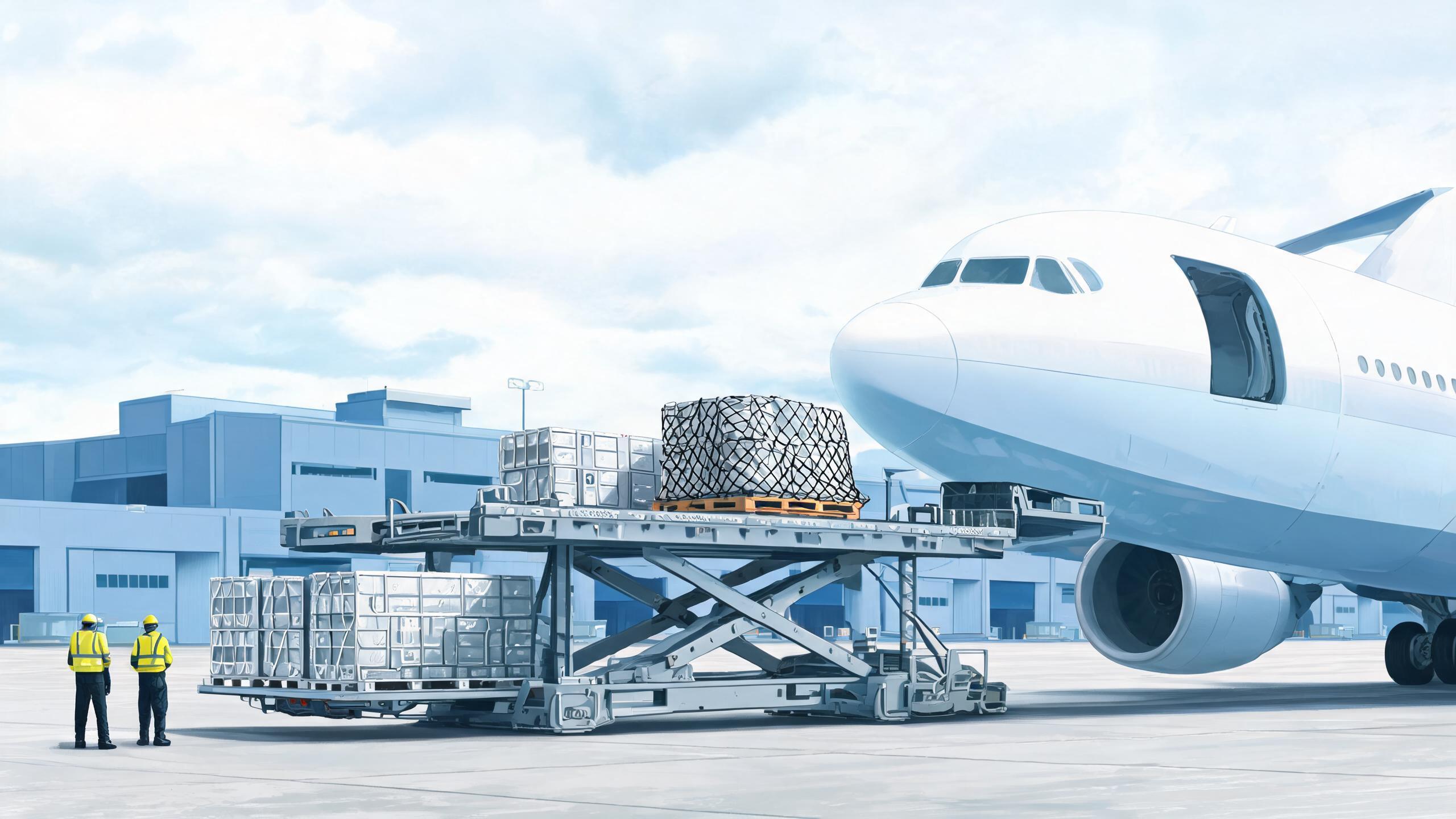
A practical guide for importers and freight forwarders on air cargo ULDs—what they are, the main container types, weight limits, and how ULD freight from China affects your cargo rates and transit times.
AIR FREIGHT BUYER GUIDE
ULD Air Cargo Containers Explained: How Unit Load Devices Shape Air Freight from China
If you import goods from China by air, your freight rate and transit time are determined by more than just the distance between Guangzhou and your local airport. The unit load device (ULD) your cargo is assigned to—or not assigned to—plays a major role in how much you pay, how your goods are handled, and whether your shipment arrives intact.
This guide explains the air cargo ULD types you will encounter when shipping from Chinese airports, how airlines charge for ULD freight, and what you should confirm with your forwarder before booking.
- ULD freight is charged by chargeable weight (gross vs. volumetric), not by piece count.
- Common air cargo containers include the AKE (LD-3), PMC (pallet), and RKN (refrigerated) — each with specific size and payload limits.
- Airline ULD tare weight is always included in your billable weight — confirm the figure with your forwarder.
- For shipments from China, consolidation into ULDs is standard practice; direct ULD allocation only makes sense for large volumes.
What Is a ULD in Air Freight?
A Unit Load Device (ULD) is a pallet or container used to load luggage, freight, and mail onto widebody aircraft and some narrowbody aircraft. It is the standard building block of air cargo loading. ULDs allow airlines to move large quantities of cargo in a single unit, reducing handling time and protecting goods from damage and weather.
There are two broad categories:
- Containers (cans): Enclosed units with rigid sides and a door. They protect cargo from theft, weather, and rough handling.
- Pallets (platforms): Flat base plates with cargo netted and sheathed. They allow irregularly shaped or oversized cargo to be secured.
Every ULD is registered with a unique identification code. The code tells you the type, size, and compatibility of the unit. For example, an AKE container is a specific LD-3 type used in the lower decks of widebody aircraft.
Why ULDs Matter for Air Freight from China
Most air cargo departing from Chinese hubs like Shanghai (PVG), Shenzhen (SZX), and Hong Kong (HKG) is consolidated into ULDs by freight forwarders. Here is why that matters to you:
1. Cost efficiency. Airlines price ULD freight based on the space the ULD occupies and its weight, not on individual cartons. A forwarder consolidating multiple shipments into one ULD can offer lower per-kg rates than shipping loose cargo.
2. Protection. Enclosed air cargo containers protect goods from rain, dust, and tampering during loading and unloading. Pallets with netting and sheeting provide similar protection for larger items.
3. Speed. ULDs are pre-loaded and pre-weighed before the aircraft arrives. This reduces turnaround time on the ground. A well-packed ULD can be loaded onto the aircraft in minutes, whereas loose cargo requires manual handling piece by piece.
4. Transit time stability. ULD freight moves through the cargo terminal as a single unit, which reduces the risk of misplaced or delayed individual pieces.
Common Air Cargo ULD Types You Will Encounter
When your forwarder quotes you a rate, they will often mention the ULD type used for your shipment. Here are the most common ones for international freight from China:
| ULD Code | Common Name | Typical Dimensions (L x W x H) | Max Gross Weight | Typical Use |
|---|---|---|---|---|
| AKE | LD-3 Container | 61.5" x 60.4" x 64" (156 x 153 x 163 cm) | 1,588 kg (3,500 lb) | Lower deck of widebody aircraft; standard for general cargo |
| PMC | Pallet (M1) | 96" x 125" (244 x 318 cm) | 6,804 kg (15,000 lb) | Main deck pallet; large volumes, palletized goods |
| PAG | Pallet (M2) | 88" x 125" (224 x 318 cm) | 6,804 kg (15,000 lb) | Main deck pallet; slightly narrower than PMC |
| RKN | Refrigerated Container | 61.5" x 60.4" x 64" (156 x 153 x 163 cm) | 1,588 kg (3,500 lb) | Temperature-sensitive cargo; maintains set temp range |
| RAP | Refrigerated Pallet | 88" x 125" (224 x 318 cm) | 6,804 kg (15,000 lb) | Large temperature-controlled shipments |
NOTE
Dimensions and weight limits vary slightly between airlines and aircraft types. Always confirm the specific ULD specifications with your airline or forwarder for the exact routing.
How ULD Freight Is Priced: Chargeable Weight
Airlines do not charge by the piece. They charge by the chargeable weight, which is the higher of:
- Gross weight — the total physical weight of your cargo plus the ULD tare weight.
- Volumetric weight — calculated as (Length × Width × Height in cm) ÷ 6,000, which is the standard divisor for air freight from China. Some airlines use 5,000 for express services.
The ULD tare weight (the empty weight of the container or pallet) is always included in the gross weight charged to you. For an AKE container, the tare weight is typically around 90–120 kg. This is a real cost factor you should account for when comparing quotes.
Example Calculation
Assume you ship 500 kg of cargo with a volume of 3.0 CBM.
- Volumetric weight = 3.0 CBM × 167 kg/CBM = 501 kg (using the 1:167 ratio, i.e., 6,000 divisor)
- Gross weight = 500 kg + ULD tare (assume 100 kg) = 600 kg
- Chargeable weight = 600 kg (the higher of the two)
The ULD tare weight alone added 100 kg to your billable weight. This is why dense, heavy cargo is more cost-effective by air than light, bulky cargo.
ULD vs. Loose Cargo: Which Should You Choose?
For most shipments under 500 kg, your cargo will be consolidated into a ULD with other shipments. This is called consolidation. For shipments above 1,000 kg, you may be able to book a direct ULD — meaning your cargo fills an entire container or pallet.
| Factor | Consolidated ULD | Direct ULD (Exclusive Use) |
|---|---|---|
| Cost per kg | Lower; shared space | Higher; you pay for the full ULD space |
| Transit time | Slightly longer; waits for consolidation | Faster; departs on first available flight |
| Handling risk | Higher; multiple shipments in one unit | Lower; your cargo is the only one in the unit |
| Minimum volume | No minimum | Typically 1,000 kg or 4–5 CBM, depending on airline |
| Best for | Small to medium shipments | Large, time-sensitive, or high-value cargo |
ULD Types and Aircraft Compatibility
Not all ULDs fit all aircraft. This matters because your shipment's routing may involve a transfer at a hub like Dubai (DXB), Doha (DOH), or Seoul (ICN). If the connecting aircraft cannot accept the ULD type used on the first leg, your cargo must be deconsolidated and re-consolidated — which adds time and cost.
Key compatibility notes:
- AKE (LD-3) containers fit in the lower decks of most widebody aircraft: Boeing 747, 777, 787, and Airbus A330, A340, A350.
- PMC pallets fit on the main decks of freighter aircraft (747F, 777F) and on the lower decks of some passenger widebodies.
- Narrowbody aircraft (Airbus A320, Boeing 737) do not accept standard ULDs. Cargo is loaded in bulk, which means higher handling risk and longer turnaround times.
If your destination airport is served only by narrowbody aircraft, your cargo will be de-ULDed at the gateway and loaded as bulk cargo for the final leg. Confirm this with your forwarder, especially for shipments to smaller airports.
How Chinese Freight Forwarders Use ULDs
From Chinese export hubs, forwarders typically operate in two modes:
1. Consolidation services. The forwarder books space on a specific flight and fills ULDs with shipments from multiple customers. This is the most common model for shipments under 500 kg. Your cargo is packed into an AKE container or PMC pallet alongside other shipments. You pay a per-kg rate that includes the ULD tare weight and the forwarder's handling margin.
2. Exclusive ULD booking. For larger shipments, the forwarder books an entire ULD for your cargo. This is common for:
- Full pallet loads of consumer goods (e.g., electronics, apparel)
- High-value cargo requiring dedicated handling
- Temperature-sensitive goods needing a refrigerated ULD (RKN or RAP)
Exclusive ULD bookings give you control over packing and security, but you pay for the full ULD space even if you do not fill it.
Common Mistakes Importers Make with ULD Freight
Mistake 1: Ignoring volumetric weight. Many first-time importers from China focus only on gross weight. If your cargo is light but bulky, you will be charged by volume, not weight. A 200 kg shipment of plastic toys with a volume of 2.5 CBM will be charged at 417 kg (2.5 × 167). Plan your packing to minimize volume.
Mistake 2: Not confirming the ULD tare weight. Tare weight varies by ULD type and age. An older aluminum AKE container may weigh more than a newer composite one. Always ask for the tare weight in writing.
Mistake 3: Assuming all ULDs are sealed. Pallets are open units secured with nets. They are not tamper-proof. If you ship high-value goods, request a container (AKE) instead of a pallet, or add security seals.
Mistake 4: Overloading the ULD. Each ULD has a maximum gross weight limit. Exceeding it can delay your shipment while cargo is re-palletized. Confirm the limit with your forwarder before packing.
How to Get Accurate ULD Freight Quotes from China
When requesting a quote from a Chinese freight forwarder, provide the following details to get an accurate air cargo ULD price:
- Total gross weight (in kg) — not the volumetric weight.
- Total volume (in CBM) — or the per-carton dimensions and quantity.
- Cargo nature — general cargo, battery, liquid, powder, or temperature-sensitive. This affects ULD selection and airline acceptance.
- Origin and destination airports — e.g., PVG to LAX, not "Shanghai to Los Angeles."
- Desired transit time — express (1–2 days) vs. economy (3–5 days) vs. consolidation (5–7 days).
A reliable forwarder will respond with:
- Chargeable weight calculation
- ULD type proposed (e.g., AKE or PMC)
- Tare weight included
- Airline and flight schedule
- Transit time and transfer points
FAQ: ULD Air Cargo Containers
Q: What is the difference between a ULD and a regular shipping container? A: A ULD is designed for aircraft. It is lighter, smaller, and shaped to fit the aircraft's fuselage. A shipping container is a steel box for ocean freight, measured in TEU (20-foot or 40-foot). ULDs are not used for ocean shipping.
Q: Can I ship my goods in my own ULD? A: Generally, no. Airlines require ULDs to be certified and registered. Most forwarders and airlines own or lease their ULDs. You can, however, specify the ULD type you prefer.
Q: How much does a ULD weigh? A: Tare weights vary: an AKE container weighs approximately 90–120 kg; a PMC pallet weighs about 100–150 kg. Refrigerated ULDs weigh more due to the cooling equipment.
Q: Do ULDs protect against temperature changes? A: Standard ULDs do not. Only refrigerated ULDs (RKN, RAP) maintain temperature. If your cargo requires a specific temperature range, request a refrigerated ULD and confirm the set point with the airline.
Q: What happens if my cargo exceeds the ULD weight limit? A: The airline will reject the ULD or require re-palletization, which causes delays and additional handling fees. Always confirm the ULD weight limit before packing.
Final Thoughts
Air cargo ULDs are the backbone of air freight from China. Understanding the container types, weight calculations, and airline charging methods helps you negotiate better rates, avoid surprise charges, and ensure your cargo arrives on time and in good condition.
Before your next air shipment, ask your forwarder three questions:
- Which ULD type will be used for my shipment?
- What is the exact tare weight, and is it included in the quoted rate?
- Is my cargo better suited for consolidation or an exclusive ULD?
Getting clear answers to these will save you money and prevent delays. If you are planning a shipment from China and need a detailed ULD freight quote, contact our team with your cargo details — we will respond with a breakdown that includes ULD type, tare weight, and chargeable weight calculation.