
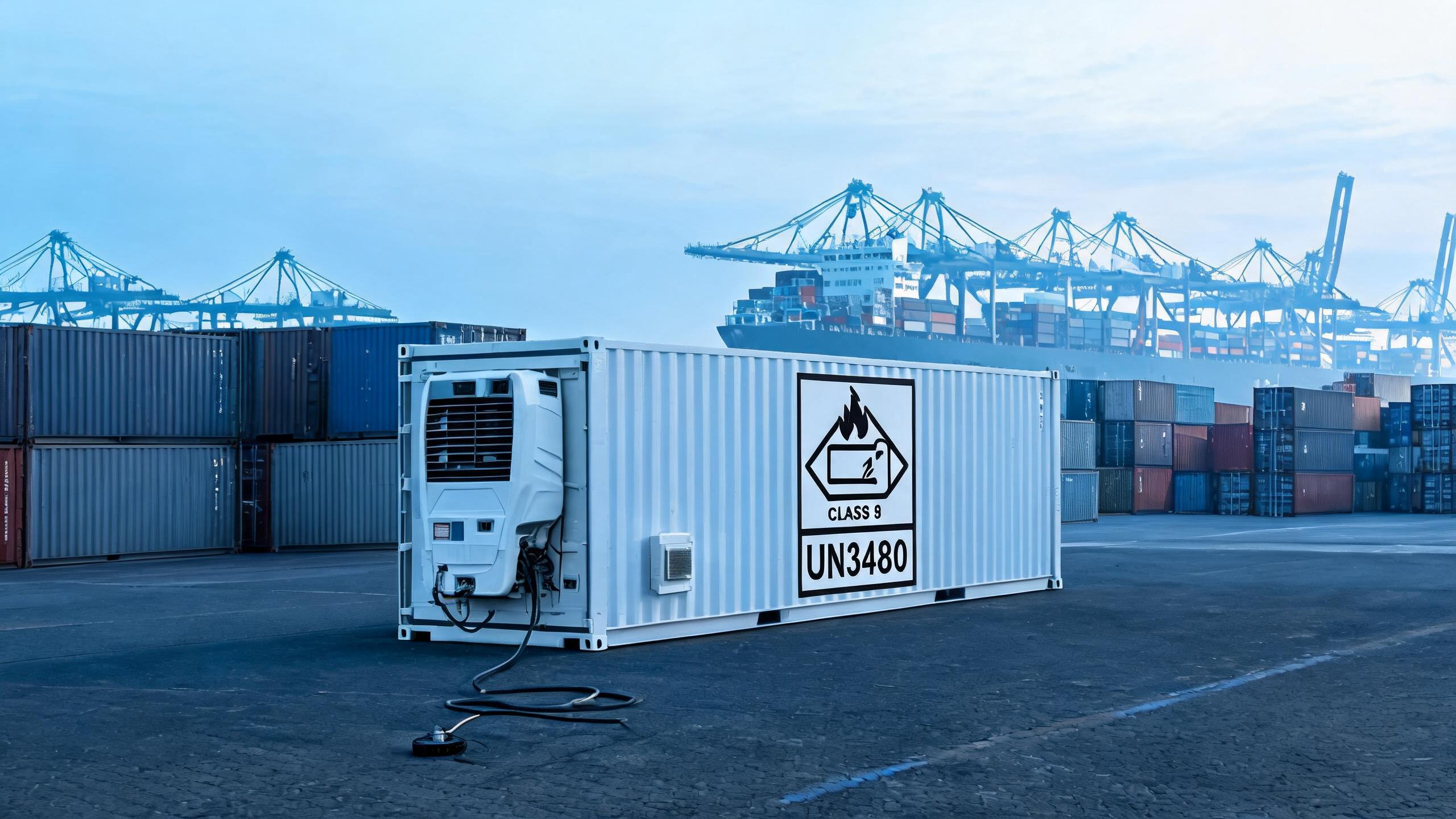
A practical guide for importers shipping dangerous goods (DG) by sea from China. Covers IMO class classification, the dangerous goods declaration process, how to handle a bill of lading for dangerous goods, and specific rules for lithium battery shipments. Includes checklists, documentation requirements, and common mistakes to avoid.
BUYER GUIDE — SEA FREIGHT & COMPLIANCE
Dangerous Goods Sea Freight from China: IMO Class Compliance, Declarations, and Lithium Battery Shipments
Shipping dangerous goods by sea from China is not like shipping regular freight. One incorrect classification, one missing signature on the declaration, or one wrong UN number on the bill of lading can delay your cargo for weeks — or get it stopped at the port. This guide walks through what importers actually need to prepare: IMO class basics, the dangerous goods declaration process, bill of lading requirements, and the specific rules for lithium batteries.
- Every DG shipment needs a correct IMO class, UN number, and packing group — get these wrong and the carrier can refuse the cargo.
- The dangerous goods declaration must be signed by the shipper (or their authorized agent) and must match the information on the bill of lading exactly.
- Lithium batteries have their own UN numbers (UN3480, UN3481) and require a specific state-of-charge limit (30% or less for most shipments).
- Use a freight forwarder with DG experience in China — they handle the China-side approvals, port storage, and carrier coordination.
- Book DG space early. Most carriers limit the number of DG containers per vessel.
What Counts as Dangerous Goods?
Dangerous goods are any substances or articles that pose a risk to health, safety, property, or the environment during transport. This includes obvious items like chemicals, acids, and fuels — but also everyday products many importers don't think about: paints, adhesives, certain cleaning agents, aerosols, and of course, lithium batteries.
The international framework for sea freight is the IMDG Code (International Maritime Dangerous Goods Code), published by the International Maritime Organization (IMO). It classifies dangerous goods into nine classes:
| IMO Class | Description | Common Examples |
|---|---|---|
| Class 1 | Explosives | Fireworks, ammunition, detonators |
| Class 2 | Gases | Aerosols, butane, oxygen cylinders, refrigerants |
| Class 3 | Flammable liquids | Gasoline, paint thinners, alcohol-based solvents |
| Class 4 | Flammable solids | Matches, sulfur, activated carbon |
| Class 5 | Oxidizing substances & organic peroxides | Hydrogen peroxide, fertilizers with ammonium nitrate |
| Class 6 | Toxic & infectious substances | Pesticides, laboratory waste, medical samples |
| Class 7 | Radioactive material | Medical isotopes, industrial gauges |
| Class 8 | Corrosives | Sulfuric acid, sodium hydroxide, battery acid |
| Class 9 | Miscellaneous dangerous goods | Lithium batteries, asbestos, dry ice, magnets |
Each class has sub-risks, packing groups (I, II, III — indicating danger level), and specific packaging requirements. The classification determines everything downstream: packaging, labeling, documentation, container stowage, and whether the cargo is even accepted by a given carrier.
The Dangerous Goods Declaration: What It Is and Who Signs It
The dangerous goods declaration (often called the DGD or Shipper's Declaration) is the core document for any DG shipment. It confirms that the cargo is correctly classified, packaged, marked, and labeled according to the IMDG Code.
What the DGD Must Contain
A compliant DGD includes:
- Shipper and consignee details (full name and address)
- UN number (e.g., UN3480 for lithium-ion batteries)
- Proper shipping name (the exact name from the IMDG Code, not a trade name)
- IMO class and subsidiary risk (if any)
- Packing group (I, II, or III)
- Number and type of packages (e.g., "4 fiberboard boxes")
- Quantity (net weight or volume per package and total)
- Packing instructions reference (e.g., P903 for lithium batteries)
- Emergency contact (24-hour number for spill or incident response)
- Shipper's signature — this is the legal confirmation that all information is accurate
The declaration must be signed by the shipper or their authorized representative. In practice, when shipping from China, your freight forwarder or their DG specialist usually prepares the DGD, but the legal responsibility sits with the shipper (the exporter). Many forwarders require the shipper to sign a draft DGD before they issue the final version.
Common DGD Mistakes We See
- Wrong UN number — e.g., using UN3480 (batteries alone) when the cargo is UN3481 (batteries packed with or contained in equipment).
- Inconsistent information — the DGD says one quantity, the commercial invoice says another. Carriers cross-check documents.
- Missing emergency contact — a 24-hour phone number is mandatory.
- Incorrect packing group — this changes the packaging requirements and can invalidate the whole declaration.
- Signature issues — the DGD must be signed; a typed name alone is not accepted.
Bill of Lading for Dangerous Goods: What Changes
The bill of lading dangerous goods entries follow a specific format. Most carriers require the DG information to appear in a dedicated block or with specific wording. The standard approach:
- The proper shipping name, UN number, class, and packing group must appear on the B/L.
- Many carriers require the phrase "DANGEROUS GOODS" or the class to be clearly stated.
- The B/L must match the DGD exactly — same UN number, same quantities, same package counts.
A mismatch between the B/L and the DGD is one of the most common reasons for cargo being held at origin or destination. If the B/L says "lithium-ion batteries" but the DGD says "lithium-ion batteries packed with equipment" (a different UN number), the carrier will stop the shipment.
What Importers Should Check on Their B/L Draft
Before you approve the B/L draft, verify:
- The UN number matches the DGD.
- The proper shipping name is the exact IMDG name (not a shortened version).
- The IMO class and packing group are stated.
- The total quantity and package count match your records.
- The shipper and consignee details are correct — corrections after issue are expensive and slow.
Lithium Battery Shipments: The Rules That Trip Up Importers
Lithium batteries are the most common DG shipment from China, and the rules have tightened significantly in recent years. Here's what you need to know.
UN Numbers for Lithium Batteries
- UN3480 — Lithium-ion batteries (standalone)
- UN3481 — Lithium-ion batteries packed with equipment or contained in equipment
- UN3090 — Lithium metal batteries (standalone)
- UN3091 — Lithium metal batteries packed with or contained in equipment
The distinction matters. A power bank is UN3480. A laptop with a built-in battery is UN3481. A device with a spare battery in the same box is also UN3481 but with different packing instructions.
State of Charge (SoC) Limits
Since 2019, the IMDG Code requires lithium-ion cells and batteries to be shipped at a state of charge of 30% or less of their rated capacity. This applies to most shipments. There are exceptions for specific cases (e.g., batteries that need a higher charge for testing), but they require additional approvals.
This rule is frequently missed. Many suppliers in China ship batteries at full charge, which is non-compliant. If the carrier inspects and finds the batteries above 30% SoC, the container can be rejected.
What the Shipper Must Provide for Lithium Battery Cargo
- UN38.3 test summary — a document proving the battery type has passed the UN38.3 tests (altitude, thermal, vibration, shock, short circuit, etc.). This is a mandatory document for lithium battery shipments.
- Dangerous goods declaration — as described above.
- MSDS (Material Safety Data Sheet) — or SDS, depending on the carrier's requirement.
- Marking and labeling — the battery mark (a specific label with the UN number) on the packaging.
Lithium Battery Shipment Checklist
| Item | Requirement |
|---|---|
| UN38.3 test summary | Must be available for the specific battery model |
| State of charge | 30% or less for lithium-ion (unless approved otherwise) |
| Packaging | Must meet Packing Instruction P903 (UN3480/UN3481) |
| Labeling | Lithium battery mark + class 9 label on the outer packaging |
| Documentation | DGD, MSDS, commercial invoice, packing list |
| Container stowage | Must be stowed away from heat sources and secured properly |
How the Process Works When Shipping DG from China
If you're an importer buying DG from a Chinese supplier, here's the typical workflow:
-
Confirm the DG status early. Ask your supplier for the MSDS and the UN number before you place the order. Don't assume — many products that seem harmless are actually DG (e.g., certain adhesives, paints, or cleaning products).
-
Get a DG-qualified freight forwarder. Not every forwarder handles dangerous goods. You need one with DG experience in China — they know which carriers accept which classes, how to handle the port-side approvals, and how to prepare the documents correctly.
-
Provide complete product information. Your forwarder needs: the MSDS, the exact product name, the packaging type, the quantity, and ideally a sample or photos. They use this to determine the correct classification.
-
Review the DGD and B/L draft. Check every detail against your records. This is your last chance to catch errors before the cargo is on the water.
-
Book space early. DG containers are limited on most vessels. Some carriers only accept a certain number of DG containers per voyage. Book 2–3 weeks ahead of your ideal sailing date.
-
Prepare for inspection. Chinese customs and port authorities can inspect DG cargo. Make sure the packaging is marked and labeled correctly, and that all documents are in order.
Common Mistakes Importers Make
-
Assuming the supplier knows the rules. Many small factories in China ship DG products as general cargo. If you buy from a supplier who doesn't regularly export DG, you'll need to educate them or use a forwarder who can handle the compliance work.
-
Splitting shipments to avoid DG classification. Some suppliers try to ship DG products without declaring them. This is illegal, dangerous, and can result in fines, cargo seizure, and blacklisting. Don't do it.
-
Using the wrong UN number. This happens more often than you'd think. A product might be a Class 3 flammable liquid, not a Class 9 miscellaneous — the rules and packaging requirements are completely different.
-
Ignoring the state-of-charge rule for batteries. This is the single most common compliance issue we see with lithium battery shipments from China.
-
Not checking the carrier's specific requirements. Each carrier has its own DG policy on top of the IMDG Code. Some refuse certain classes, some have stricter documentation requirements. Your forwarder should know this.
Questions to Ask Your Forwarder Before You Book
- Does your team have experience with my specific IMO class?
- Which carriers accept this class from the port I'm shipping from?
- Can you prepare the dangerous goods declaration on my behalf?
- What is the cut-off time for DG bookings on the vessel I want?
- Are there any additional charges for DG handling (DG fee, port storage, etc.)?
- Can you provide the UN38.3 test summary requirement for my battery shipment?
Final Thoughts
Shipping dangerous goods from China is manageable if you treat compliance as a core part of the process, not an afterthought. The key is to confirm the classification early, work with a forwarder who actually handles DG, and double-check every document before it goes to the carrier. The cost of getting it wrong — delayed cargo, fines, or a rejected shipment — is far higher than the cost of doing it properly.
If you're planning a DG shipment and need a freight forwarder with experience handling dangerous goods from China, contact us with your product details (MSDS, quantity, and destination). We'll confirm the classification and provide a clear quote including all DG-related fees.
FAQ
Q: Can I ship lithium batteries by sea without a dangerous goods declaration? A: No. Lithium batteries are classified as Class 9 dangerous goods under the IMDG Code. A dangerous goods declaration is mandatory, along with the UN38.3 test summary and proper labeling.
Q: Who signs the dangerous goods declaration? A: The shipper (exporter) or their authorized agent. In practice, your freight forwarder can prepare and submit the declaration, but the shipper's legal responsibility remains.
Q: What happens if the bill of lading doesn't match the dangerous goods declaration? A: The carrier can refuse to load the cargo, or the shipment can be held at destination. Mismatched documents are a common cause of delays and additional charges.
Q: Do I need a special freight forwarder for dangerous goods? A: Yes. Not all forwarders handle DG. You need one with DG experience, knowledge of carrier-specific requirements, and the ability to coordinate with Chinese port authorities.
Q: What is the state of charge limit for lithium-ion batteries shipped by sea? A: The IMDG Code requires lithium-ion batteries to be shipped at 30% or less state of charge, unless specific exceptions apply.