
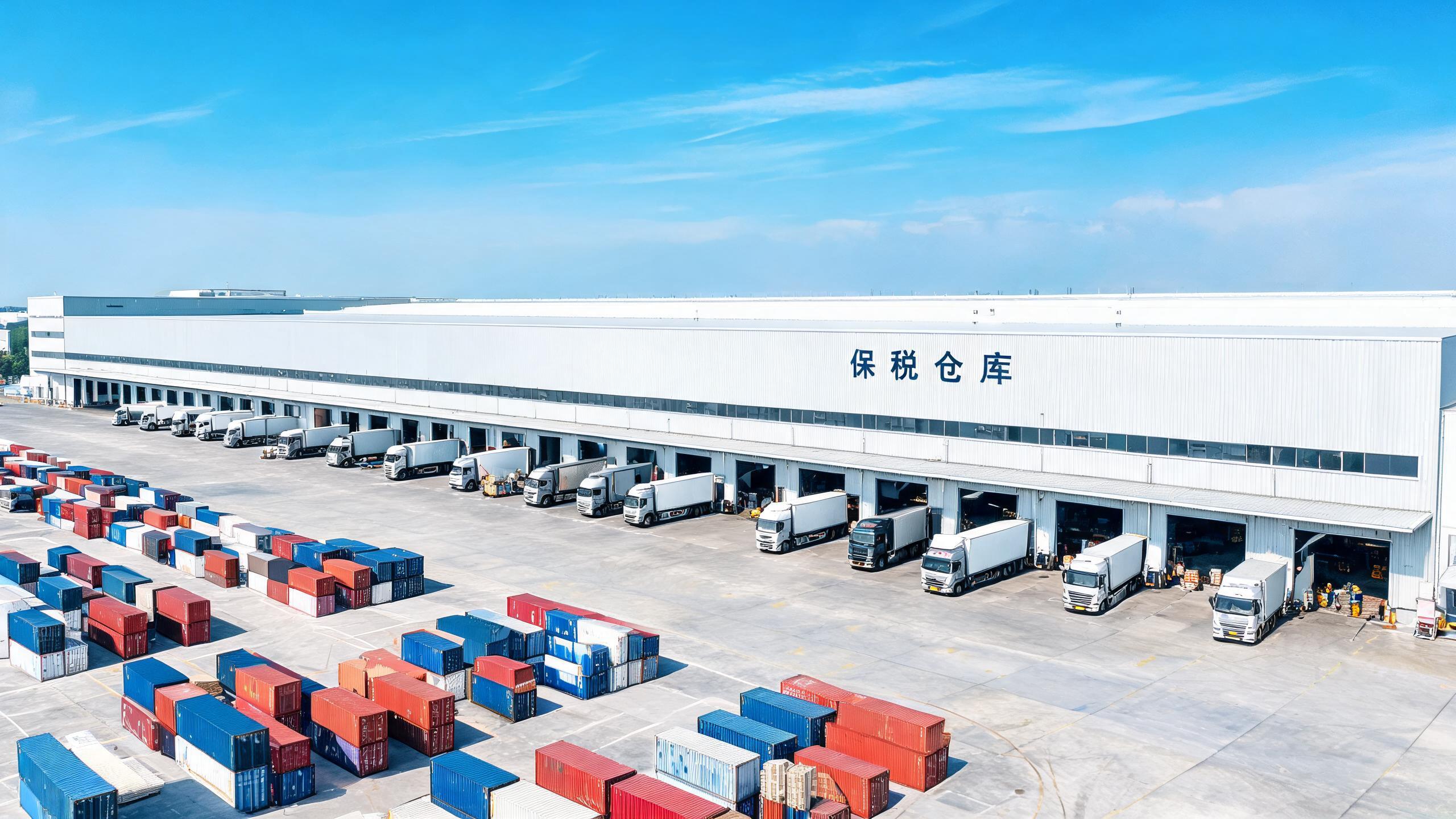
A practical guide for B2B importers on US import tariffs from China—covering how duties are calculated, what has changed in recent trade policy, and how to build tariff costs into your sourcing budget.
IMPORT COST GUIDE
US Import Tariffs on Goods from China: How Duties Are Calculated, What Changed, and How to Budget for Them
If you source from China, tariff policy is no longer a back-office detail. It is a line-item cost that can shift your landed cost by 10–25% overnight. Between Section 301 actions, de minimis changes, and annual rate reviews, the rules have moved several times in the past five years. This guide walks through how US import duties from China are actually calculated, what has changed recently, and how to build a tariff budget that survives policy swings.
- US import tariffs from China are not a single rate—they stack: MFN duty + Section 301 additional duty + any product-specific duties (AD/CVD).
- The de minimis threshold change (T86) now removes the $800 duty-free exemption for most Chinese-origin goods, forcing many small parcels into formal entry.
- Your duty base is the transaction value (price paid for goods), not the retail price—freight and insurance are added before the rate is applied.
- Budgeting for tariffs on imports from China should use a range (base + 25–30% buffer), not a single number.
- HTS classification is the single biggest lever you control—misclassification is the most common cause of unexpected duty bills.
How US Import Duties from China Are Calculated
The calculation looks simple on paper, but the details matter. The basic formula is:
Duty = (Transaction Value + Freight + Insurance) × Applicable Duty Rate
The "transaction value" is the price actually paid or payable for the merchandise, not the suggested retail price. For most B2B shipments, this is your supplier's invoice amount. To that, CBP adds the cost of freight and insurance to arrive at the "CIF value" (Cost, Insurance, Freight). The duty rate is then applied to that CIF value.
The rate itself is where things get complicated. A single product can face three or more stacked rates:
| Rate Component | What It Is | Typical Range |
|---|---|---|
| MFN (Column 1) duty | Base tariff rate for WTO member countries | 0–15% depending on HTS code |
| Section 301 additional duty | Trade-action tariff on Chinese-origin goods | 7.5–100% depending on product category |
| AD/CVD duties | Anti-dumping / countervailing duties on specific products | Varies widely; product-specific |
For example, a mechanical part with a 3% MFN rate and a 25% Section 301 rate faces a combined 28% duty on the CIF value. A product like certain steel fasteners could face MFN + Section 301 + anti-dumping duties, pushing the total above 100%.
What Changed: Key Policy Shifts in Recent Years
Section 301 Lists and the 2024 Rate Review
The Section 301 tariffs, first imposed in 2018, cover roughly $350 billion of Chinese imports across four lists. In May 2024, the USTR announced a statutory review that raised rates on several strategic categories:
| Product Category | Previous Rate | New Rate (2024–2026) |
|---|---|---|
| Electric vehicles (EVs) | 25% | 100% |
| Semiconductors | 25% | 50% |
| Lithium-ion batteries (EV) | 7.5% | 25% |
| Steel and aluminum products | 0–7.5% | 25% |
| Medical gloves, syringes | 7.5% | 25–50% |
These increases are being phased in over 2024–2026, so the rate you pay today may not be the rate you pay next year.
The De Minimis (T86) Change
For years, shipments valued under $800 entered the US duty-free under the de minimis provision. In 2025, that exemption was eliminated for most goods originating from China. The practical effect: small parcels that previously skipped formal entry now require a customs bond, an entry filing, and payment of applicable duties. If you ship small packages directly to US customers, this change adds both cost and administrative burden per shipment.
Exclusion Processes
The USTR has periodically granted product exclusions from Section 301 tariffs. These exclusions are time-limited and product-specific. If your product was previously excluded, the exclusion may have expired. Checking the current exclusion list is a standard step in any tariff review.
How to Find Your Product's Duty Rate
You cannot budget for import duties from China to US without knowing your HTS code. The process:
- Classify your product using the Harmonized Tariff Schedule (HTS). The first 6 digits are international; the last 4 are US-specific.
- Check the MFN rate for that HTS code on the USITC HTS database.
- Check the Section 301 list to see if your HTS code is covered and at what rate.
- Check AD/CVD orders on the CBP or ITA website if your product category is prone to trade remedies.
- Verify current exclusions before assuming the full rate applies.
This is not a one-time exercise. Rates change, exclusions expire, and new reviews are announced. A quarterly tariff check is a reasonable cadence for any company with steady China sourcing.
How to Budget for Tariffs on Imports from China
Budgeting is about range, not precision. Tariff rates can change between your quote date and your shipment date. A practical approach:
1. Build a Base-Case and Stress-Case Cost
For each SKU, calculate your landed cost under two scenarios:
- Base case: Current applicable rate (MFN + Section 301 + any product duties).
- Stress case: Current rate + 25 percentage points, simulating a rate increase or the loss of an exclusion.
If your margin survives the stress case, you have a durable sourcing model. If not, you need a mitigation plan before you commit to a long-term purchase order.
2. Use the Right Valuation Base
Remember that duty is calculated on CIF value, not FOB value. If your supplier quotes FOB Shanghai, you must add freight and insurance before applying the duty rate. A 25% tariff on a $10,000 FOB shipment becomes 25% on $10,700–$11,000 after freight and insurance. That difference matters when you are pricing a container.
3. Plan for the De Minimis Impact
If you sell D2C or ship small orders, factor in the new per-shipment cost. The elimination of the $800 exemption means:
- A customs bond (annual or per-entry)
- Entry filing fees
- Duty on each parcel, even small ones
For high-volume, low-value shipments, this can add $2–5 per parcel in administrative cost alone, before any duty.
4. Negotiate Incoterms with Tariffs in Mind
Your Incoterm choice shifts who bears the tariff cost. Under DDP (Delivered Duty Paid), the supplier is responsible for duties—but they will price that risk into your quote. Under FOB or EXW, you own the duty cost and the classification risk. For products with volatile tariff rates, many importers prefer FOB and manage the customs process themselves, so they can react quickly to rate changes.
5. Consider Tariff Engineering (Carefully)
"Tariff engineering" means modifying a product's design or composition so it qualifies for a different HTS classification with a lower rate. This is legal when the modification is genuine and the new classification is accurate. It is illegal when done solely to evade duties. If you are considering this, work with a licensed customs broker or trade attorney. Do not rely on a supplier's suggestion that "we can change the code."
What Has Not Changed: The Core Rules
Some things remain stable even as rates move:
- The transaction value method is still the default valuation method.
- The country of origin determines whether Section 301 applies. Substantial transformation in a third country can change origin, but the rules are strict and fact-specific.
- Recordkeeping requirements remain in place. You must retain import records for five years.
Practical Steps for Your Next Shipment
- Get a current HTS ruling from your customs broker for each SKU you import regularly.
- Ask your broker for a duty estimate before you place the order, not after.
- Check the Section 301 exclusion list quarterly.
- Review your Incoterms with your supplier—make sure you know who bears the tariff risk if rates change mid-contract.
- Build a tariff buffer into your pricing—a 25–30% contingency above the current rate is a reasonable starting point for Chinese-origin goods.
FAQ
What is the difference between "tariffs on imports from China" and "import duties from China to US"? They are the same thing in practice. "Tariff" is the general term for a tax on imports; "duty" is the specific amount calculated. In US customs law, the two are used interchangeably.
How do I know if my product is on the Section 301 list? Check the USTR's Section 301 tariff list using your product's 8-digit HTS code. Your customs broker can confirm this quickly. If you do not have a broker, the USTR and USITC websites both have searchable databases.
Can I pass tariff costs to my customers? You can, but it changes your pricing structure. Most B2B buyers now expect suppliers to quote with current tariff rates included or as a separate line item. Transparent pricing—showing the base price and the tariff separately—tends to build more trust than hiding the cost in a higher unit price.
Do tariffs apply to samples? Yes, unless the sample qualifies for a specific exemption. The de minimis change removed the $800 exemption for Chinese-origin goods, so even small samples may now incur duties and entry fees. Confirm with your broker before shipping samples to US addresses.
Will tariffs go away? There is no indication of a blanket removal. The 2024 review increased rates on several categories, and the statutory review process will continue. The realistic planning assumption is that Section 301 tariffs remain in place for the foreseeable future, with periodic adjustments.
Final Thought
Tariffs on imports from China are a cost you can plan for, not a surprise you have to absorb. The key is knowing your HTS code, checking the rate regularly, and building a buffer into your pricing model. Work with a licensed customs broker who handles Chinese-origin goods—they will see rate changes and exclusion opportunities before you do. A 30-minute tariff review per quarter can save you thousands per container.
If you need help verifying the current duty rate for a specific product or understanding how a tariff change affects your landed cost, contact us with your HTS code or product description—we can walk you through the calculation.