
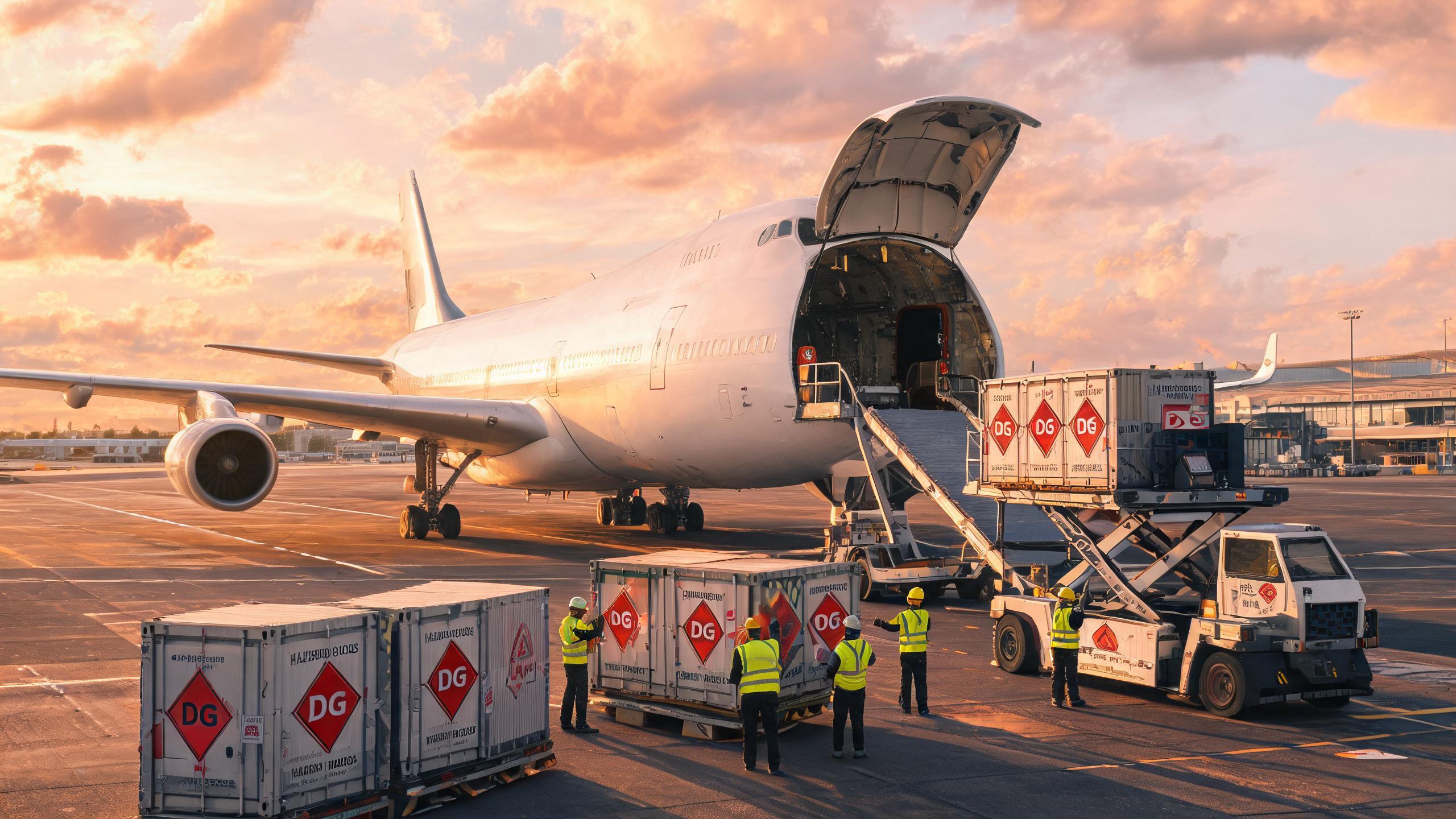
A practical buyer’s guide to air freight from China to Canada. We cover express air cargo from Shanghai and Guangzhou hubs, chartered and consolidated options, transit times, chargeable weight basics, and dangerous goods handling via dedicated DG charter flights under IATA DGR—using Meicheng’s real service facts only.
BUYER GUIDE — AIR FREIGHT CHINA TO CANADA
Air Freight from China to Canada: Express Air Cargo from Shanghai & Guangzhou, DG Charter Flights, and When Air Beats Ocean
If you are sourcing from China and shipping to Canada, you already know the two ends of the spectrum. Ocean freight is cheap but slow—typically 25 to 40 days door-to-door from Shanghai or Shenzhen to Vancouver or Toronto. Air freight is fast but costs more per kilogram. The real question is not “which is better.” It is: for this shipment, which option gets the goods to market at the lowest total cost?
This guide answers that question with concrete facts. We cover express air cargo from China’s two busiest export hubs—Shanghai (PVG) and Guangzhou (CAN)—plus chartered and consolidated air cargo, transit times, chargeable weight calculations, and the special case of dangerous goods handled via dedicated DG charter flights under IATA DGR. All service details reference Meicheng’s actual air freight offerings.
- Express air cargo from Shanghai or Guangzhou to Canada runs in days, not weeks—suitable for urgent replenishment, high-value goods, and samples.
- Chartered air cargo gives you dedicated capacity and schedule control; consolidated air cargo shares space to lower cost per kilo for smaller shipments.
- Chargeable weight is the greater of gross weight vs. volumetric weight—knowing this prevents surprise invoices.
- Dangerous goods (DG) require dedicated charter flights and strict IATA DGR compliance; not all forwarders can handle them.
1. Express Air Cargo from Shanghai and Guangzhou Hubs
Shanghai Pudong (PVG) and Guangzhou Baiyun (CAN) are China’s two largest air cargo gateways. Together they handle a significant share of China’s export air freight, with dense flight networks to North America.
Meicheng operates an Air Freight China to North America Express service from both hubs. This is a premium product designed for shipments where transit time is the critical factor.
What “Express” Means in Practice
Express air freight is not standard air freight. It means:
- Priority handling at origin, during transit, and at destination.
- Direct or near-direct routing to minimize transshipment delays.
- Fast customs clearance support at both ends.
- Short transit times—typically a few days from pick-up in Shanghai or Guangzhou to delivery in Canada.
For a buyer, the practical difference is predictability. A standard air shipment might sit at a transshipment hub for 24–48 hours. An express shipment is booked on the earliest available flight and tracked more tightly.
| Service | Origin Hubs | Destination | Typical Transit |
|---|---|---|---|
| Air Freight China to North America Express | Shanghai (PVG), Guangzhou (CAN) | Canada (major airports) | A few days |
| Chartered Air Cargo (incl. DG) | Shanghai (PVG), Guangzhou (CAN) | Canada / North America | Schedule-based, dedicated |
| Consolidated Air Cargo | Shanghai (PVG), Guangzhou (CAN) | Canada (major airports) | Standard air transit + consolidation time |
2. Chartered vs. Consolidated Air Cargo
When you book air freight from China to Canada, you have two basic loading options. Each solves a different problem.
Chartered Air Cargo (Dedicated)
A charter means the entire aircraft (or a large block of its capacity) is dedicated to your shipment. This is not for small parcels—it is for cargo that needs the whole plane, or where schedule certainty outweighs cost.
When to consider a charter:
- Full-plane or large-volume shipments where commercial flight capacity is insufficient.
- Oversized or heavy cargo that cannot fit in standard ULDs (unit load devices).
- Time-critical production stoppages where waiting for the next available commercial flight is unacceptable.
- Dangerous goods that commercial passenger airlines refuse to carry (see Section 5).
Meicheng offers Chartered Air Cargo for Dangerous Goods, a dedicated service that goes beyond standard freight forwarding. This is a specialized capability—most forwarders will not touch DG charters because of the regulatory complexity.
Consolidated Air Cargo (Shared)
Consolidation means your cargo shares space with other shippers’ goods in the same ULD or aircraft hold. The forwarder buys bulk space and resells it in smaller increments.
When to consider consolidation:
- Shipments below a full ULD (typically under 1,000–2,000 kg, depending on the route).
- Non-urgent air freight where a day or two of consolidation time is acceptable.
- Cost-sensitive shipments that still need air speed but not express priority.
The trade-off is simple: consolidation costs less per kilo than a dedicated charter, but you share the schedule and the risk of delays caused by other cargo.
3. When Air Beats Ocean: Three Clear Cases
Ocean freight from China to Canada is inexpensive—often 10–20% of the air freight cost per kilo. But cost per kilo is not the same as total cost. Here are the three situations where air freight from China to Canada is the right call, despite the higher rate.
Case 1: Urgent Replenishment (Stock-Outs)
A retailer in Toronto sells out of a product. The next ocean shipment is 3 weeks away. The cost of lost sales—and lost customer trust—far exceeds the air freight premium.
The math: If a product sells for $50 with a 40% margin, a stock-out of 1,000 units costs $20,000 in lost margin. Air freight for 500 kg at $8/kg costs $4,000. The air shipment pays for itself if it prevents even a fraction of the stock-out loss.
Case 2: High-Value Goods
For goods with high value per kilogram—electronics, precision instruments, medical devices, automotive components—air freight is often the default. The freight cost is a small percentage of the product value, and the reduced transit time means:
- Lower inventory carrying costs (less capital tied up in transit).
- Faster cash conversion (goods arrive, sell, and generate revenue sooner).
- Reduced risk of damage or obsolescence during long ocean transits.
Case 3: Samples and Pre-Production Runs
Samples sent by ocean take weeks to arrive. By then, the buyer may have lost interest, or the production decision is already delayed. Air freight for samples—even express air cargo—is almost always worth the cost because it compresses the entire sourcing cycle.
The rule of thumb: if the goods are worth more than roughly 10–15 times the air freight cost per kilo, air is usually the economically rational choice.
4. Chargeable Weight Basics: How Air Freight Is Priced
Air freight is priced per kilogram, but not by gross weight alone. Airlines use chargeable weight, which is the greater of:
- Gross weight — the actual physical weight of the cargo.
- Volumetric weight — the space the cargo occupies in the aircraft.
The Volumetric Weight Formula
For international air freight, the standard divisor is 6,000 cubic centimeters per kilogram (some carriers use 5,000 for certain routes).
Volumetric weight (kg) = (Length × Width × Height in cm) ÷ 6,000
Example: A carton measuring 60 cm × 40 cm × 50 cm and weighing 15 kg.
- Volumetric weight = (60 × 40 × 50) ÷ 6,000 = 120,000 ÷ 6,000 = 20 kg
- Chargeable weight = max(15 kg, 20 kg) = 20 kg
The shipment is billed at 20 kg, not 15 kg, because it takes up more space than its physical weight justifies.
Why This Matters for Buyers
- Packaging design affects freight cost. Reducing packaging volume by 10% can reduce chargeable weight by 10%, directly cutting your air freight bill.
- Always ask your forwarder for the chargeable weight breakdown. A reputable forwarder will show you both gross and volumetric weights.
- For dense, heavy cargo, gross weight usually applies. For light, bulky cargo (e.g., foam products, textiles), volumetric weight usually applies.
5. Dangerous Goods: Dedicated DG Charter Flights Under IATA DGR
Dangerous goods are the most complex category in air freight. They include lithium batteries, chemicals, aerosols, flammable liquids, and many industrial materials. Commercial passenger airlines have strict limits on what they will carry—and many DG items are prohibited entirely on passenger aircraft.
The Regulatory Framework: IATA DGR
The IATA Dangerous Goods Regulations (DGR) is the global standard for transporting hazardous materials by air. It defines:
- Classification of dangerous goods into 9 classes (e.g., Class 3 flammable liquids, Class 8 corrosives, Class 9 miscellaneous including lithium batteries).
- Packaging requirements — UN-specification packaging, labeling, and marking.
- Documentation — Shipper’s Declaration for Dangerous Goods, air waybill endorsements.
- Training requirements — all personnel involved must be trained and certified.
Why Dedicated DG Charter Flights?
For many dangerous goods, especially in large quantities or with certain classifications, cargo-only charter flights are the only viable option. Passenger aircraft have stricter limits; cargo aircraft can carry a wider range of DG under IATA DGR.
Meicheng’s Chartered Air Cargo for Dangerous Goods service is built for exactly this scenario. It provides:
- Dedicated aircraft configured for DG transport.
- Compliance with IATA DGR for classification, packaging, labeling, and documentation.
- Specialist handling from origin warehouse to destination.
- Route flexibility — charters can fly direct from Shanghai or Guangzhou to the destination airport that best serves your Canadian distribution network.
What Buyers Must Prepare for DG Shipments
If your cargo is classified as dangerous goods, expect these requirements:
| Requirement | Details |
|---|---|
| MSDS / SDS | Material Safety Data Sheet or Safety Data Sheet for each product |
| DG Classification | UN number, proper shipping name, hazard class, packing group |
| UN Packaging | Certified packaging with UN markings, tested per IATA DGR |
| Shipper’s Declaration | Signed and dated, completed by a trained DG shipper |
| Training Certificates | Evidence that the shipper’s personnel are IATA DGR trained |
| Air Waybill Endorsement | Additional declarations on the AWB for DG carriage |
If you are unsure whether your product is classified as DG, ask your forwarder. Misdeclaring dangerous goods is a serious regulatory violation with significant penalties.
6. Choosing the Right Air Freight Option: A Decision Framework
To summarize, here is a practical framework for deciding between express, charter, and consolidation for your air cargo from China to Canada:
| Shipment Profile | Recommended Service | Rationale |
|---|---|---|
| Urgent, time-critical, < 500 kg | Express air cargo (PVG/CAN) | Fastest transit, priority handling |
| High-value goods, any weight | Express or charter | Speed protects value and reduces capital tied up |
| Samples, documents, small parcels | Express air cargo | Days not weeks; compresses sourcing cycle |
| Large volume, non-urgent | Consolidated air cargo | Lower cost per kilo, shared space |
| Full-plane volume, schedule-critical | Chartered air cargo | Dedicated capacity, no sharing |
| Dangerous goods (any volume) | DG charter flight | Only viable option for many DG classes |
7. Practical Tips for Buying Air Freight from China to Canada
-
Get the chargeable weight calculated upfront. Ask your forwarder for both gross and volumetric weights before booking. This avoids invoice surprises.
-
Compare express vs. standard air, not just air vs. ocean. The difference between express and standard air is often only 1–2 days, but the price gap can be significant. Match the service level to the actual urgency.
-
For DG, verify the forwarder’s capability early. Not all forwarders can handle dangerous goods charters. If your product is DG, confirm this before you commit to a shipment timeline.
-
Prepare DG documentation in advance. The Shipper’s Declaration and MSDS/SDS cannot be rushed. Start the paperwork as soon as you know the product classification.
-
Ask about destination airport options. Toronto (YYZ), Vancouver (YVR), and Montreal (YUL) are the main gateways. Depending on your final delivery address, one may be more cost-effective than another.
FAQ: Air Freight from China to Canada
Q: How long does air freight from China to Canada take? A: Express air cargo from Shanghai or Guangzhou typically takes a few days. Standard air freight is longer, and consolidated shipments add 1–2 days for consolidation at origin.
Q: What is the difference between express air cargo and standard air freight? A: Express air cargo uses priority handling and direct or near-direct routing to minimize transit time. Standard air freight may involve transshipment and longer waiting times.
Q: Can dangerous goods be shipped by air from China to Canada? A: Yes, but only under strict conditions. Dangerous goods must comply with IATA DGR, and many DG items require dedicated cargo charter flights because passenger aircraft restrictions are too tight.
Q: How is air freight cost calculated? A: Air freight is billed on chargeable weight, which is the greater of gross weight and volumetric weight (length × width × height in cm ÷ 6,000).
Q: When should I choose air freight over ocean freight? A: Choose air freight when the total cost of delay (lost sales, inventory carrying costs, or production stoppage) exceeds the air freight premium. This is typically the case for urgent replenishment, high-value goods, and samples.
Next Steps
Air freight from China to Canada is not a single product—it is a range of options from express parcel to full charter, each with its own cost and speed profile. The right choice depends on your cargo’s value, urgency, volume, and classification.
For express air cargo from Shanghai or Guangzhou, chartered air cargo (including dangerous goods), or consolidated shipments, Meicheng provides real, operational services. To get a specific quote, you will need to provide: origin city, destination airport in Canada, cargo description, total weight, dimensions (for volumetric weight), and—if applicable—the DG classification and UN number.
Contact Meicheng with your shipment details to receive a tailored air freight solution for your China-to-Canada cargo.