
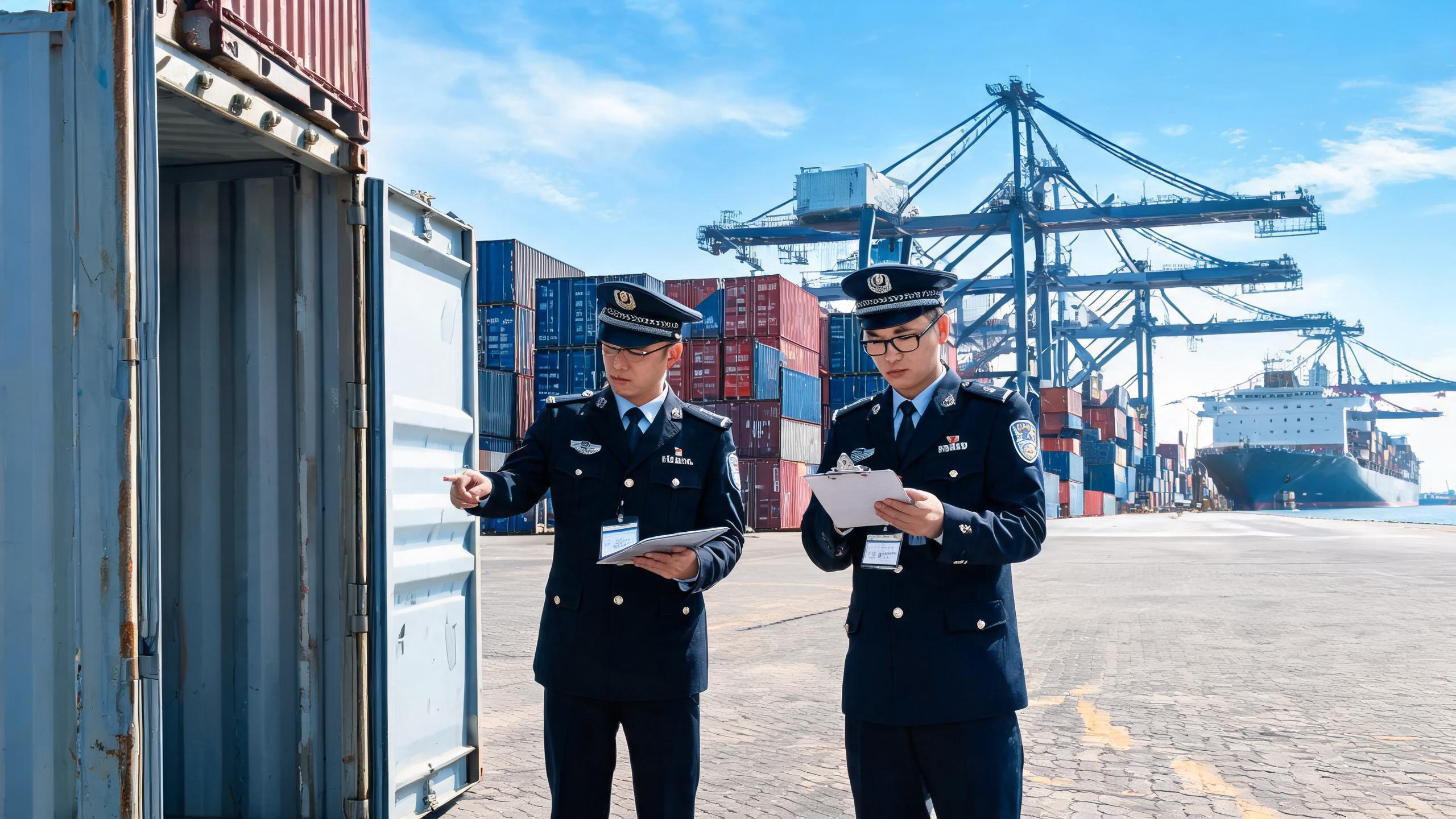
A practical, step-by-step guide for international buyers and exporters on the China export customs clearance procedure. Covers customs declaration, inspection, documentation, and common pitfalls — written for B2B trade professionals.
EXPORT GUIDE
China Export Customs Clearance: Step-by-Step Guide to Declaration, Inspection, and Documentation
Every international buyer who sources from China eventually faces the same question: What exactly happens at customs, and how do I make sure my shipment clears without delay?
The China export customs clearance procedure is a regulated process managed by the General Administration of Customs of China (GACC). For a B2B buyer, understanding the steps — from declaration to inspection to release — helps you set realistic lead times, avoid unexpected fees, and choose the right supplier or forwarder.
This guide walks through the entire process, the required documents, and the most common mistakes that cause delays.
- A standard customs clearance China export takes 1–3 working days for low-risk goods.
- The exporter (or their customs broker) submits a China customs declaration electronically — usually 24 hours before loading.
- Three clearance channels exist: green (no inspection), yellow (document review), red (physical inspection).
- Missing or mismatched HS codes are the #1 cause of delays.
- Buyers should request a copy of the customs declaration form and the clearance stamp from their supplier.
What Is the China Export Customs Clearance Procedure?
Export customs clearance is the legal process by which goods leaving China are declared to customs, inspected (if required), and released for shipment. The procedure applies to all commercial exports — whether by sea, air, rail, or truck.
The process is standardized across all Chinese ports. However, the speed and complexity depend on the product category, declared value, and the exporter's compliance history.
The three core steps are:
- Declaration — Electronic submission of shipment details and documents.
- Inspection — Customs reviews the declaration and may inspect the cargo.
- Release — Goods are cleared and allowed to load.
Step 1: China Customs Declaration
The first step in any customs clearance China export is the electronic declaration. The exporter (or a licensed customs broker) submits the declaration through the China International Trade Single Window system.
What is declared?
The declaration includes:
- Exporter and consignee information
- HS code (Harmonized System tariff classification)
- Product description, quantity, and unit price
- Total declared value and currency
- Port of loading and destination port
- Shipping marks and container numbers
- Contract or invoice number
- License or permit numbers (if applicable)
When is it submitted?
For sea freight, the declaration is typically submitted 24 to 72 hours before cargo arrives at the port. For air freight, it is usually submitted 4 to 8 hours before departure.
Who submits it?
The exporter can submit directly, but most use a licensed customs broker. The broker holds a registration number with GACC and is responsible for the accuracy of the declaration.
Key documents required for declaration
| Document | Purpose | Who provides |
|---|---|---|
| Commercial invoice | Declares value, quantity, unit price | Exporter |
| Packing list | Shows weight, dimensions, carton count | Exporter |
| Bill of lading / air waybill | Evidence of transport contract | Carrier / forwarder |
| Customs declaration form | Formal declaration to GACC | Exporter / broker |
| Sales contract | Proof of transaction | Exporter & buyer |
| License / permit (if required) | For regulated goods (e.g., chemicals, electronics) | Exporter |
| Certificate of origin (if required) | For tariff preference or compliance | Exporter / chamber of commerce |
Step 2: Customs Inspection
Once the declaration is submitted, the system assigns a clearance channel. There are three possible outcomes:
Green Channel (Low Risk)
The declaration is accepted without any document review or physical inspection. The goods are cleared automatically. This is the fastest route — typically 1–2 hours after submission.
Yellow Channel (Document Review)
Customs requests additional documents or clarification. This could be a request for a more detailed product description, a certificate of origin, or a license. The review is done electronically and usually takes 1–2 working days.
Red Channel (Physical Inspection)
Customs orders a physical inspection of the cargo. An inspector opens the container or cartons, checks the goods against the declaration, and may take samples for testing. Physical inspection takes 2–5 working days depending on the port and product type.
What triggers a red channel inspection?
- HS code mismatch between declaration and actual goods
- Declared value significantly below market average
- New exporter with no history
- Product subject to export restrictions (e.g., dual-use goods, hazardous chemicals)
- Random sampling (a small percentage of all shipments)
> Note: A physical inspection does not mean the goods are illegal. It is a routine check. However, it does add time and cost — the buyer should factor this into their lead time planning.
Step 3: Release and Loading
After the declaration is accepted (green channel) or the inspection is completed (yellow or red channel), customs issues a release order. The cargo can then be loaded onto the vessel, aircraft, or truck.
The release is recorded in the customs system. The exporter receives a clearance stamp on the customs declaration form, which serves as proof that the goods have legally exited China.
What happens after release?
- The carrier issues the bill of lading or air waybill.
- The exporter sends the shipping documents to the buyer (or the buyer's bank for L/C transactions).
- The goods are on their way.
Common Documentation Errors That Delay Clearance
Over years of handling exports, we see the same mistakes repeatedly. Here are the most frequent ones:
1. Wrong HS Code
The HS code determines duty rates, inspection requirements, and export controls. A wrong code can lead to misclassification, fines, or a red channel inspection. Always verify the HS code with your supplier or a customs broker.
2. Mismatched Product Description
The description on the invoice must match the description on the customs declaration. "Spare parts" is too vague. Use "steel flanges, DN100, PN16, ASTM A105" — specific enough for the inspector to verify.
3. Inconsistent Units
If the packing list shows kilograms but the customs declaration shows pounds, the system flags it. Use the same unit of measure throughout all documents.
4. Missing Licenses
Certain products require export licenses — chemicals, batteries, electronics with encryption, food products, medical devices. If the license is missing, the shipment is held until it is provided. Check with your supplier whether your product needs one.
5. Low Declared Value
Declaring a value significantly below the market price to reduce duties is illegal. Customs has access to reference prices. If the declared value is too low, they will hold the shipment and request a justification.
How Long Does Customs Clearance in China Take?
The total time depends on the channel assigned and the port.
| Channel | Typical time | Frequency |
|---|---|---|
| Green (no inspection) | 1–2 hours | ~60% of shipments |
| Yellow (document review) | 1–2 working days | ~25% of shipments |
| Red (physical inspection) | 2–5 working days | ~15% of shipments |
These are estimates. During peak seasons (September–November, before Chinese New Year), clearance times can double.
What a Buyer Should Ask the Supplier
To avoid surprises, ask your supplier these questions before placing an order:
- What is the HS code for this product? — Verify it yourself or ask a broker.
- Does this product require an export license? — If yes, ask for a copy of the license.
- What is the typical clearance channel for this product? — Some products are always red channel.
- Can you provide a copy of the customs declaration and clearance stamp? — This is proof of legal export.
- Who is your customs broker? — A licensed broker with a good track record reduces risk.
Final Thoughts
The China export customs clearance procedure is not complicated, but it is detail-sensitive. For a buyer, the key is to work with a supplier who understands the process, uses correct HS codes, and provides complete documentation.
If you are sourcing from China and want to ensure smooth customs clearance, ask your supplier to walk you through their declaration process. A transparent supplier will share the details. A supplier who avoids the question may not be handling customs properly.
For more information on specific product categories or port requirements, contact your supplier or a licensed customs broker. Every shipment is different, but the fundamentals remain the same.
This guide is based on standard GACC procedures as of 2025. Regulations may change. Always verify with your customs broker or local authorities for the most current requirements.