
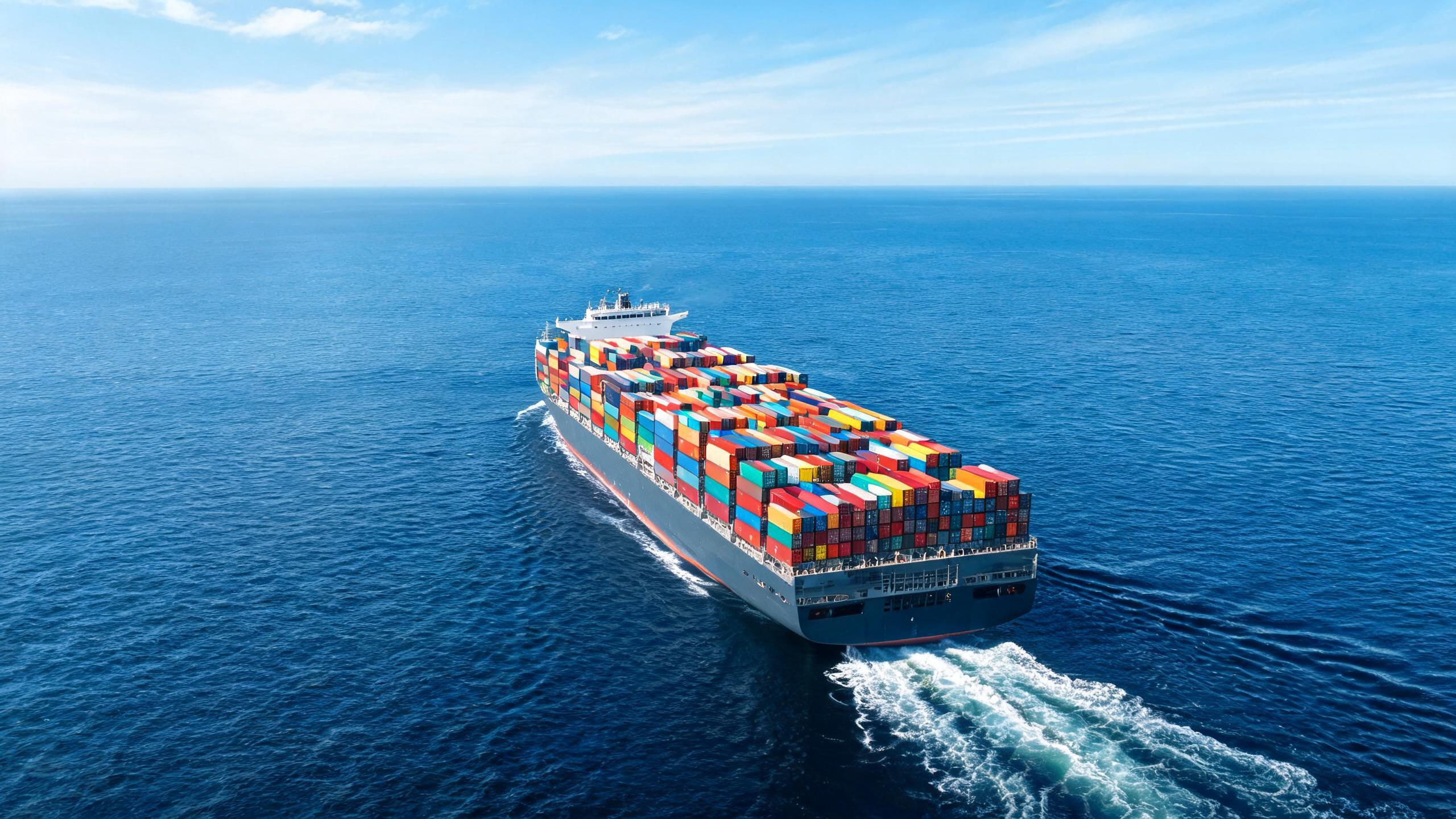
A comprehensive guide to understanding shipping from China to the USA price, ocean freight rates, and cost factors. Learn how to calculate freight costs, compare shipping methods, and avoid hidden fees for your B2B imports.
IMPORT LOGISTICS GUIDE
Shipping from China to the USA: Pricing, Rates, and Cost Factors Explained
Every importer who sources from China faces the same question: What will the freight cost actually be? The shipping from China to USA price can vary widely depending on cargo volume, transport mode, port pair, and current market conditions. This guide breaks down the real numbers, the factors that move them, and how to estimate your total landed cost.
- Ocean freight remains the most cost-effective option for most B2B shipments, at roughly $1,500–$4,500 per 40ft container (depending on route and season).
- Air freight costs 10–15x more per kg than sea, but cuts transit time from 30+ days to 5–10 days.
- Shipping rates from China to USA are driven by container availability, fuel surcharges, port congestion, and your Incoterms choice.
- Hidden costs—customs clearance, tariffs, warehousing, and inland trucking—can add 20–40% to the base freight cost.
- Always request a full quotation from your freight forwarder with all surcharges itemized, not just the ocean freight base rate.
1. The Three Main Shipping Modes and Their Typical Costs
The first decision is which transport mode fits your cargo. Each has a different cost structure and transit time.
Ocean Freight (Full Container Load – FCL)
For shipments that fill a 20ft or 40ft container, FCL is the standard. The ocean freight China to USA price depends on the port of loading (POL) and port of discharge (POD).
Typical FCL rates (2024–2025 estimates, per container):
| Route | 20ft Container | 40ft Container | Transit Time |
|---|---|---|---|
| Shanghai to Los Angeles | $1,800–$2,800 | $2,500–$4,000 | 12–16 days |
| Ningbo to Long Beach | $1,700–$2,700 | $2,400–$3,800 | 13–17 days |
| Shenzhen to New York | $2,500–$3,800 | $3,500–$5,500 | 25–30 days |
| Qingdao to Savannah | $2,200–$3,400 | $3,000–$4,800 | 22–28 days |
Note: Rates fluctuate weekly. These are indicative ranges for standard dry containers. Peak season (August–October) can add 20–40%.
Ocean Freight (Less than Container Load – LCL)
If your cargo occupies less than 15 cubic meters (CBM), LCL is often cheaper than FCL. You pay per CBM or per metric ton (whichever is greater).
Typical LCL rates:
- $40–$80 per CBM from major Chinese ports (Shanghai, Ningbo, Shenzhen) to West Coast USA.
- $60–$120 per CBM to East Coast or Gulf ports.
- Minimum charge: Usually 1 CBM or 1 ton, even if your cargo is smaller.
Example: A 5 CBM shipment from Shanghai to Los Angeles would cost roughly $200–$400 in ocean freight, plus consolidation fees, customs clearance, and delivery charges.
Air Freight
Air freight is for urgent, high-value, or low-volume goods. The shipping rates from China to USA by air are calculated per kilogram (kg) of chargeable weight.
Typical air freight rates (2024–2025):
- $3.50–$6.00 per kg from China to West Coast airports (LAX, SFO).
- $4.50–$7.50 per kg to East Coast airports (JFK, ORD, ATL).
- Minimum charge: Usually 45 kg or 100 kg, depending on the carrier.
Example: A 200 kg shipment from Shanghai to Los Angeles by air would cost $700–$1,200, compared to roughly $200–$400 by LCL sea—but transit time is 5–7 days vs. 20–30 days.
Express / Courier Services
For small parcels (under 50 kg), express services like DHL, FedEx, and UPS are common. Rates are higher but include door-to-door delivery and customs clearance.
Typical express rates:
- $6–$12 per kg for documents and small packages.
- $4–$8 per kg for larger shipments (50–200 kg).
- Transit time: 3–7 days.
2. What Drives the Freight Cost China to USA?
The base ocean freight or air freight rate is only part of the story. Here are the key cost factors that affect the final freight cost China to USA.
2.1 Container Availability and Market Demand
Container shipping is a supply-and-demand market. When demand spikes (e.g., pre-holiday season, post-pandemic restocking), rates can double. When demand drops, carriers offer discounts.
- Peak season surcharges (PSS): Common from August to October.
- General rate increases (GRI): Carriers announce GRI every few weeks, often $200–$1,000 per container.
- Equipment imbalance: If containers are scarce at the origin port (e.g., during Chinese New Year), rates rise.
2.2 Fuel Surcharges
Ocean carriers and airlines apply a bunker adjustment factor (BAF) or fuel surcharge. This is a percentage of the base freight rate, updated monthly based on global fuel prices. In 2024, BAF for ocean freight was typically 10–20% of the base rate.
2.3 Port Congestion and Demurrage
Congestion at US ports (especially Los Angeles/Long Beach, New York/New Jersey) can cause delays. Carriers charge demurrage (for container use beyond free time) and detention (for chassis use). These fees can be $100–$300 per day per container.
2.4 Incoterms and Who Pays What
Your Incoterms (e.g., FOB, CIF, DAP) define who bears the cost and risk at each stage. Common scenarios:
- FOB (Free on Board): Seller pays for inland transport to the port and loading. Buyer pays ocean freight, insurance, customs clearance, and inland delivery in the US.
- CIF (Cost, Insurance, Freight): Seller pays for ocean freight and insurance to the destination port. Buyer pays customs clearance, duties, and inland delivery.
- DAP (Delivered at Place): Seller pays for all transport and risk up to the buyer's named location, but buyer pays customs duties and taxes.
Tip: For B2B buyers, FOB China is the most common and gives you control over the freight cost. You can negotiate the ocean freight rate directly with your forwarder.
2.5 Cargo Weight and Volume
For ocean freight, the chargeable weight is the greater of actual weight (in metric tons) and volumetric weight (in CBM). For air freight, the formula is: Length × Width × Height (cm) / 6,000 = volumetric weight (kg).
Example: A 500 kg pallet with dimensions 120 cm × 100 cm × 150 cm has a volumetric weight of (120×100×150)/6,000 = 300 kg. The actual weight (500 kg) is higher, so the chargeable weight is 500 kg.
2.6 Customs Clearance and Duties
Customs clearance in the US involves:
- Customs broker fee: $150–$400 per shipment.
- Duty rate: Varies by HS code (typically 0–25% of the cargo value). You can check the US Harmonized Tariff Schedule (HTS) for your product.
- Merchandise Processing Fee (MPF): 0.3464% of the cargo value (min $27.23, max $528.33).
- Harbor Maintenance Fee (HMF): 0.125% of the cargo value for ocean shipments.
2.7 Inland Trucking in the US
Once the container arrives at the US port, you need to truck it to your warehouse or distribution center. Costs vary by distance and weight.
Typical drayage rates:
- Local (within 50 miles of port): $200–$400 per container.
- Regional (50–200 miles): $400–$800.
- Long-haul (200+ miles): $1.00–$2.00 per mile.
3. How to Estimate Your Total Landed Cost
A reliable estimate of the freight cost China to USA should include all line items. Here is a simple calculation template:
| Cost Item | Example (FOB Shanghai → Los Angeles, 1×40ft container) |
|---|---|
| Ex-works price (goods) | $15,000 |
| Inland transport in China (factory to port) | $300 |
| Export customs clearance and documentation | $150 |
| Ocean freight (FCL 40ft) | $3,200 |
| Ocean freight insurance (0.3% of cargo value) | $45 |
| US customs broker fee | $250 |
| US customs duties (assume 5% of cargo value) | $750 |
| MPF + HMF | $70 |
| Drayage (port to warehouse, 50 miles) | $350 |
| Total landed cost | $20,115 |
Note: The ocean freight cost is roughly 16% of the total landed cost in this example. The actual percentage varies by product value and shipping volume.
4. How to Get the Best Shipping Rates from China to USA
4.1 Compare Multiple Freight Forwarders
Get at least 3–5 quotes from different forwarders. Use freight marketplaces like Freightos, Flexport, or Shipa Freight for spot rates. For regular shipments, negotiate a contract rate with a dedicated forwarder.
4.2 Book During Off-Peak Seasons
Avoid shipping in August–October (peak season for US imports) and January–February (Chinese New Year factory shutdowns). The best time for lower rates is March–May and November–December.
4.3 Consolidate Shipments
If you have multiple small orders, combine them into one LCL or FCL shipment. This reduces the per-unit freight cost.
4.4 Use a Customs Broker Early
A good broker can help you classify your goods correctly, avoid duty overpayments, and handle ISF (Importer Security Filing) filing. This prevents delays and penalties.
4.5 Consider Transshipment Routes
Direct sailings from China to US West Coast are fastest but often more expensive. Transshipment via Hong Kong, Busan, or Singapore can be cheaper, though transit time is longer.
5. Common Mistakes That Increase Freight Cost
- Not checking the free time at the destination port. If you miss the free demurrage period (usually 3–5 days), you pay $100–$300 per day.
- Underestimating volumetric weight. For air freight, a light but bulky item can cost more than a heavy dense item.
- Ignoring insurance. Ocean freight insurance is cheap (0.1–0.5% of cargo value) but can save you thousands if cargo is damaged or lost.
- Not verifying the forwarder's license. Only use a licensed NVOCC or freight forwarder. Check their Federal Maritime Commission (FMC) license number.
- Relying on a single quote. Rates vary by 20–50% between forwarders for the same route.
6. Frequently Asked Questions
Q: What is the cheapest way to ship from China to the USA?
A: Ocean freight FCL (full container load) is the cheapest per unit for large volumes. For small shipments (under 1 CBM), LCL is more cost-effective than air freight.
Q: How long does shipping from China to USA take by sea?
A: From major Chinese ports (Shanghai, Ningbo, Shenzhen) to US West Coast: 12–20 days. To East Coast: 25–35 days. To Gulf Coast (Houston, Savannah): 20–30 days.
Q: Do I need to pay US customs duties on goods from China?
A: Yes, unless the goods qualify for duty-free treatment under a specific program (e.g., Section 321 for shipments under $800, or certain trade agreements). Most commercial shipments are subject to duties based on the HS code.
Q: What is the difference between FOB and CIF pricing?
A: FOB (Free on Board) means the seller delivers the goods to the port and loads them onto the vessel. The buyer pays for ocean freight, insurance, and all costs after that. CIF (Cost, Insurance, Freight) means the seller pays for ocean freight and insurance to the destination port. Buyers typically prefer FOB to control shipping costs.
Q: How can I reduce the shipping from China to USA price?
A: Consolidate shipments, book during off-peak months, negotiate with multiple forwarders, choose a less congested port (e.g., use Savannah instead of New York for East Coast), and use FOB Incoterms to control the freight booking.
7. Final Advice for B2B Importers
The shipping from China to USA price is not a fixed number—it is a negotiation. The best approach is to:
- Know your cargo dimensions and weight accurately before requesting quotes.
- Get itemized quotes showing base freight, fuel surcharge, terminal handling charges, and documentation fees.
- Build a relationship with a reliable freight forwarder who understands your product category and volume.
- Always factor in the total landed cost, not just the ocean freight rate, when comparing suppliers.
If you are sourcing from China and need a freight cost estimate for your specific product, contact your forwarder with the following details: product type, estimated weight and volume, origin city in China, destination city in the US, and preferred Incoterms. That will give you the most accurate quote.
Need a shipping quote for your next import? Contact our logistics team for a personalized freight cost breakdown.