
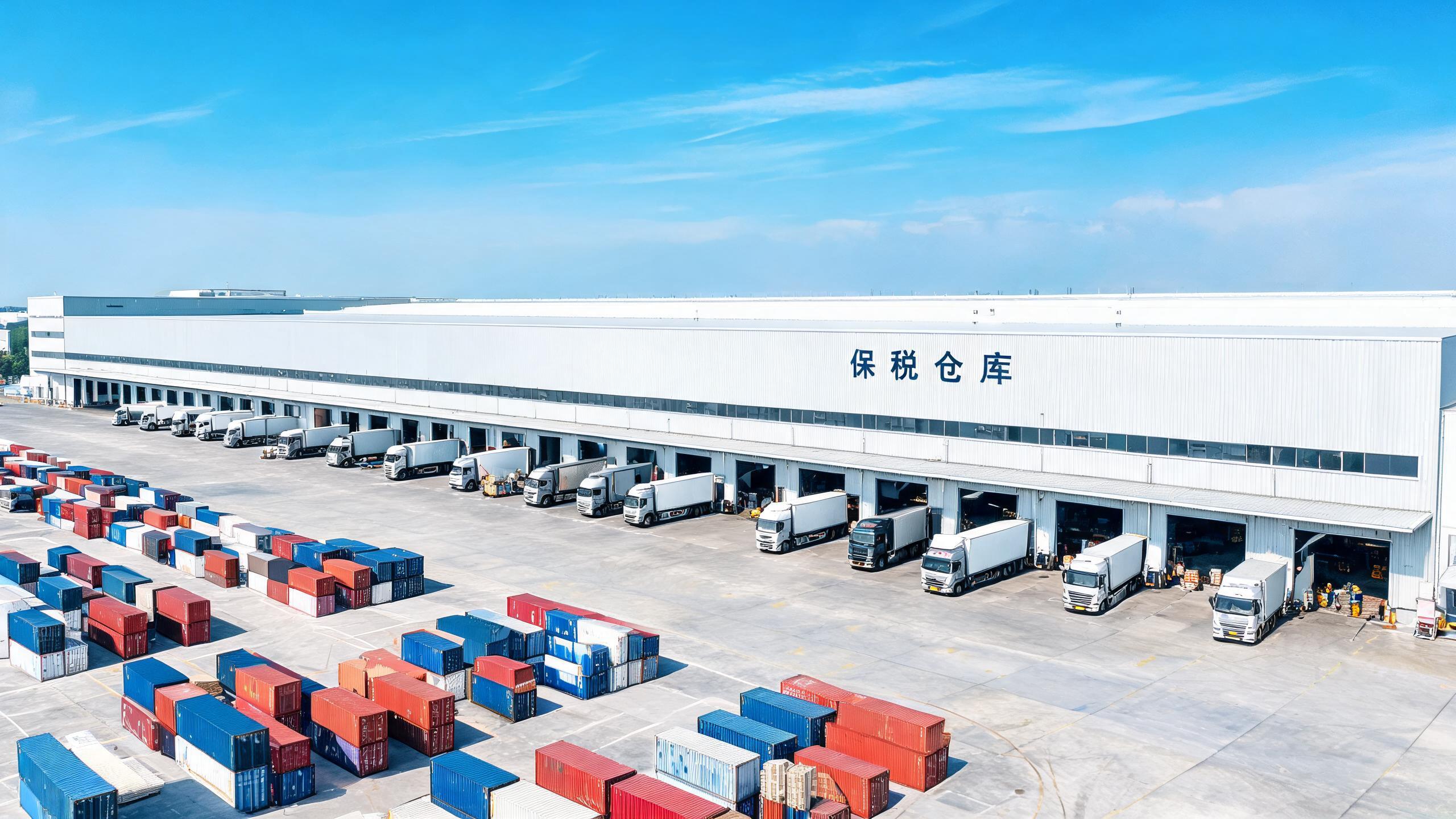
A practical guide to bonded warehousing China operations — how customs-supervised storage works, the cash-flow and duty advantages for importers and exporters, what to check before signing with a China warehousing and distribution provider, and a step-by-step walkthrough of the bonded process.
CHINA LOGISTICS GUIDE
Bonded Warehousing and Distribution Services in China: How Bonded Warehouses Work for Importers and Exporters
If you import goods into China — or export raw materials from Chinese suppliers — you have likely faced the same problem: you must pay import duties and VAT the moment your cargo clears customs, even if the goods are only passing through or waiting for the next buyer.
Bonded warehousing China solves that problem. A bonded warehouse is a customs-supervised facility where goods can be stored without paying import duties or VAT until they officially enter the Chinese domestic market — or until they are re-exported. This article explains how bonded warehouses operate, who benefits from them, and what to verify before you sign a contract with a China warehousing and distribution provider.
- Bonded warehouses defer import duties and VAT — you pay only when goods formally enter China's domestic market.
- Goods can be stored, sorted, re-labelled, and re-exported inside a bonded zone without full customs clearance.
- For re-export, no duty or VAT is paid at all in most cases.
- Bonded zones support value-added services like quality inspection, repackaging, and consolidated distribution.
- Not all warehouses are bonded — verify the operator's customs registration before committing.
What Is a Bonded Warehouse in China?
A bonded warehouse is a customs-supervised storage facility registered with China Customs. Goods entering the warehouse are considered "not yet imported" in the legal sense. They sit in a duty-suspended state.
Two terms you will hear constantly:
- Bonded warehouse (保税仓库) — a single facility approved by customs to store goods under supervision.
- Bonded zone (保税区) — a larger, fenced area (like the Shanghai Waigaoqiao Free Trade Zone or Shenzhen's Qianhai) that contains multiple bonded warehouses, distribution centers, and sometimes light processing facilities.
For most importers and exporters, the practical difference is scale and service scope. A bonded zone usually offers more services — inspection, repackaging, labelling, and cross-docking — under one roof.
How the Bonded Process Works: Step by Step
Here is the typical flow when you ship goods into a bonded warehouse in China:
- Goods arrive at a Chinese port (sea, air, or rail).
- Customs clearance into the bonded zone — your freight forwarder files a "bonded entry" declaration. No import duty or VAT is paid at this stage.
- Goods enter the bonded warehouse — they are stored under customs supervision, usually with a 24/7 CCTV and inventory control system linked to customs.
- You decide the next step:
- Re-export: Goods leave China without paying duty or VAT.
- Domestic sale: You file a formal import declaration, pay the applicable duty and VAT, and the goods are released into the Chinese market.
- Transfer: Goods move to another bonded facility or a processing zone.
| Step | Action | Duty / VAT Status |
|---|---|---|
| 1. Arrival at port | Goods unloaded, customs declaration filed | Not yet payable |
| 2. Bonded entry | Customs clears goods into bonded zone | Deferred |
| 3. Storage | Goods held under customs supervision | Deferred |
| 4a. Re-export | Goods shipped out of China | Not payable |
| 4b. Domestic sale | Formal import declaration filed | Payable at this point |
Who Should Use Bonded Warehousing China?
Bonded storage is not for every shipment. It makes commercial sense in specific situations:
1. Importers Who Don't Know the Final Destination Yet
If you import goods into China but haven't confirmed the end buyer — or are still deciding whether to sell domestically or re-export — a bonded warehouse gives you time without tax cost. You can hold inventory, negotiate with buyers, and only pay duty when a domestic sale is confirmed.
2. Exporters Doing Value-Added Services
Many exporters use bonded zones for quality inspection, sorting, re-labelling, or repackaging before goods ship to the final overseas destination. Because the goods are not formally imported, these services can be done without triggering duty or VAT.
3. Companies Managing Multi-SKU Distribution
If you ship mixed containers and need to break bulk, consolidate, or redistribute goods across Asia-Pacific markets, a bonded distribution center in China acts as a regional hub. Goods arrive, get sorted, and ship out to multiple destinations — all without a domestic import declaration.
4. Traders Avoiding Double Duty
A common scenario: goods from Vietnam enter China, get re-labelled or re-packed, then ship to Europe. Without bonded storage, you would pay Chinese import duty and VAT on goods that never actually enter the Chinese market. Bonded warehousing eliminates that cost.
Key Advantages of Bonded Warehouse Services
| Advantage | What It Means for You |
|---|---|
| Duty deferral | Cash flow improves — you don't pay duty or VAT until goods enter the domestic market. |
| No duty on re-export | Goods that leave China again are exempt from import duty and VAT. |
| Value-added services | Inspection, repacking, labelling, and consolidation can be done inside the bonded zone. |
| Flexible market entry | You can wait for the right buyer or market condition before committing to domestic sale. |
| Regional hub | Use China as a distribution point for Asia-Pacific and global markets. |
What to Check Before Choosing a Bonded Warehouse Provider
Not all China warehousing and distribution providers operate bonded facilities. The customs registration is specific and audited. Before you commit, verify these points:
1. Customs Registration Status
Ask for the operator's customs registration certificate for bonded warehousing. This is a formal document, not a marketing claim. A bonded warehouse must be separately approved from a regular warehouse.
2. Bonded Zone Location
Location affects your logistics cost. A bonded warehouse near the port where your goods arrive reduces inland transportation. A facility near your target domestic market reduces final delivery time. There is no single "best" location — it depends on your trade flow.
3. Service Scope
Confirm what the operator can do inside the bonded zone:
- Storage (general, temperature-controlled, hazardous?)
- Repackaging and re-labelling
- Quality inspection
- Cross-docking and consolidation
- Customs declaration support
Not every bonded warehouse offers all services. Match the scope to your actual needs.
4. Inventory Management System
Bonded warehouses must track inventory precisely for customs audits. Ask about their warehouse management system (WMS), barcode/SKU tracking, and reporting frequency. You need real-time visibility of your stock.
5. Incoterms and Liability
Clarify where your liability ends and the warehouse operator's begins. Confirm insurance coverage, handling damage procedures, and what happens in case of inventory discrepancies. Get it in writing.
6. Costs Beyond Storage
Bonded storage fees are usually quoted per cubic meter or per pallet per day. But confirm what else is charged:
- Handling fees (in and out)
- Customs declaration fees
- Inspection or supervision fees
- Repacking or labelling charges
- Administration fees
A low storage rate can be offset by high handling charges. Ask for a full rate card.
Common Mistakes to Avoid
Mistake 1: Assuming all warehouses are bonded. A regular warehouse cannot hold goods in duty suspension. Verify the registration before shipping.
Mistake 2: Not planning the exit strategy. Bonded goods cannot stay indefinitely. Customs rules generally require goods to be cleared or re-exported within a set period (typically up to one year, extendable in some cases). Confirm the allowed storage period with your provider.
Mistake 3: Mixing bonded and non-bonded goods. Bonded and non-bonded inventory must be physically separated. Mixing them creates customs compliance problems and potential penalties.
Mistake 4: Ignoring documentation requirements. Bonded warehousing requires precise documentation — the customs declaration, packing lists, invoices, and transport documents must match exactly. Errors cause delays and inspection.
FAQ: Bonded Warehousing and Distribution Services in China
Q: How long can goods stay in a bonded warehouse? A: The standard period is up to one year, with extension possible in specific cases. Confirm the exact rules with your provider, as they vary by zone and goods type.
Q: Can I do light manufacturing in a bonded warehouse? A: Basic value-added services like repacking, labelling, and sorting are generally allowed. Full manufacturing usually requires a different customs status (e.g., a bonded processing zone). Ask your provider what is permitted in their specific facility.
Q: Do I pay VAT on re-exported goods? A: No. If goods are re-exported from a bonded warehouse, import duty and VAT are not levied.
Q: Is bonded warehousing more expensive than regular warehousing? A: Storage fees are often comparable. The real cost difference comes from the customs supervision, documentation, and compliance requirements. The duty deferral usually outweighs the extra administrative cost.
Q: Can I inspect my goods inside the bonded warehouse? A: Yes, in most bonded zones you can arrange for quality inspection or sampling under customs supervision. Confirm the process and any associated fees with your provider.
Is Bonded Warehousing Right for Your Trade Flow?
Bonded warehousing China is a practical tool — but only when your trade flow matches its strengths. If you are importing goods for immediate domestic sale, a bonded warehouse adds unnecessary steps. If you are holding inventory for re-export, consolidating regional distribution, or waiting for the right buyer, it can meaningfully improve your cash flow and flexibility.
Before choosing a China warehousing and distribution provider, ask for their customs registration, a full rate card, and a written service scope. The right provider will walk you through the documentation and compliance requirements — not just quote a storage price.
For specific questions about your product category, trade route, or volume, contact us with your shipment details. We can assess whether bonded warehousing fits your operation and recommend a suitable setup.