
Customs Clearance and Warehousing
3PL Warehousing and Distribution: Four Lanes from Factory to Customer
Why storage price per pallet is the smallest line in a 3PL program: bonded consolidation, in-house FBA and retail prep, SKU-level fulfillment, and door delivery as one connected flow.
A 3PL program is four lanes, and most buyers only buy two of them
When buyers evaluate 3PL warehousing and distribution from China, they usually start with storage price per pallet. The storage line is the smallest part of the program. What actually decides whether a 3PL relationship works is how the four lanes — inbound consolidation, value-added processing, order fulfillment, and destination distribution — connect, because every disconnected handoff between them is a charge you discover later and a delay you absorb.
What disconnected lanes cost a buyer
- Multi-supplier chaos: goods from several factories arrive at different times; without a consolidation warehouse each early shipment pays its own export and freight cost.
- Compliance rework: FBA and retail prep done outside the warehouse means relabeling, repacking, and re-inspection after the goods have already moved.
- Blind fulfillment: without SKU-level tracking, the first signal that a PO went short or wrong arrives at the destination customer.
How Meicheng runs the four lanes
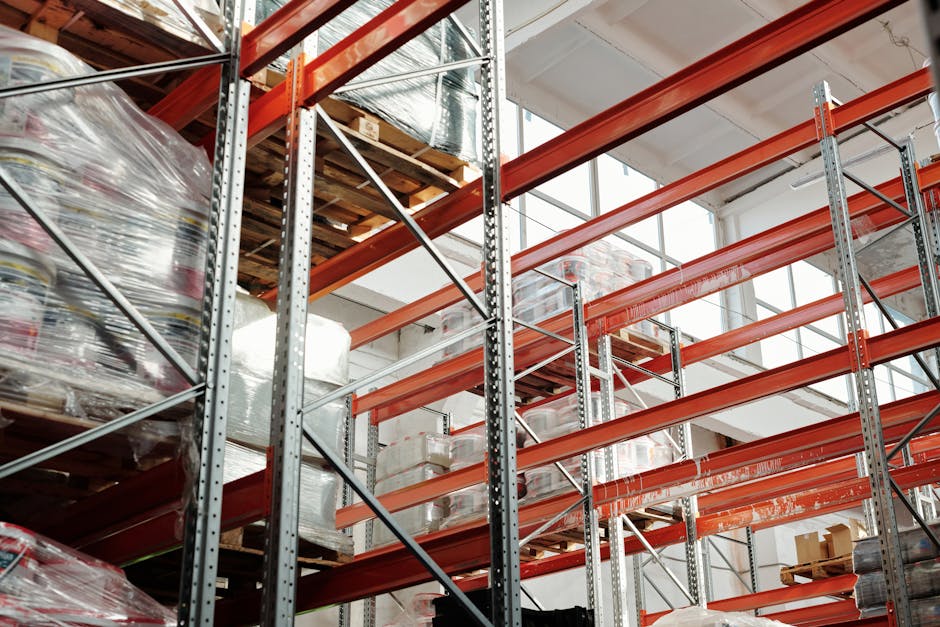
The lanes run inside one bonded network: 50,000 m² total bonded warehousing capacity in Shenzhen, Shanghai, and Ningbo, operated together with our freight and customs teams. Multi-supplier consolidation waits for the full PO inside bonded storage before a single export; pick and pack, FBA prep, labeling, and cross-docking happen in the same building; and the Supply Chain Management and Distribution service carries SKU tracking from inbound receipt to EU and US destination delivery, with temperature-controlled storage for sensitive goods.
The lane diagram below shows how a PO moves and where each decision sits. Service scope is detailed on the Supply Chain Management and Distribution and Bonded Warehousing and Distribution Service pages.
Lane 1 — Inbound consolidation
Suppliers deliver into the bonded warehouse against PO; inbound receipts are logged SKU-level and short shipments are flagged before export.
Lane 2 — Value-added processing
Pick and pack, FBA prep, retail labeling, and quality checks run in-house, with temperature-controlled zones where the goods require them.
Lane 3 — Order fulfillment
Orders release from the same SKU record that received the goods; fulfillment volume and order accuracy report back on the same ledger.
Lane 4 — Destination distribution
Consolidated export and freight under one program to EU and US destinations, port-to-port or door-to-door, with bonded storage deferring duty until the goods actually sail.
Client cases
Case 1 — US outdoor gear brand, FBA replenishment
Who and what: a US outdoor gear brand shipping Amazon FBA replenishments from five Chinese suppliers through Shenzhen.
Solved with what: all five suppliers consolidated into one bonded warehouse entry with FBA carton and label prep in-house before a single FCL export.
Before: each supplier shipped separately, FBA prep was outsourced twice, and Amazon receiving rejections cost the brand listing downtime.
Now: the brand reports FBA receiving rejections eliminated across the most recent cooperation cycle and one export instead of five per PO.
Where the numbers come from: the brand's FBA receiving reports matched against warehouse outbound records.
Case 2 — German kitchen appliance importer, Hamburg DC
Who and what: a German importer feeding a Hamburg distribution center from four factories in Zhejiang and Jiangsu.
Solved with what: PO-level consolidation in the Shanghai bonded warehouse with SKU tracking from inbound receipt to container seal.
Before: short and mixed POs surfaced only at the Hamburg DC, and each discrepancy started a claims cycle across three parties.
Now: the importer reports shipment discrepancies caught at inbound in the warehouse rather than at destination, cutting claims cycles to rare events.
Where the numbers come from: warehouse inbound discrepancy logs versus the importer's destination claims register.
Case 3 — UK pet supplies brand, retail and e-com mixed
Who and what: a UK brand serving both retail chains and its own webshop from Chinese production, shipping to Felixstowe.
Solved with what: retail-labeled cartons and webshop picks prepared in the same Ningbo facility, released per sales channel from one SKU ledger.
Before: retail and e-commerce stock lived in separate workflows, and channel-specific labels were applied after arrival at extra cost.
Now: the brand reports channel prep completed before export and a single stock position per SKU across both channels.
Where the numbers come from: the brand's channel fulfillment reports against warehouse outbound records.
Client reviews
★★★★★
We run Amazon FBA replenishments through Shenzhen for five supplier factories.
Consolidation and FBA prep in one building ended the receiving rejections that used to cost us listing time; monthly storage minimums deserve a review as volumes grow.
Verifiable result: zero FBA receiving rejections across the last two replenishment quarters (FBA receiving reports).
Source type: e-commerce operations manager, US outdoor gear brand (FBA report record).
★★★★☆
Our Hamburg DC is fed from four Chinese factories under one program.
Catching short shipments at inbound instead of at destination changed how our claims process works; peak-season warehouse space needs a booking rhythm.
Verifiable result: destination claims reduced to rare events after inbound checks were added (claims register versus inbound logs).
Source type: supply chain lead, German kitchen appliance importer (claims register).
★★★★☆
We serve UK retail chains and our own webshop from the same production base.
One SKU ledger across channels simplified our stock planning; onboarding our label templates took one cycle to get exactly right.
Verifiable result: channel-specific prep completed before export on every shipment since standardization (outbound records).
Source type: logistics manager, UK pet supplies brand (fulfillment report).
Compliance and documentation credentials
Goods move under bonded warehousing entries where storage is used, with export declarations and CIQ inspection coordination prepared by our in-house customs team. Inbound receipts, SKU tracking, and outbound records form one ledger per PO, and FBA or retail prep follows the destination's carton and labeling requirements as confirmed before the first shipment. Duty exposure stays deferred until the bonded cargo actually sails.
Company strength behind your 3PL program
- Founded 2008 — 17+ years in international freight forwarding, headquartered in Shanghai, China.
- Bonded warehousing network of 50,000 m² total capacity in Shenzhen, Shanghai, and Ningbo, including temperature-controlled zones and cross-docking.
- Value-added services in-house: pick and pack, FBA prep, retail labeling, and quality checks.
- Freight under the same program: weekly FCL and LCL sailings to Europe and North America with multi-carrier allocation.
- In-house customs documentation: export declaration, CIQ inspection coordination, ISF/AMS filings, and EU/US import declarations.
- Export markets served: Europe and North America, warehouse-to-door.
Pain-point FAQ
Is bonded storage worth it for my volume?
Bonded storage pays when multiple suppliers feed one export: goods consolidate without duty exposure and sail once. For single-supplier, sail-immediately flows, regular warehousing prices lower — send your PO pattern and we compare both.
Can you handle FBA carton and labeling requirements?
Yes. FBA prep runs in-house, and carton, label, and pallet requirements are confirmed against the destination's current spec before the first shipment rather than assumed.
How do you track SKUs across the program?
Inbound receipts, processing, and outbound shipments post to one SKU record per PO, so discrepancies surface at the warehouse instead of at your customer.
Who books the freight — you or us?
Freight can sit inside the same program: weekly FCL and LCL allocations to Europe and North America are booked from the same SKU ledger that confirms your outbound volume.
Which lanes does your program actually need?
Match your situation to the lane; each row lists the service scope to request in the quote.
| Your situation | Lead lane | Request in your quote |
|---|---|---|
| Multiple suppliers, one destination PO | Inbound consolidation | Bonded consolidation entry, PO-level receiving, single export |
| Amazon FBA or retail prep needed | Value-added processing | FBA/retail carton and label spec confirmed before first shipment |
| Mixed channels from one stock position | Order fulfillment | SKU ledger across channels, per-channel release |
| Door delivery to EU or US | Destination distribution | Port-to-port or door term stated, duty deferral where bonded |
What Meicheng can confirm for your 3PL program
- 50,000 m² total bonded warehousing capacity in Shenzhen, Shanghai, and Ningbo, as described in the Bonded Warehousing and Distribution Service.
- Multi-supplier consolidation, SKU tracking, order fulfillment, and EU/US distribution, as described in the Supply Chain Management and Distribution service.
- In-house export declaration and CIQ inspection coordination, as described in the Export Customs Declaration and Inspection Service.
Storage rates, value-added service pricing, and freight scope are quoted per program after the PO pattern is reviewed.
Related services
Request a quote for this solution
Send your route, cargo details and required timing so the team can review your requirement and prepare a quotation.