
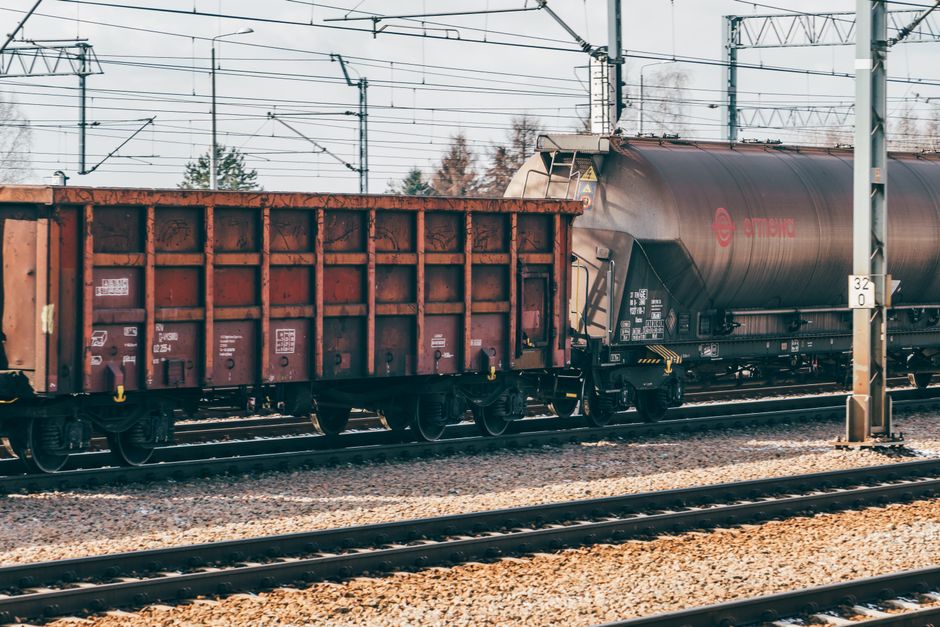
Land and Rail Transport
Rail Freight Quote: How Terminal Pairs Set Your Transit Window
How to read a rail freight quote the way the corridor works: terminal pair, transit window, customs transit arrangement, and what to send to compare China-Europe block train offers.
Why rail quotes go wrong before the train leaves
If you buy rail freight from China to Europe, the most expensive mistake is comparing two quotes that were never built the same way. One forwarder quotes the block train slot only; another adds terminal handling, gauge-change transloading, and TIR customs transit. The number on the sheet can look 30% apart and be identical in reality — or identical on the sheet and 30% apart at the destination port.
The impact on a B2B buyer is concrete: production lines planned around a delivery date miss by two weeks, buffer stock quietly doubles, and the finance team sees a landed cost that no longer matches the quotation. The root cause is almost always the same — the quote was priced on a route instead of on a terminal pair plus transit window plus customs transit arrangement.
How our quoting solves this
We price rail freight the way the corridor actually works: first the origin terminal that serves your factory or consolidation point, then the European terminal closest to your delivery address, then the transit window documented for that pair, then the customs transit arrangement that applies along the route. On the China–Europe corridor we book fixed-day block trains from Chengdu, Chongqing, Xi'an, and Yiwu to Duisburg, Madrid, and Hamburg with a 12–18 day transit window; on the Central Asia corridor we run multimodal rail and truck from Xi'an, Chengdu, Urumqi, and Zhengzhou to Kazakhstan, Uzbekistan, Russia, and Poland in 8–15 days under a single TIR customs transit document.
What that is worth to you: a transit figure you can put into a production schedule, fewer surprise charges at destination because customs transit is settled in the quotation, and a cost position between ocean and air that stays stable across the booking cycle. See the full service scope on the China-Europe Railway Block Train Service and the China-Central Asia Rail and Truck Service.
Client cases
Case 1 — Industrial components importer, Germany
Who and what: a German industrial-components importer moving stamping parts from a Chengdu supplier by rail (EU block train, Chengdu → Duisburg).
Problem before: the same parts moved by ocean with a 35–40 day port-to-port window; the buyer held roughly six weeks of buffer stock to cover schedule variance.
Result now: 16–18 day door delivery on the block train; the buyer reports buffer stock down by about two reorder cycles and delivery dates confirmed against the B/L.
Where the numbers come from: monthly shipment logs reconciled against delivery-dated bills of lading over the cooperation period.
Case 2 — E-commerce fulfilment 3PL, Poland
Who and what: a Polish 3PL consolidating small-parcel replenishment out of Yiwu by LCL rail.
Problem before: ad-hoc road and mixed-mode bookings produced transit swings and per-shipment re-quoting every cycle.
Result now: fixed weekly block-train consolidation; transit variance narrowed to the documented window and rate requests now repeat per quarter rather than per shipment.
Where the numbers come from: consolidation manifests and the 3PL's own quarterly rate-request records.
Case 3 — Machinery distributor, Uzbekistan
Who and what: a Tashkent machinery distributor importing spare parts via the Central Asia rail-and-truck corridor (Xi'an → Tashkent).
Problem before: multi-leg handoffs across two borders stretched delivery past three weeks with unclear responsibility at each transfer.
Result now: 8–15 day multimodal delivery under a single TIR customs transit document, with border formalities handled inside the corridor service.
Where the numbers come from: TIR carnet records and border-crossing timestamps on the transport documents.
Client reviews
★★★★★
We book rail slots twice a month through our Shanghai buying office for EU-bound components.
The quotations have matched the final invoice line-for-line since we moved this lane to block train — I stopped budgeting a variance reserve for it.
Verifiable result: 18 consecutive block-train bookings across 14 months with zero schedule re-quotes (reorder-cycle count from our purchasing records).
Source type: procurement manager feedback on file, industrial importer (email record).
★★★★☆
We source rail RFQs through our EU distribution centre's quarterly tender round.
Quotations arrive with the terminal pair and transit window written out, which makes our internal comparison work take minutes instead of days; documentation follow-ups are still needed occasionally on mixed cargo.
Verifiable result: response within 24 hours on 9 of 9 RFQs in our last tender log.
Source type: logistics lead, EU distribution centre (RFQ log record).
★★★★☆
We evaluate corridor forwarders as part of a supplier scorecard in an equipment tender.
Transit quotes for the Central Asia corridor have held to the window we were given; I would like to see more published schedule granularity for peak season.
Verifiable result: 3-year relationship, 11 shipments, zero customs transit holds (tender supplier scorecard).
Source type: tender evaluation scorecard, machinery distributor.
Compliance and documentation credentials
For every rail booking we prepare the corridor document set in-house: transport documents, customs transit paperwork, and the TIR arrangement on corridors that use it. Carrier space allocation on the block trains is confirmed at booking. Licences, registrations, and current carrier agreements that apply to your lane are provided with the quotation on request — we confirm what is valid for your route rather than listing generic credentials. Cargo-specific requirements (for example restricted commodities on rail) are confirmed before you commit a delivery date.
Company strength behind your rail booking
- Founded 2008 — 17+ years in international freight forwarding, headquartered in Shanghai, China.
- Bonded warehousing network of 50,000 m² total capacity across Shenzhen, Shanghai, and Ningbo for consolidation before loading.
- In-house customs documentation: export declaration, ISF/AMS filings, and EU import declarations prepared by our own team.
- Carrier partnerships with space allocation on lines including COSCO, Maersk, and MSC, plus fixed-day block-train allocations on the China–Europe corridor.
- Export markets served: Europe and North America, with door-to-door coordination across major ports and inland hubs.
Pain-point FAQ
Why do rail quotes for the same route differ so much?
Because they are built on different terminal pairs, different transit windows, and different customs transit arrangements. Ask each forwarder to state those three elements in writing before comparing totals.
Is the 12–18 day transit a promise or a range?
It is the documented window for the China–Europe block train service. Your exact window is confirmed per terminal pair at booking and stated on the quotation.
Can LCL cargo move by rail?
Yes. The block trains carry both full containers and consolidated cargo; the quote will state how your volume is handled and priced.
What happens at the gauge-change or border crossings?
Gauge changes and border formalities are part of the corridor service and are covered by the customs transit arrangement in your quote; confirm the arrangement that applies to your route before booking.
Transit window selector — pick your corridor
These are the two documented corridors behind our rail freight quotes. Open the group that matches your origin and destination.
China → Europe (block train)
Origins: Chengdu, Chongqing, Xi'an, Yiwu. Destinations: Duisburg, Madrid, Hamburg.
- Documented transit window: 12–18 days
- Customs transit: corridor customs arrangement confirmed per route
- Best fit when: you need a transit between ocean and air and can plan to a terminal-pair window
Send with your request: origin city, destination city, container size or cargo volume, commodity, required delivery window.
China → Central Asia / Russia (rail and truck)
Origins: Xi'an, Chengdu, Urumqi, Zhengzhou. Destinations: Kazakhstan, Uzbekistan, Russia, Poland.
- Documented transit window: 8–15 days
- Customs transit: single TIR document along the corridor
- Best fit when: your destination sits inland beyond the EU rail terminals and road delivery completes the leg
Send with your request: origin city, destination city, cargo volume, commodity, required delivery window.
If your delivery date is fixed rather than flexible, state the exact window — the booking is made against that date, not a generic transit estimate.
What Meicheng can confirm for your rail shipment
- China-Europe railway block train from Chengdu, Chongqing, Xi'an, and Yiwu to Duisburg, Madrid, and Hamburg with 12-18 day transit, full container and LCL rail service with TIR customs transit — as described in the China-Europe Railway Block Train Service.
- Multimodal rail and truck service from Xi'an, Chengdu, Urumqi, and Zhengzhou to Kazakhstan, Uzbekistan, Russia, and Poland with 8-15 day transit via TIR customs transit — as described in the China-Central Asia Rail and Truck Service.
- Export documentation and customs declarations prepared in-house — as described in the Export Customs Declaration and Inspection Service.
Terminal pairs, transit windows, and customs transit arrangements are confirmed per shipment; ask for the current basis with your quotation.
Related services
Request a quote for this solution
Send your route, cargo details and required timing so the team can review your requirement and prepare a quotation.