
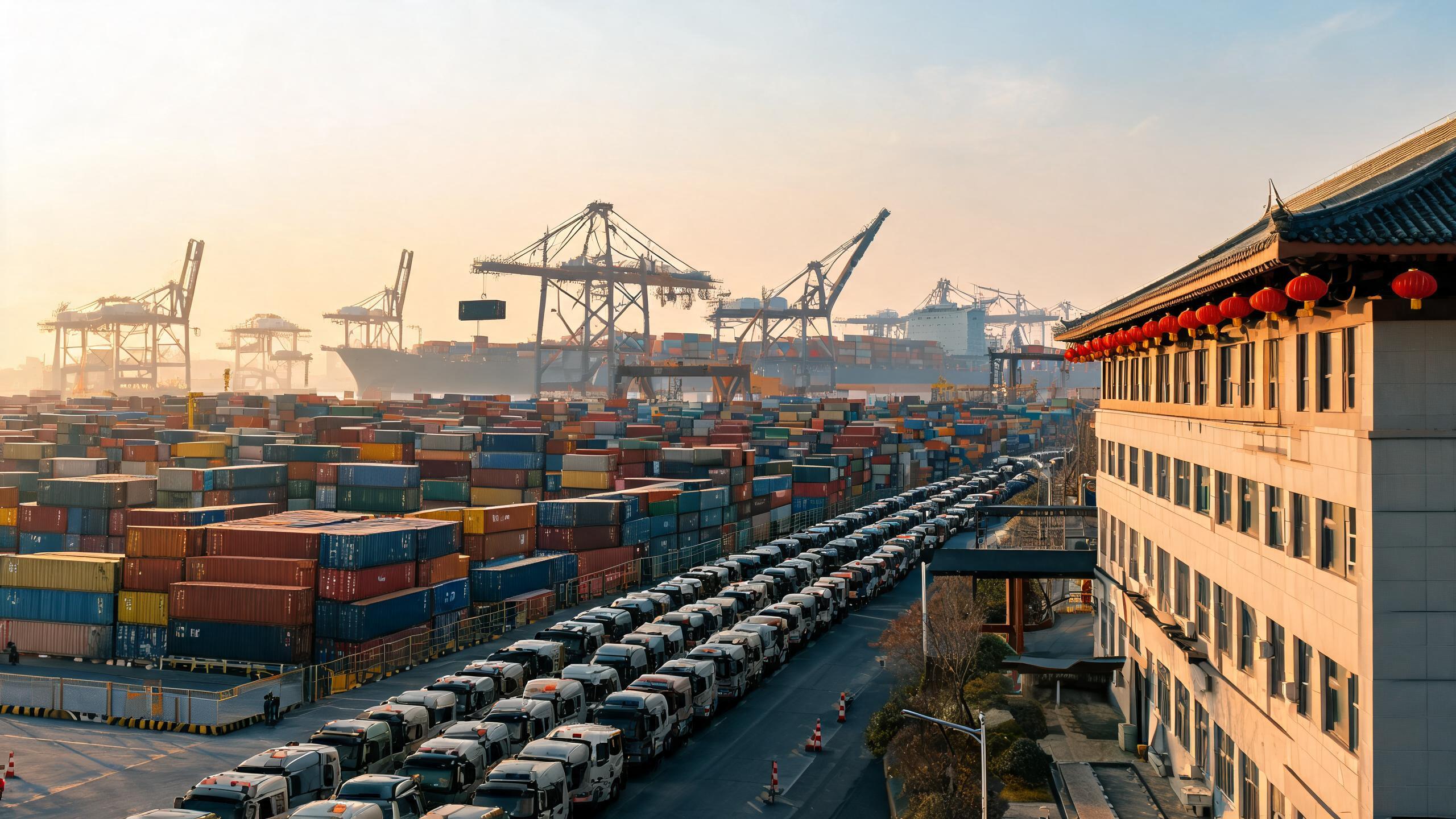
Chinese New Year 2027 begins Saturday, February 6, with mainland public holidays from February 5–12. For importers sourcing from China, this means factory closures, blank sailings, and port congestion that can stretch delivery timelines by weeks. This guide explains the pre-CNY space crunch, what happens after the holiday, and a practical timeline—including booking ocean freight 4–6 weeks ahead, shipping before mid-January, using bonded warehousing to buffer stock, and combining sea and air—grounded in Meicheng's real services.
BUYER GUIDE · FREIGHT PLANNING
Chinese New Year Shipping Delays: How to Plan Cargo Around China's Spring Festival
Chinese New Year 2027 falls on Saturday, February 6, 2027. The mainland public holiday runs February 5–12, 2027. For anyone sourcing goods from China, those eight days are the easy part to predict. The hard part is everything around them: the pre-holiday space crunch, factory shutdowns that start earlier than the official calendar, blank sailings that thin out vessel capacity, and the post-holiday congestion that can push deliveries into March.
This guide walks through what actually happens to your cargo timeline, and gives a practical schedule for booking, shipping, and buffering stock—so Chinese New Year shipping delays don't become your problem.
- Book ocean space 4–6 weeks ahead of the holiday—carriers start blanking sailings 3–4 weeks before CNY.
- Ship ocean cargo before mid-January 2027 to clear China ports before the shutdown.
- Use bonded warehousing to hold stock in China through the holiday, then ship when space reopens.
- Combine sea and air: ocean for base volume, express air freight for urgent or reorder items.
- Post-CNY congestion typically lasts 2–4 weeks; plan for late-February to mid-March recovery.
What Actually Happens Around Chinese New Year
The official holiday is February 5–12, 2027. But the logistics impact starts weeks earlier and ends weeks later. Here's the sequence:
1. Pre-CNY Space Crunch (Mid-January Onward)
Factories want to ship finished goods before the holiday. Importers want their cargo on the water before the shutdown. The result: a surge in export volume starting around mid-January, with vessel space filling up fast.
Carriers respond with blank sailings—cancelling scheduled departures to manage capacity. This is not a rumor; it's standard practice. In the 3–4 weeks before CNY, expect fewer available sailings, higher rates, and tighter equipment (containers) availability at inland depots.
2. Factory Closures (Earlier Than the Official Holiday)
Many factories stop production 5–10 days before the official holiday. Workers travel home for the reunion, and most manufacturing lines shut down completely. Even if your supplier says they'll "stay open," realistically, QC, loading, and documentation teams thin out.
What this means: if your cargo isn't produced and ready for pickup by late January, it likely won't ship until after the holiday.
3. Blank Sailings and Reduced Capacity
During the holiday week itself, ports operate with reduced staff. Vessel schedules are often disrupted. After the holiday, carriers need time to reposition empty containers and restore full schedules. This is why the post-CNY congestion period—typically 2–4 weeks—is just as disruptive as the pre-holiday rush.
4. Post-CNY Congestion (Late February to Mid-March)
When factories reopen after February 12, there's a backlog of orders. Everyone ships at once. Ports get congested, trucks queue at terminals, and vessel space is oversubscribed again. If you didn't book early, you're waiting for the next available sailing—which might be 2–3 weeks out.
| Phase | Timeline (2027) | What Happens |
|---|---|---|
| Pre-CNY rush | Jan 10 – Feb 4 | Export volume surges; space tightens; rates rise |
| Factory closures | Late Jan – Feb 12 | Production stops; QC and loading limited |
| Holiday week | Feb 5 – Feb 12 | Reduced port staffing; blank sailings |
| Post-CNY recovery | Feb 13 – mid-Mar | Backlog shipping; congestion; space oversubscribed |
Practical Timeline: When to Book and Ship
The goal is simple: get your cargo on a vessel before the pre-CNY rush peaks, or hold it in a way that lets you ship when space reopens without paying panic rates.
Book Space 4–6 Weeks Ahead
For ocean freight, book your space 4–6 weeks before the holiday—meaning by late December 2026 to early January 2027. This gives your freight forwarder time to secure a confirmed booking before carriers start blanking sailings.
Waiting until mid-January to book means competing with everyone else who waited. You'll pay higher rates and may not get the sailing date you want.
Ship Ocean Cargo Before Mid-January
For cargo that must arrive before the holiday shutdown, aim to have it loaded and on a vessel by January 15, 2027. This means production needs to be finished by early January, with trucking and customs clearance completed before the port congestion peaks.
If your cargo misses this window, it's usually better to hold it and ship after the holiday rather than pay premium rates for a spot that may not exist.
What If You Miss the Window?
If your cargo isn't ready by mid-January, don't panic. You have two realistic options:
- Ship after the holiday with a confirmed booking made now (before the rush).
- Use bonded warehousing to store goods in China through the holiday, then ship when space reopens.
Using Bonded Warehousing to Buffer Stock
Bonded warehousing is a practical solution for the CNY gap, especially if you have inventory that's produced but not yet shipped.
Here's how it works: your goods are manufactured, transported to a bonded warehouse in China, and stored there without paying import duties or taxes until they're shipped out. During the CNY period, when vessel space is tight and rates are high, your cargo sits safely in the warehouse instead of competing for scarce space.
After the holiday, when carriers restore full schedules and rates normalize, you ship from the bonded warehouse. This lets you:
- Lock in production before the factory closes, without forcing a rushed shipment.
- Avoid peak-season ocean rates by shipping after the rush.
- Keep inventory available for urgent orders via air freight if needed.
Meicheng offers bonded warehousing as part of our logistics services. If you're planning around CNY 2027, this is worth discussing with our team—especially if you have regular volume that can be staged ahead of the holiday.
Combining Sea and Air: A Hybrid Approach
For many importers, the best strategy isn't choosing between ocean and air—it's using both.
- Ocean freight handles your base volume. Book early, ship before mid-January, and accept the longer transit time.
- Express air freight covers urgent items, reorders, or products that missed the ocean window. Air freight is faster and less affected by port congestion, though it costs more per kilogram.
A common pattern: ship 80% of your order by ocean before the holiday, and hold 20% for air freight if needed after the holiday. This gives you a buffer for unexpected demand without paying air rates on your full volume.
Meicheng offers weekly FCL (full container load) and LCL (less than container load) sailings, plus express air freight for time-sensitive cargo. Combining these gives you flexibility during the CNY period.
What to Confirm with Your Supplier and Forwarder
Before finalizing your CNY 2027 plan, confirm these points:
| Item | What to Confirm |
|---|---|
| Factory closure dates | Exact last production day; QC availability before holiday |
| Booking cutoff | Latest date to confirm ocean space before blank sailings |
| Container availability | Are empty containers available at your loading port? |
| Warehouse access | Can the bonded warehouse receive goods during the holiday? |
| Post-holiday schedule | First confirmed sailing after Feb 12; expected congestion delays |
FAQ: Chinese New Year Shipping Delays
Q: When is Chinese New Year 2027? A: Chinese New Year 2027 begins Saturday, February 6, 2027. The mainland public holiday runs February 5–12, 2027.
Q: When should I book ocean freight for CNY 2027? A: Book 4–6 weeks ahead—by late December 2026 to early January 2027. This secures space before carriers blank sailings.
Q: What's the latest date to ship ocean cargo before the holiday? A: Aim to have cargo loaded and on a vessel by mid-January 2027. After that, space gets tight and rates rise.
Q: How long do post-CNY delays last? A: Typically 2–4 weeks. Expect congestion from mid-February to mid-March as factories reopen and backlog ships.
Q: Can I use bonded warehousing to avoid the rush? A: Yes. Store produced goods in a bonded warehouse through the holiday, then ship when space and rates normalize. This avoids peak-season costs and protects inventory.
Q: Is air freight a good option during CNY? A: For urgent or high-value items, yes. Air freight is less affected by port congestion. Combine it with ocean for base volume to balance cost and speed.
Planning Checklist for CNY 2027
- Confirm factory closure dates with your supplier (ask for the actual last production day).
- Book ocean space by early January 2027—don't wait.
- Ship ocean cargo before mid-January if it must arrive before the holiday.
- Evaluate bonded warehousing for goods produced but not yet shipped.
- Identify which items need air freight and get quotes in advance.
- Confirm post-holiday sailing schedules with your forwarder by early February.
Bottom Line
Chinese New Year shipping delays are predictable—which means they're avoidable with proper planning. The key dates for 2027 are clear: the holiday runs February 5–12, but the logistics impact spans from mid-January to mid-March.
Book ocean space 4–6 weeks ahead, ship before mid-January, and use bonded warehousing or air freight as buffers. If you're sourcing from China, start your CNY 2027 planning now—not in February.
Meicheng offers weekly FCL/LCL sailings, bonded warehousing, and express air freight to support your shipping plan around the Spring Festival. Contact our team to discuss your cargo timeline and confirm space availability for the CNY period.