
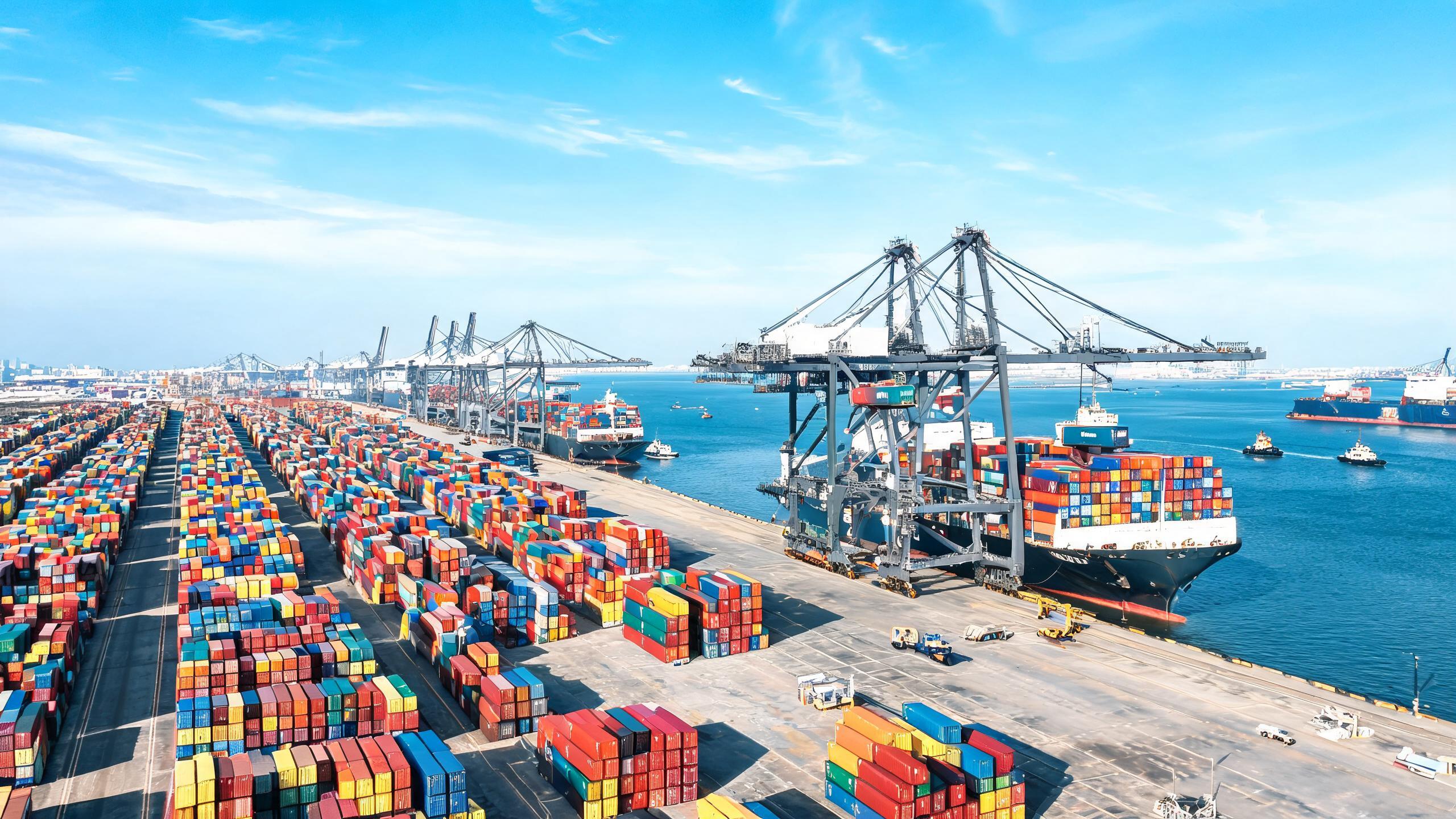
A practical, fact-based guide covering the major freight shipping methods from China to the USA—sea, air, and rail—with typical transit times, cost drivers, and actionable advice for importers. Includes a comparison table, common pitfalls, and a pre-shipment checklist.
FREIGHT & LOGISTICS GUIDE
• Sea freight (LCL/FCL) is the most cost-effective for shipments over 1 CBM, with transit times of 18–35 days.
• Air freight costs 4–6x more than sea but delivers in 3–8 days—best for high-value or time-sensitive goods.
• Rail freight via the New Silk Road takes 15–20 days, but is currently limited for USA-bound cargo from China.
• Total landed cost includes ocean/air freight, insurance, customs duties, port handling, and inland trucking—often overlooked.
If you are sourcing products from China and selling into the US market, freight shipping from China to the USA is likely your single largest logistics cost and risk factor. Getting the route, mode, and timing wrong can erase your margin—or delay your product launch by weeks.
This guide covers the three main shipping methods, their typical transit times, the factors that drive costs, and the practical steps to avoid common mistakes. We focus on what a buyer or procurement manager actually needs to decide: which option fits my cargo, budget, and deadline?
1. Sea Freight: The Workhorse of China–USA Shipping
Sea freight handles roughly 90% of all containerized cargo between China and the USA. It is the most economical option for shipments above 1 cubic meter (CBM) or 150 kg.
FCL (Full Container Load) vs. LCL (Less than Container Load)
| Factor | FCL (20' / 40' container) | LCL (shared container) |
|---|---|---|
| Typical volume | ≥ 15 CBM (20') / ≥ 28 CBM (40') | 1–15 CBM |
| Cost per CBM | Lower (economies of scale) | Higher (consolidation & handling fees) |
| Transit time (port to port) | 18–30 days | 20–35 days |
| Risk of damage | Lower (sealed container) | Higher (multiple handling points) |
| Customs clearance | Single consignee | Consolidated, possible delays |
Major Chinese ports for USA-bound cargo: Shanghai, Shenzhen (Yantian/Shekou), Ningbo, Guangzhou (Nansha), Qingdao, Tianjin. These ports handle the vast majority of container traffic to the US West Coast (Los Angeles/Long Beach) and East Coast (New York/Newark, Savannah, Houston).
Common sea routes and transit times (port-to-port, typical):
- Shanghai → Los Angeles / Long Beach: 14–18 days
- Shenzhen → Los Angeles / Long Beach: 15–20 days
- Ningbo → New York / Newark: 25–30 days (via Panama Canal)
- Shanghai → Savannah (GA): 22–28 days (via Panama Canal)
- Qingdao → Houston: 25–35 days (via Panama Canal)
Note: Actual door-to-door transit adds 3–7 days for origin trucking, customs clearance, and final delivery in the US.
2. Air Freight: Speed at a Premium
When you need your goods in the US within a week, air freight is the only reliable option. Typical cost is $4–$8 per kg, compared to $0.30–$0.80 per kg for sea freight. Use air freight for:
- High-value electronics, medical devices, or spare parts
- Time-sensitive products (seasonal goods, samples, urgent restocks)
- Low-volume but high-margin items
Major Chinese airports for USA cargo: Shanghai Pudong (PVG), Guangzhou Baiyun (CAN), Shenzhen Bao'an (SZX), Beijing Capital (PEK).
Typical air transit times (airport to airport):
- Shanghai → Los Angeles (LAX): 3–5 days (including consolidation & customs)
- Shanghai → Chicago (ORD): 4–6 days
- Guangzhou → New York (JFK): 4–7 days
- Shenzhen → San Francisco (SFO): 3–5 days
Door-to-door air freight typically adds 2–3 days for pickup and delivery. Express services (DHL, FedEx, UPS) offer 3–5 day door-to-door but at a higher rate—usually $6–$12 per kg.
3. Rail Freight: A Niche Option
Rail freight from China to the USA via the New Silk Road (China → Kazakhstan → Russia → Belarus → Poland → Germany → Rotterdam → ship to US East Coast) is a theoretical option but currently not widely used for US-bound cargo due to geopolitical disruptions, longer transit times (15–20 days rail + 10–15 days sea), and limited capacity. Most rail freight from China goes to Europe, not the USA. If you are considering this route, verify with your freight forwarder that it is currently operational for your specific origin-destination pair.
4. Cost Factors: What Drives Your Freight Bill?
Understanding the components of your freight shipping china to usa cost helps you negotiate better and avoid surprises.
| Cost Component | Typical Range | Notes |
|---|---|---|
| Ocean freight (FCL 40') | $2,500–$6,000 | Highly volatile; book 3–4 weeks ahead for best rates |
| Ocean freight (LCL per CBM) | $80–$250 | Includes consolidation fee; minimum 1 CBM |
| Air freight (per kg) | $4–$8 | Volume weight vs. actual weight — the higher one is charged |
| Origin trucking (China) | $150–$500 | Factory to port; depends on distance |
| Port handling & documentation | $200–$600 | THC, BL fee, customs clearance in China |
| US customs clearance | $150–$400 | Broker fee; varies by complexity |
| US inland trucking (port to warehouse) | $300–$1,200 | Distance from port to final destination |
| Marine insurance | 0.2%–0.5% of cargo value | Strongly recommended; covers loss/damage |
Key variables that affect your rate:
- Seasonality: Rates spike 20–40% before Chinese New Year (Jan–Feb) and during peak US retail season (Aug–Oct).
- Fuel surcharges: Adjust monthly based on bunker fuel prices.
- Container availability: During equipment shortages, FCL rates can double.
- Customs compliance: Incorrect HS codes or missing documents can trigger exams ($200–$1,000+ per exam) and delays.
5. Documentation You Must Have
Missing or incorrect paperwork is the #1 cause of customs delays. For any shipping from china to usa, prepare these documents:
- Commercial Invoice — Must include HS code (6-digit minimum), unit price, total value, Incoterms, and country of origin.
- Packing List — Detailed weight, dimensions, and quantity per carton.
- Bill of Lading (sea) or Air Waybill (air) — The contract of carriage; must match the commercial invoice.
- Certificate of Origin — Required for US Customs; can be issued by the China Chamber of Commerce.
- Import Security Filing (ISF) — sea freight only — Must be filed 24 hours before vessel loading; penalty for late filing is $5,000.
- Additional permits — For regulated goods: FDA (food, cosmetics, medical devices), EPA (chemicals), CPSC (toys, children's products).
6. Choosing the Right Incoterm
Incoterms define who pays for what and when risk transfers. For china to usa freight, the most common are:
- FOB (Free on Board): Seller delivers goods to the port and loads them onto the vessel. Buyer pays ocean freight, insurance, and all US-side costs. Most common for Chinese exports.
- CIF (Cost, Insurance, Freight): Seller pays for ocean freight and insurance to the destination port. Buyer takes risk once goods are loaded.
- DDP (Delivered Duty Paid): Seller handles everything—including US customs clearance and duties. Convenient but higher price; buyer has less control.
For first-time importers, we recommend starting with FOB and using a trusted freight forwarder to handle the US side. This gives you visibility and control over costs.
7. Common Mistakes and How to Avoid Them
1. Underestimating total landed cost — Always add 15–20% to your freight quote for port fees, duties, and inland trucking.
2. Booking too late — For sea freight, book 3–4 weeks ahead; for air, 1–2 weeks ahead. Last-minute rates are 30–50% higher.
3. Ignoring volume weight for air freight — Air carriers charge by the greater of actual weight or dimensional weight (length × width × height / 6000).
4. Using the wrong HS code — A 2-digit error can change duty rates by 10–25%. Have a customs broker verify your HS code.
5. Not insuring the cargo — Marine insurance is cheap (0.2–0.5% of value) and covers theft, damage, and total loss. Don't skip it.
8. Pre-Shipment Checklist
Before your cargo leaves the factory, run through this checklist:
- ☐ Commercial invoice and packing list are accurate and match the BL/AWB
- ☐ HS code is confirmed by a licensed customs broker
- ☐ ISF (sea) or advance cargo information (air) is filed on time
- ☐ All regulated goods have the correct permits (FDA, EPA, CPSC, etc.)
- ☐ Cargo is properly packed, labeled, and palletized for the mode of transport
- ☐ Marine insurance is in place
- ☐ You have a confirmed freight forwarder or logistics partner for the US side
Frequently Asked Questions
Q: What is the cheapest way to ship from China to the USA?
A: Sea freight LCL (shared container) for shipments under 15 CBM, or FCL (full container) for larger volumes. Expect to pay $80–$250 per CBM plus port and inland fees.
Q: How long does sea freight from China to the USA take?
A: Port-to-port transit is 14–30 days depending on the route. Add 5–10 days for origin and destination handling. Total door-to-door: 20–45 days.
Q: How much does air freight from China to the USA cost per kg?
A: Typically $4–$8 per kg for standard air freight, and $6–$12 per kg for express courier (DHL/FedEx/UPS). Rates depend on weight, volume, and season.
Q: Do I need a customs broker for importing into the USA?
A: Yes—US Customs requires a licensed customs broker to clear commercial shipments. Most freight forwarders offer this service or can recommend one.
Q: What is the minimum shipment size for sea freight?
A: Most LCL consolidators require a minimum of 1 CBM. For smaller shipments, consider air freight or express courier.
Final Thoughts
Choosing the right freight method for your freight shipping china to usa needs is a balance of cost, speed, and risk. For most B2B importers, sea freight (FCL or LCL) is the default choice, with air freight reserved for urgent or high-value goods. The key is to plan ahead, work with a reliable freight forwarder, and never skip the documentation and insurance steps.
If you are sourcing products from China and need a logistics partner who understands both the origin and destination sides, contact our team for a free consultation. We can help you compare quotes, choose the right route, and navigate customs clearance.