
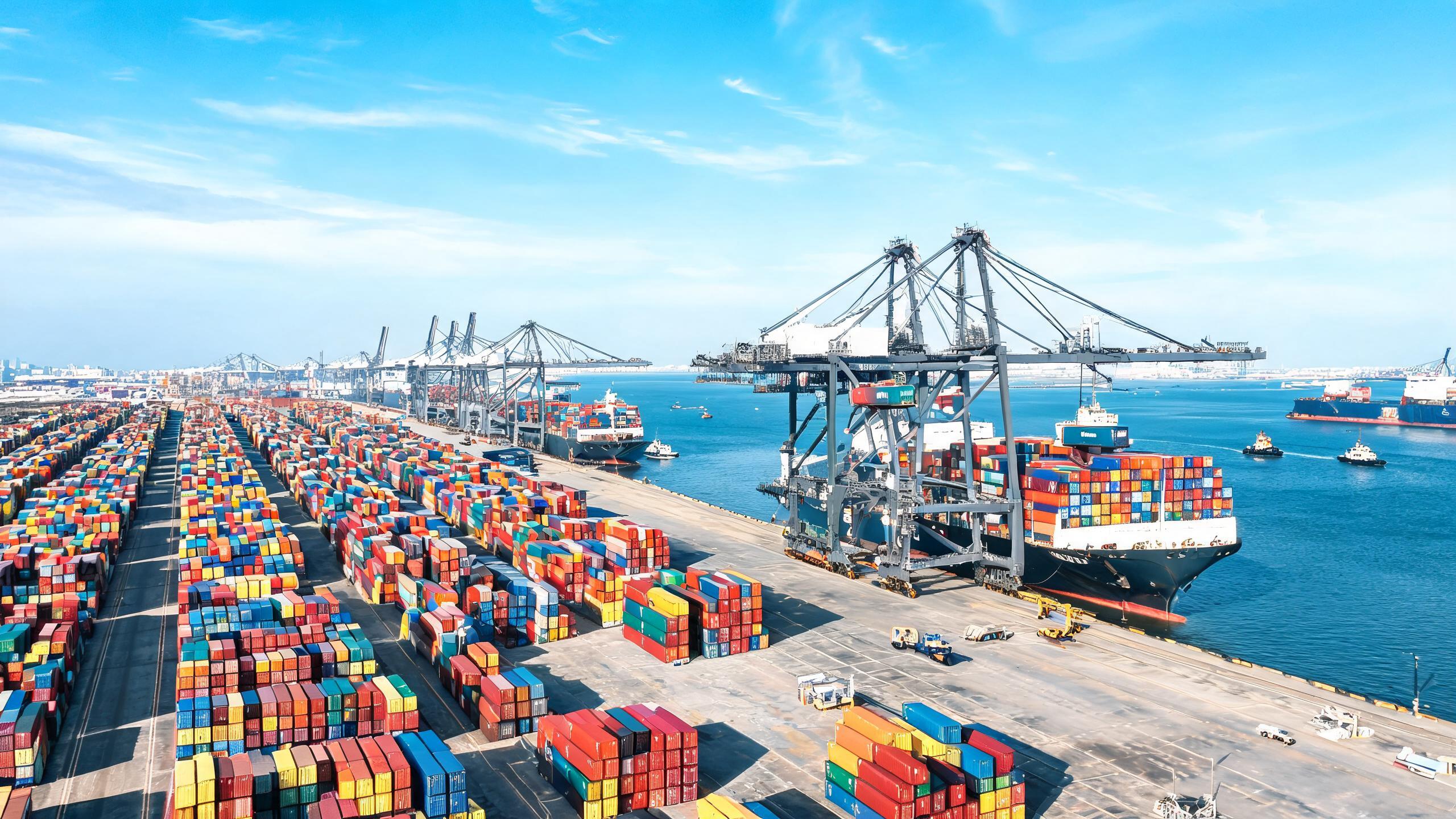
A practical guide for importers moving full container loads from China. Covers container types (20GP, 40GP, 40HQ), the booking process, essential documentation (bill of lading, packing list, commercial invoice, CO), and common pitfalls to avoid. Written for buyers who need clear, actionable steps — not marketing fluff.
IMPORTER LOGISTICS GUIDE
- FCL shipping from China is the most cost-effective option when your cargo volume exceeds ~12 CBM (for 20GP) or ~25 CBM (for 40HQ).
- Three standard container types cover 90%+ of general cargo: 20GP, 40GP, and 40HQ. Know your internal dimensions and payload before booking.
- Booking requires at least 5–7 working days lead time during peak season. The booking process is straightforward: request → confirm → receive container number → arrange pickup.
- Four core documents govern every FCL shipment: Bill of Lading, Commercial Invoice, Packing List, and Certificate of Origin. Missing or incorrect data on these causes customs delays and demurrage fees.
- Demurrage and detention charges are the most common unexpected cost. Understand the free-time allowance at both origin and destination.
If you are importing goods from China in volumes that fill a container — or nearly fill one — you are likely choosing between FCL (Full Container Load) and LCL (Less than Container Load). For most buyers moving more than 12–15 cubic meters of cargo, FCL shipping from China is the smarter choice: lower per-unit cost, faster transit, less handling damage, and simpler documentation.
This guide covers exactly what you need to know to book, manage, and document an FCL shipment from China. It is written for importers who want facts, not fluff — container dimensions, booking steps, document lists, and common mistakes.
What Is FCL Shipping from China?
FCL means your goods occupy an entire container. You share the container with no one else's cargo. The container is sealed at the factory or warehouse, and the seal is broken at your destination. This gives you:
- Lower cost per unit compared to LCL (LCL charges per CBM + handling fees).
- Faster transit — FCL shipments are typically loaded directly onto the vessel, while LCL cargo goes through a consolidation warehouse.
- Less risk of damage or loss — fewer handling points, and the container is sealed.
- Simpler documentation — one bill of lading, one set of documents.
The break-even point between FCL and LCL is usually around 12–15 CBM for a 20GP, and 25–28 CBM for a 40HQ. Below those volumes, LCL may be cheaper. Above them, FCL is almost always more cost-effective.
Container Types: Which One Do You Need?
Three container types cover the vast majority of general cargo shipped from China. Here are the internal dimensions and payloads you need to know.
| Container Type | Internal Length | Internal Width | Internal Height | Max Payload (kg) | Typical Volume (CBM) |
|---|---|---|---|---|---|
| 20GP (20' General Purpose) | 5.90 m | 2.35 m | 2.39 m | 28,000 | ~33 CBM |
| 40GP (40' General Purpose) | 12.03 m | 2.35 m | 2.39 m | 26,500 | ~67 CBM |
| 40HQ (40' High Cube) | 12.03 m | 2.35 m | 2.69 m | 26,000 | ~76 CBM |
When to choose each:
- 20GP — Best for heavy cargo (e.g., machinery, steel, stone, tiles) where weight is the limiting factor, not volume. Max payload is 28,000 kg, but actual usable volume is only ~26–28 CBM after pallet gaps.
- 40GP — Good for medium-density cargo. But note: the height is the same as a 20GP (2.39 m). If your cargo or pallets exceed 2.30 m tall, you cannot use a 40GP.
- 40HQ — The most popular container for FCL shipping from China. Extra 30 cm of height means you can fit taller pallets (up to 2.50 m) and more volume. If your cargo is light and bulky (e.g., furniture, plastic products, textiles), a 40HQ is almost always the right choice.
PRO TIP: Always check the actual internal height of the container at the terminal. Some lines have slightly different specs. If your cargo is exactly 2.40 m tall, do not assume a 40GP will work — use a 40HQ.
How to Book FCL from China: Step by Step
The booking process for FCL shipping from China is straightforward, but timing matters. Here is the typical sequence:
- Get a freight quote — Provide your supplier or freight forwarder with: cargo description, total weight, total volume, container type (20GP/40GP/40HQ), port of loading (e.g., Shanghai, Ningbo, Shenzhen), and port of destination (e.g., Los Angeles, Hamburg, Rotterdam).
- Confirm the booking — Once you accept the rate, the forwarder issues a booking confirmation. This includes the vessel name, voyage number, estimated time of departure (ETD), and estimated time of arrival (ETA).
- Receive container number and seal number — Usually 2–3 days before the container pick-up date. The forwarder will also give you the container pickup location (empty container depot).
- Arrange container loading — Your supplier or a third-party loading team picks up the empty container, loads the cargo at the factory or warehouse, and returns the full container to the terminal. The container must be back before the "cut-off time" (usually 24–48 hours before vessel departure).
- Submit shipping documents — The forwarder requires the draft Bill of Lading, Commercial Invoice, Packing List, and any other documents (e.g., Certificate of Origin, phytosanitary certificate) at least 2–3 days before the vessel sails.
- Vessel sails — The container is loaded onto the vessel. You receive the final Bill of Lading (either telex release or original) after the vessel departs.
Typical lead time: Allow 5–7 working days from booking confirmation to container loading during normal season. During peak season (August–October), allow 10–14 days — space on vessels fills up fast.
Documentation: The Four Core Documents
Every FCL shipment from China requires these four documents. Errors on any of them can delay customs clearance and incur demurrage charges.
| Document | Purpose | Who Issues It | Key Data Points |
|---|---|---|---|
| Bill of Lading (B/L) | Title of ownership and contract of carriage. The carrier releases cargo only against an original B/L or telex release. | Shipping line or freight forwarder | Shipper, consignee, notify party, vessel name, container number, seal number, port of loading, port of discharge, cargo description, gross weight, number of packages. |
| Commercial Invoice | Customs declaration and value assessment. Used for duty calculation at destination. | Supplier | Buyer and seller details, invoice number, date, HS code, unit price, total value, incoterm, payment terms. |
| Packing List | Details what is inside each package/container. Used for customs and cargo inspection. | Supplier | Number of packages, gross weight, net weight, dimensions of each package, marks and numbers. |
| Certificate of Origin (CO) | Proves where the goods were manufactured. Required for preferential tariff treatment (e.g., under RCEP, China-Australia FTA). | China Chamber of Commerce or supplier | Product description, HS code, origin criterion, exporter details, issuing authority stamp. |
CRITICAL: The B/L consignee must match exactly the entity that will clear customs at destination. If you use a different company name on the B/L, the cargo will not be released.
Common Mistakes That Cost Money
Here are three mistakes we see most often from importers new to FCL shipping from China.
1. Misunderstanding Demurrage and Detention
Demurrage is the charge for keeping the container at the terminal beyond the free time (usually 3–5 days at destination). Detention is the charge for keeping the container outside the terminal (e.g., at your warehouse) beyond the free time (usually 3–7 days). These charges can be USD 50–150 per container per day, and they add up fast. Always confirm the free-time allowance with your forwarder before booking.
2. Incorrect HS Code or Cargo Description
Customs in the destination country uses the HS code to determine duty rate and regulatory requirements. A wrong HS code can trigger a customs hold, inspection, or even a fine. Get the correct 6-digit HS code from your supplier and verify it with your customs broker.
3. Overloading the Container
Each container has a maximum payload (see table above). Overloading by even 500 kg can result in the container being rejected at the terminal, or the vessel being delayed. The shipping line will charge a heavy-lift surcharge or refuse to load. Weigh your cargo before loading.
FAQ: FCL Shipping from China
Q: How long does FCL shipping from China take?
A: Transit times vary by route. Example: Shanghai to Los Angeles ~12–15 days, Shanghai to Rotterdam ~28–32 days, Shenzhen to Hamburg ~30–35 days. Add 5–7 days for loading and 3–5 days for customs clearance at destination.
Q: Can I use my own container?
A: Yes, but it is rare and usually not cost-effective. The shipping line provides the container as part of the freight rate. Using your own container means you must arrange for its inspection and certification, and you pay for repositioning.
Q: What is the difference between FCL and LCL in terms of cost?
A: FCL charges a flat rate per container (plus terminal fees). LCL charges per CBM plus consolidation fees, handling fees, and often a higher per-unit freight rate. For volumes above 15 CBM, FCL is almost always cheaper.
Q: Do I need a customs broker?
A: Yes, at the destination. A customs broker handles the clearance process, submits documents, and pays duties. Choose a broker with experience in your product category.
Q: What happens if my container is damaged?
A: Inspect the container before loading. If you find damage (holes, dents, broken floorboards), reject it and request another. If the container is damaged during transit, file a claim with the shipping line within 3 days of receipt.
Final Advice for Importers
FCL shipping from China is a mature, well-documented process. The key to a smooth shipment is preparation: know your cargo volume and weight, choose the right container, book early, and double-check every document before submission.
Work with a freight forwarder who has a physical office in China and a network at your destination. A good forwarder handles the booking, container tracking, document preparation, and customs coordination. They are worth the fee — especially for your first few shipments.
If you are looking for a reliable logistics partner for FCL China shipments, we can help. Contact us with your cargo details and destination port, and we will provide a competitive quote within 24 hours.