
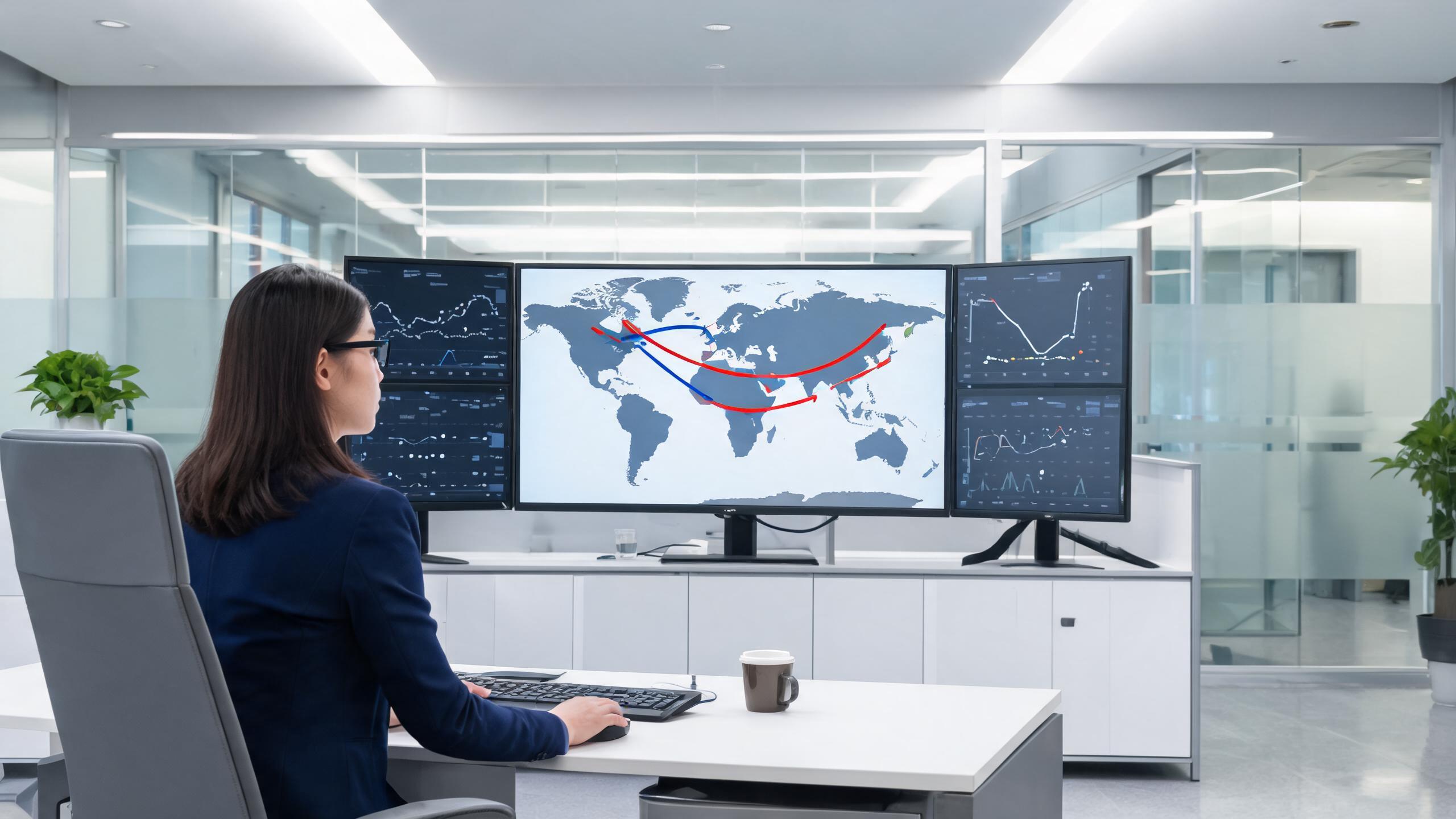
Finding the best freight forwarder from China to the USA is a critical decision for any importer. This guide provides a practical, step-by-step checklist to evaluate freight forwarders based on licensing, service scope, pricing transparency, communication, and risk management. Use it to shortlist partners who can handle your cargo reliably and compliantly.
IMPORTER CHECKLIST
- Verify the forwarder holds a valid FMC/NVOCC bond and IATA accreditation — this is non-negotiable for US-bound shipments.
- Demand a full rate breakdown (ocean/air freight, THC, documentation, customs clearance, D&D) before booking.
- Check their China-side network: do they have owned offices or vetted partners in Shanghai, Shenzhen, Ningbo, or Guangzhou?
- Ask for 3 recent customer references from importers of similar cargo (same product type, volume, and incoterm).
- Confirm their cargo insurance coverage and claims process — standard liability is often too low for high-value goods.
Every year, thousands of containers and air freight shipments move from China to the USA. The difference between a smooth delivery and a costly delay often comes down to one decision: which freight forwarder you choose.
If you are searching for the best freight forwarders china to usa, you already know that price is only one factor. A low rate can disappear under unexpected fees, poor communication, or a missed customs deadline. This article gives you a checklist — not a list of names, but a set of criteria you can use to evaluate any freight forwarder china to usa against your own cargo, budget, and timeline.
Why the Forwarder Matters More Than the Rate
A china freight forwarder to usa handles more than transportation. They manage documentation, customs clearance, cargo insurance, warehousing, and last-mile delivery. A mistake in any of these steps can cost you thousands in storage fees, demurrage, or penalties from US Customs and Border Protection (CBP).
When you evaluate a forwarder, you are really evaluating their ability to manage risk across the entire supply chain. The checklist below is organized around the five areas where most problems occur: licensing, service scope, pricing, communication, and risk management.
1. Licensing and Compliance: The Foundation
Before you trust any cargo to a forwarder, confirm they are legally authorized to handle US-bound shipments.
| License / Accreditation | What It Covers | Why It Matters |
|---|---|---|
| FMC License (OTI) | Ocean Transportation Intermediary — required for any company arranging ocean freight to/from the US | Without it, the forwarder cannot legally issue a Bill of Lading or book space with carriers |
| NVOCC Bond | Financial guarantee ($50k–$150k) posted with the FMC | Protects you if the forwarder fails to pay carriers or damages your cargo |
| IATA Accreditation | Air freight — required for international air cargo | Needed if you ship via air; ensures compliance with dangerous goods regulations |
| C-TPAT Certification | Customs-Trade Partnership Against Terrorism (US CBP program) | Reduces inspection rates and speeds up border clearance |
How to verify: Ask the forwarder for their FMC license number and NVOCC bond certificate. You can cross-check the FMC number on the FMC's public database. For IATA, ask for their Cargo Agency Accreditation number.
Red flag If they cannot provide these documents within 24 hours, move on.
2. Service Scope: What Exactly Do They Offer?
Not all forwarders provide the same services. Some only handle port-to-port moves. Others offer full door-to-door solutions. For a freight forwarder china to usa, you want a partner who can cover the entire journey — including the China side.
Checklist for service scope
- Origin services in China: Do they have owned offices or long-term partners in major ports (Shanghai, Shenzhen, Ningbo, Guangzhou, Qingdao)? Can they arrange factory pick-up, consolidation, and export customs clearance?
- Ocean or air freight booking: Do they have direct contracts with carriers (COSCO, MSC, Maersk, CMA CGM for ocean; Cathay, China Southern, or FedEx for air)? Direct contracts often mean better rates and space allocation.
- US customs brokerage: Do they have a licensed US customs broker in-house or a dedicated partner? This is critical for avoiding clearance delays.
- Warehousing and distribution: Can they offer short-term storage, palletization, or LTL (less-than-truckload) delivery to your final destination?
- Cargo insurance: Do they offer all-risk marine or air cargo insurance? The carrier's liability is typically limited (e.g., $500 per package for ocean). You need additional coverage for high-value goods.
How to check: Ask for a list of their service offices in China and the US. Request a sample service agreement that outlines what is included.
3. Pricing Transparency: Beyond the Quoted Rate
The quoted rate is rarely the final cost. The best freight forwarders china to usa give you a full rate breakdown before you book. Anything less is a risk.
What a transparent quote should include
| Fee Component | Typical Range (Ocean FCL, 40' container, China to US West Coast, 2024) | Notes |
|---|---|---|
| Ocean freight (base rate) | $1,500 – $4,000 | Varies by season, carrier, and contract |
| THC (Terminal Handling Charge) — origin | $200 – $400 | Charged by the port terminal in China |
| THC — destination | $300 – $600 | Charged at the US port |
| Documentation fee (export) | $40 – $80 | For Bill of Lading, packing list, etc. |
| Customs clearance (US) | $100 – $250 | Brokerage fee for filing ISF and entry |
| ISF (Importer Security Filing) | $25 – $50 | Mandatory for all ocean shipments to US |
| D&D (Demurrage & Detention) | Variable | Free time typically 3–7 days; ask for the carrier's D&D tariff |
How to check: Ask for a "all-in" quote that lists every expected fee. Then ask: "Are there any additional charges that could apply after the cargo is booked?" Common hidden fees include: change of destination, re-routing, late documentation, and weekend/holiday surcharges.
Red flag If the forwarder refuses to itemize the quote or says "don't worry, it's all included," get it in writing.
4. Communication and Responsiveness
When your container is sitting at the port and you need an answer in 30 minutes, slow communication is a deal-breaker. The best freight forwarder china to usa should be reachable during both Chinese and US business hours.
What to test during evaluation
- Response time: Send an email with a specific question (e.g., "What is the transit time from Shanghai to Los Angeles for a 20' container?"). If they don't reply within 4 business hours, that is a warning.
- Language: Does the person handling your account speak fluent English? Can they explain customs procedures clearly?
- Tracking system: Do they provide a web portal or regular email updates with real-time tracking? Can you see the status of your cargo without calling?
- Dedicated account manager: Will you have a single point of contact, or will you be passed between departments?
How to check: Ask for a sample shipment update. A good forwarder will show you a screenshot of their tracking dashboard or a sample email update with milestones (booking confirmed, container picked up, vessel departed, estimated arrival, customs cleared, delivered).
5. Risk Management and Contingency Plans
Even the best-planned shipments encounter delays: port congestion, weather, carrier schedule changes, or customs holds. The question is: how does the forwarder handle it?
Key risk areas to discuss
- Carrier reliability: Which carriers do they use most often? Do they have backup carriers if the primary one cancels?
- Demurrage and detention policy: What is the free time at origin and destination? Who pays if the container is late due to the forwarder's error?
- Cargo insurance: What is the coverage limit? What is the claims process? How long does a claim take to settle?
- Force majeure: How do they handle events like port strikes, natural disasters, or pandemic-related disruptions?
How to check: Ask for a case study or example of how they handled a recent delay. A good forwarder will have a documented process (e.g., "We have a contingency carrier list, and we proactively notify clients within 2 hours of any schedule change").
6. References and Reputation
No amount of paperwork can replace a conversation with a current or past client. The best freight forwarders china to usa are happy to provide references.
What to ask references
- How long have you worked with this forwarder?
- What types of cargo do you ship? (Make sure it matches your product)
- How often do shipments arrive on time?
- Have you ever had a customs issue? How did the forwarder handle it?
- Were there any surprise fees? If so, how were they resolved?
- Would you use them again for your next shipment?
How to check: Ask for 3 references from importers who ship similar products (e.g., electronics, furniture, auto parts) with similar volumes (LCL, FCL, or air). If the forwarder hesitates or only provides one reference, be cautious.
Putting It All Together: Your Evaluation Checklist
Use this checklist when you compare multiple forwarders. Score each one on a scale of 1–5 for each criterion.
| Criterion | What to Look For | Score (1–5) |
|---|---|---|
| Licensing | FMC, NVOCC bond, IATA, C-TPAT | |
| China-side network | Owned offices or vetted partners in major ports | |
| Service scope | Door-to-door, customs brokerage, insurance, warehousing | |
| Pricing transparency | Full itemized quote, no hidden fees | |
| Communication | Response time < 4 hours, dedicated account manager, tracking system | |
| Risk management | Backup carriers, D&D policy, insurance coverage, contingency plan | |
| References | 3 recent, relevant references with positive feedback |
Minimum score to proceed: 25 out of 35. If any criterion scores below 3, ask for clarification. If two or more criteria score below 3, consider removing that forwarder from your shortlist.
Common Mistakes Importers Make
- Choosing based on price alone: The cheapest forwarder often cuts corners — on service, communication, or compliance. A $200 savings can turn into a $2,000 problem.
- Not verifying the forwarder's China presence: A forwarder without a physical office or partner in China cannot handle factory pick-up or export customs efficiently.
- Ignoring the fine print: Always read the service agreement, especially the liability limits and force majeure clause.
- Waiting until the last minute: Start evaluating forwarders at least 4–6 weeks before your first shipment. Rushed decisions lead to bad ones.
FAQ
How do I find the best freight forwarders from China to the USA?
Start by asking for recommendations from other importers in your industry. Then use the checklist above to evaluate each candidate. You can also search online directories like the FMC's list of licensed OTI's or the IATA's cargo agent directory.
What is the difference between a freight forwarder and a customs broker?
A freight forwarder arranges transportation and logistics. A customs broker handles the paperwork and clearance with US Customs. Many forwarders offer both services, but verify that they have a licensed broker on staff.
How long does shipping from China to the USA take?
Ocean freight: 15–25 days from China to the US West Coast, 25–35 days to the East Coast. Air freight: 3–7 days depending on the service level. These are estimates; actual transit times vary by carrier, port congestion, and customs processing.
Do I need cargo insurance?
Yes, unless you are willing to accept the carrier's limited liability (typically $500 per package for ocean freight). For high-value goods, all-risk marine insurance is strongly recommended.
Next Steps
Once you have shortlisted 2–3 forwarders, ask each to provide a sample quote for a real shipment you are planning. Use the quote to test their transparency, responsiveness, and willingness to answer your questions.
If you are looking for a freight forwarder china to usa that meets all the criteria above, contact us for a no-obligation consultation. We can provide a detailed rate breakdown and a service agreement you can review before committing any cargo.