
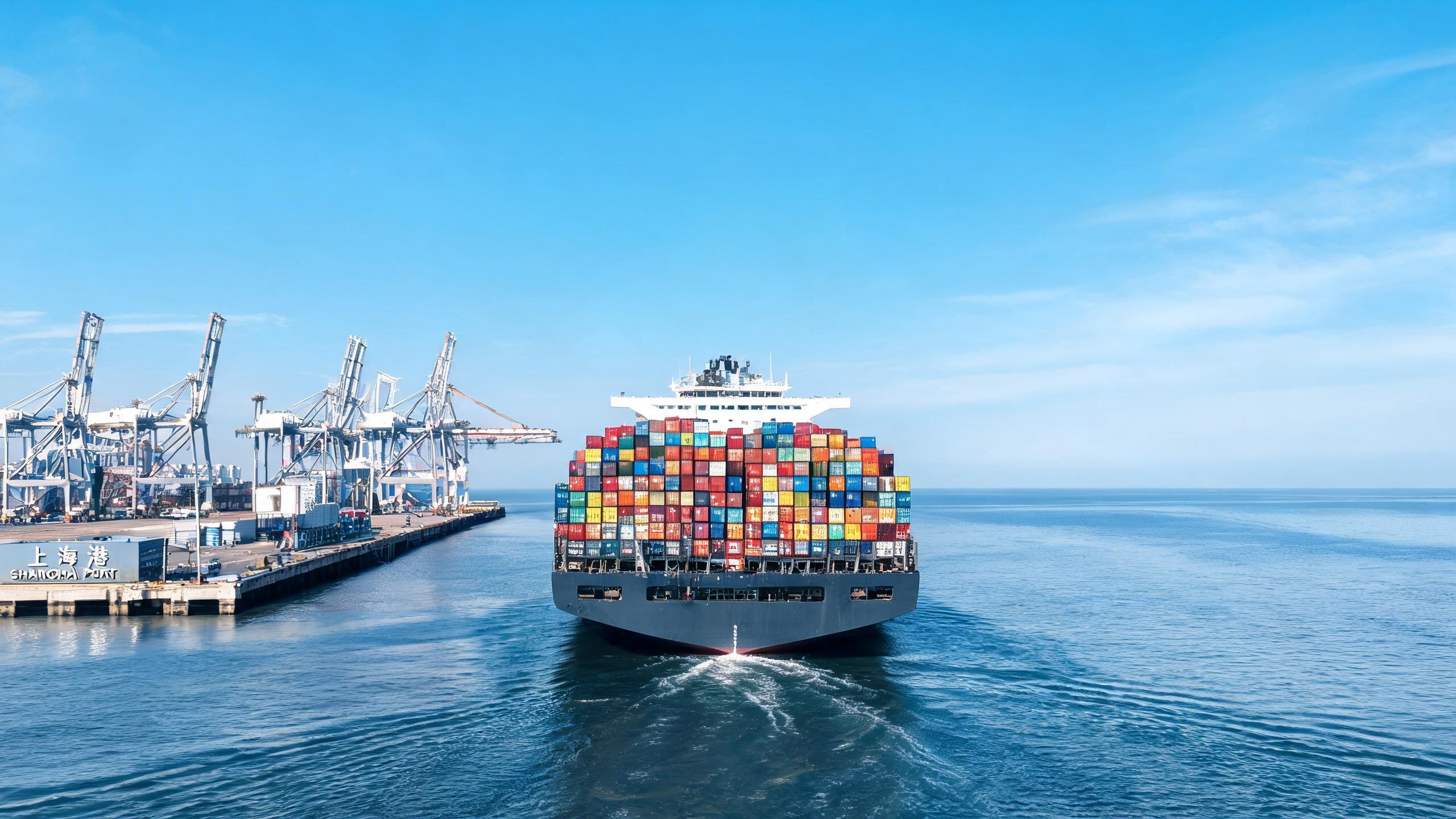
A practical guide to shipping from China to Canada with Meicheng — covering Vancouver and Montreal port entry, weekly FCL sailings from Shanghai, Ningbo, Shenzhen, and Qingdao (16–22 days to Vancouver), twice-weekly LCL consolidation to four key destinations, ISF filing, customs clearance, and door delivery. Written for importers who need specifics, not adjectives.
BUYER GUIDE · CHINA–CANADA FREIGHT
If you import from China to Canada, the questions are always the same: Which port should I ship to? How long will it actually take? What do I need to file before the vessel departs? And what happens after the container lands?
This guide answers those questions with the specific services Meicheng runs on this lane — the ports we call at, the sailing frequencies we book, the transit times we quote, and the compliance steps (ISF, customs clearance, door delivery) that determine whether your cargo clears on time or sits at the terminal.
- Meicheng offers weekly FCL sailings from Shanghai, Ningbo, Shenzhen, and Qingdao to Vancouver, with 16–22 day transit.
- LCL consolidation runs twice weekly to Los Angeles, Long Beach, New York, Vancouver, and Montreal.
- ISF (Importer Security Filing) must be submitted before the vessel departs — this is a U.S. and Canada border compliance requirement, not optional paperwork.
- Customs clearance at destination and door delivery are part of the service scope, not add-ons you source separately.
Which Canadian Port Should You Ship To?
Canada's two main gateways for ocean freight from China are Vancouver on the West Coast and Montreal on the East Coast. They serve different supply chains, and the right choice depends on where your goods are consumed.
| Port | Coast | Best For | Typical Routing |
|---|---|---|---|
| Vancouver | West | Western Canada, rail to Calgary/Edmonton, or cross-border to U.S. Midwest | Direct from Shanghai, Ningbo, Shenzhen, Qingdao |
| Montreal | East | Quebec, Ontario, and the U.S. Northeast via rail/truck | Often via Vancouver rail, or via U.S. East Coast ports |
Vancouver is the primary West Coast entry point for sea freight from China to Canada. It's closer to Asia, which means shorter ocean transit. Montreal serves the industrial heartland of Ontario and Quebec — but cargo usually reaches it either by rail from Vancouver or by transiting through a U.S. East Coast port, which adds time.
For most importers, the decision comes down to this: if your warehouse is in British Columbia or Alberta, ship to Vancouver. If your customers are in Toronto, Montreal, or the U.S. Northeast, calculate the total cost of ocean transit plus rail/truck from Vancouver versus routing through the East Coast. The lower ocean rate to the West Coast is often offset by inland rail costs.
FCL Services: Weekly Sailings from Four Major Ports
Meicheng operates weekly FCL (Full Container Load) sailings from four Chinese loading ports to Vancouver:
- Shanghai — China's largest container port; frequent departures, broad carrier choice
- Ningbo — strong for manufactured goods, electronics, and machinery from the Yangtze Delta
- Shenzhen — the gateway for Pearl River Delta manufacturing (electronics, appliances, consumer goods)
- Qingdao — key for northern China sourcing (home goods, machinery parts, chemicals)
Transit time from any of these ports to Vancouver is 16 to 22 days, depending on the carrier, the specific terminal, and whether the vessel makes intermediate stops.
| Loading Port | Destination | Frequency | Transit Time |
|---|---|---|---|
| Shanghai | Vancouver | Weekly | 16–20 days |
| Ningbo | Vancouver | Weekly | 17–21 days |
| Shenzhen | Vancouver | Weekly | 18–22 days |
| Qingdao | Vancouver | Weekly | 18–22 days |
These are ocean transit times — the period from vessel departure at the loading port to vessel arrival at Vancouver. They do not include the time your cargo spends waiting for the next available sailing, nor the time at destination for customs clearance and delivery.
When you book FCL with Meicheng, you get a confirmed sailing schedule, a container number, and a bill of lading. You know which vessel your cargo is on, when it departs, and when it's due to arrive. That predictability matters when you're planning inventory or committing to a delivery date with your own customer.
LCL Services: Twice-Weekly Consolidation to Five Destinations
Not every shipment fills a 20-foot or 40-foot container. For smaller volumes, LCL (Less than Container Load) lets you share container space with other importers and pay only for the space your cargo occupies.
Meicheng runs twice-weekly LCL consolidation to five destinations:
- Los Angeles
- Long Beach
- New York
- Vancouver
- Montreal
LCL consolidation works like this: your cargo is delivered to Meicheng's warehouse at the origin port in China, where it's consolidated with other shipments into a single container. The container sails to the destination port, where it's deconsolidated and your cargo is cleared and delivered separately.
The twice-weekly frequency matters because it shortens the waiting time between when your cargo arrives at the warehouse and when the next consolidation vessel departs. Instead of missing a sailing and waiting a week, you typically have another consolidation within three to four days.
- Your shipment volume is under roughly 15 cubic meters (about half a 20-foot container)
- You want to test a new product or market without committing to full-container inventory
- Your cargo is time-sensitive and you need the next available sailing
ISF Filing: The Step Most Importers Underestimate
ISF — Importer Security Filing — is a mandatory submission to U.S. Customs and Border Protection (CBP) for ocean cargo destined to the United States. For shipments to Canada, the equivalent requirement applies when cargo transits through U.S. ports or crosses the border.
The ISF must be filed at least 24 hours before the vessel departs from the foreign port. It contains 10 data elements about the shipment: seller, buyer, importer of record, consignee, manufacturer, ship-to party, country of origin, commodity HTS code, container stuffing location, and consolidator.
Late or inaccurate ISF filings result in penalties — up to $5,000 per violation — and can delay your cargo at the destination port. This is not a step you can skip or defer until the vessel is at sea.
When you ship with Meicheng, ISF filing is handled as part of the service. We collect the required data from your commercial invoice and packing list, submit the filing within the mandated window, and confirm the ISF number with you before departure.
Customs Clearance at Destination
Once your cargo arrives at Vancouver or Montreal, it must clear Canada Border Services Agency (CBSA) before it can be released for delivery. The clearance process involves:
- Submitting the bill of lading, commercial invoice, packing list, and any permits or certificates required for your commodity
- Paying applicable duties and taxes (GST, and any provincial taxes or anti-dumping duties that apply to your product)
- Responding to any CBSA inspection or document requests
Meicheng's destination handling covers customs clearance at the port of arrival. This means we coordinate with the local customs broker, submit the required documentation, track the clearance status, and notify you when your cargo is released.
Common reasons shipments get held at customs:
- Missing or inconsistent information between the invoice, packing list, and bill of lading
- Incorrect HTS classification, leading to the wrong duty rate being applied
- Missing permits for regulated goods (e.g., wood packaging, certain chemicals, food-contact materials)
- Value discrepancies that trigger a valuation review
Most of these are preventable with accurate documentation at origin. That's why the data you provide when booking the shipment — product description, value, weight, dimensions, and HTS code — determines how smoothly clearance goes at destination.
Door Delivery: The Final Mile
After customs clearance, the cargo needs to move from the port to your warehouse, distribution center, or job site. Meicheng offers door delivery as part of the service scope, covering:
- FCL: Trucking the container from the port to your address, with the option of a drop-and-pick or live unload depending on your facility's receiving capacity
- LCL: Deconsolidation at the destination warehouse, then trucking your specific cartons or pallets to your door
Door delivery quotes include the trucking cost from the port to your address. The rate depends on distance, access, and whether a liftgate or residential delivery is required. For FCL, you also need to confirm whether your facility can receive a full container — some warehouses lack the dock space and require a container yard (CY) delivery instead.
What to Prepare Before You Book
To get an accurate quote and a confirmed booking for shipping from China to Canada, have the following ready:
- Commodity description — what your product is, its material composition, and its intended use
- HS code — if you have it; if not, Meicheng can help classify it
- Dimensions and weight — per carton, per pallet, and total
- Incoterms — whether you're buying EXW, FOB, CIF, or DDP
- Destination address — for the door delivery quote
- Timeline — when your cargo is ready at origin, and when you need it at destination
With this information, Meicheng can confirm the sailing schedule, transit time, freight rate, and destination charges — and flag any compliance requirements specific to your commodity.
FAQ: China to Canada Shipping
How long does sea freight from China to Canada take?
FCL transit from Shanghai, Ningbo, Shenzhen, or Qingdao to Vancouver is 16–22 days. LCL consolidation follows the same ocean transit, plus a few days for consolidation at origin and deconsolidation at destination.
Is Vancouver or Montreal better for my shipment?
Vancouver is faster from Asia and suits Western Canada. Montreal serves Ontario and Quebec but usually involves rail from Vancouver or a U.S. East Coast transit, adding time and cost. Calculate total landed cost before choosing.
Do I need to file ISF for Canada-bound cargo?
ISF applies to U.S. imports. If your cargo transits a U.S. port or crosses the border into the U.S., ISF is required. Meicheng handles the filing as part of the service.
What's the difference between FCL and LCL?
FCL means you book an entire container. LCL means you share container space and pay for your volume. FCL suits shipments over roughly 15 cubic meters; LCL suits smaller volumes and offers more frequent departures.
Does Meicheng handle customs clearance and delivery?
Yes. Customs clearance at the destination port and door delivery are included in the service scope. You receive one point of contact from origin pickup to final delivery.
Next Step
Shipping from China to Canada is a defined process: choose the port, book the sailing, file ISF, clear customs, and deliver. The variables — transit time, cost, and clearance risk — are manageable when you have a freight partner who runs the lane consistently.
Contact Meicheng with your cargo details (commodity, volume, origin and destination addresses) to get a confirmed sailing schedule and a full quote for sea freight from China to Canada.